
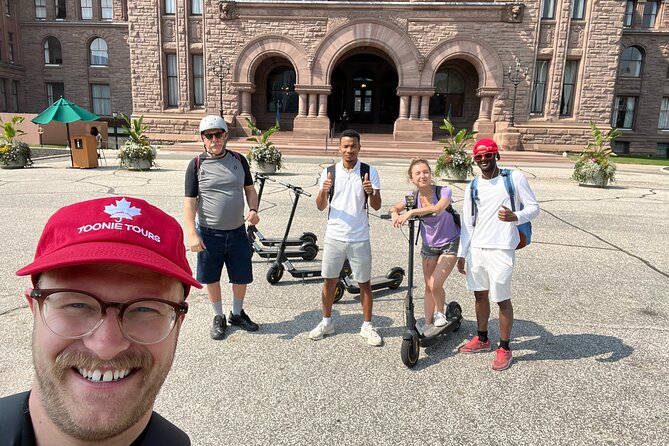
Reviewed · DOWNTOWN TORONTO WALKING TOURS
Toronto Discovery District 2hr Walking Tour
Toronto in two hours, neatly guided. I like how this tour strings together Toronto’s biggest civic and university landmarks into a walk that feels easy and logical. The guide helps you with photo moments at the most popular spots, and you also get practical tips for how to use the rest of your day in the city.
My other favorite part is the small group size (up to 15), which means it’s not a lecture—you can ask questions and steer the conversation. The one thing to plan for is the start point: Nathan Phillips Square can be tricky to find fast, especially in bad weather, so arrive a few minutes early and double-check the pin.
If you want Toronto context without doing a bunch of research first, this is a solid pick. You’ll get lots of short stops, each timed well enough that you’re never stuck waiting too long, and the tour ends right where you can keep exploring on your own.
In This Review
- Quick hits you’ll feel right away
- Starting at Nathan Phillips Square: the fast way to get your bearings
- The civic-building stop: why the architecture and gardens matter
- College Place and Toronto General Hospital history: modern medicine, early
- Queen’s Park: Ontario’s story in one big green space
- Cruising through the University of Toronto: war memory without heavy stuffiness
- Convocation Hall and Soldiers’ Tower: graduation pride meets wartime loss
- Philosopher’s Walk and Koerner Hall: art, culture, and a sensible break
- Royal Ontario Museum finish: a strong endpoint even without tickets
- Price and value: what $34.99 buys you here
- Guides, pacing, and the small-group advantage
- Logistics to get right: start on time, dress smart
- Who should book this walking tour
- Should you book this Toronto Discovery District 2-hour walk?
- FAQ
- How long is the Toronto Discovery District walking tour?
- Where does the tour start and end?
- What is the meeting point address?
- Is the tour offered in English?
- Are tickets or admissions included for the stops?
- What is the group size limit?
- Do I need to print a ticket?
- Is a guide included?
- Are tips included in the price?
- Can I cancel and get a full refund?
Quick hits you’ll feel right away
- Small group (max 15) means your questions actually get answered.
- Photo help at major landmarks so you’re not fumbling with angles and strangers in the frame.
- Short, focused 10-minute stops keep energy up and pacing smooth.
- U of T war-memory stops add meaning beyond postcard views.
- Koerner Hall break gives you a realistic restroom/snack pause without derailing the tour.
- Outdoor-only Royal Ontario Museum stop works well as a finish line, even if you don’t plan to enter right away.
Starting at Nathan Phillips Square: the fast way to get your bearings
Nathan Phillips Square is the kind of place that instantly tells you, this is downtown Toronto. Your guide starts here with Toronto’s sign for an easy selfie moment, and it’s also a natural “hub” that’s often filled with activity. That matters, because it sets a lively tone for the walk: you’re not starting in a dead corridor.
This first stop is also where you learn how to read the civic space. The square can host markets, festivals, and public events, which is a big part of why locals treat it like more than just a landmark.
Practical tip: dress for the weather and keep your phone ready for photos. Even a quick stop can turn into a longer one if you get focused on the details or the crowd.
Lace up for more downtown Toronto walking tours around Toronto


The civic-building stop: why the architecture and gardens matter
Right after the opening, you’ll get a look at a major civic building area where the “why” behind the design is part of the story. The focus here is on how public service functions in that space today, plus the meaning behind the building’s design and the artistic, cultural gardens nearby.
This is one of those stops that pays off if you tend to notice details when you walk—columns, layout, landscaping, and the way a building shapes movement. Even if architecture isn’t usually your thing, tying the design to how the space is used makes it easier to follow and remember.
Good to know: this is a walking tour with short time at each location. If you want to linger on a specific detail, bring that curiosity up to your guide so you can decide whether it’s worth spending an extra minute.
College Place and Toronto General Hospital history: modern medicine, early
College Place is where the tour slows the story down and gives you a deeper “Toronto didn’t just happen” moment. You’ll hear how this building connected to the third iteration of Toronto’s General Hospital at the start of the 20th century—and how it was viewed as especially advanced for its time.
The tour’s angle isn’t just dates. It’s about what made the hospital building feel so complete and modern, the obstacles people faced to make that vision real, and the medical successes that came out of the work.
Why this stop is valuable: it’s easy to treat hospital buildings as background. Here, you get enough context to understand why a place like this signals ambition and progress. It turns a street-level view into a timeline you can picture.
Queen’s Park: Ontario’s story in one big green space

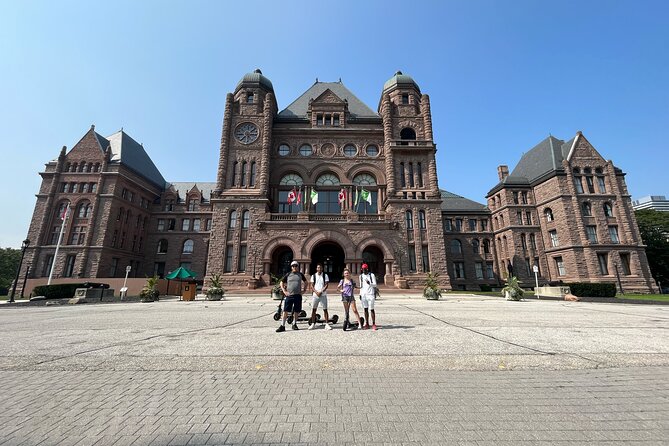
Queen’s Park is Canada history in a park setting. You’ll spend around 10 minutes here hearing how Ontario’s and Canada’s history is condensed into the space, along with a look at the statues and the architectural centerpiece used for photos.
If you’re the type who likes to feel the meaning behind places, this stop works well. It’s not only scenic; it’s interpretive. You come away with a sense of why this park is more than a green break in downtown.
Photo tip from the tour style: ask your guide for where to stand for the best shot of the centerpiece. The guide is there to help you frame landmarks, and Queen’s Park is the kind of spot where that advice saves time.
Cruising through the University of Toronto: war memory without heavy stuffiness

When you move into the University of Toronto area, the mood shifts from parks and civic squares to a campus that’s built for walking, thinking, and (today) big community life. The tour highlights the campus beauty and adds historical layers, including U of T’s war efforts and how the school remembers those who made the ultimate sacrifice.
That memory element is important. It’s one thing to see a memorial. It’s another to understand the relationship between the institution and what it did during wartime, plus how remembrance is handled afterward.
You’ll also notice the pacing: each stop is short enough that you keep moving, but long enough that the guide can give you the key story beats. For many people, that’s the sweet spot on a 2-hour tour.
More walking tours to stroll on foot through Toronto






Convocation Hall and Soldiers’ Tower: graduation pride meets wartime loss

Convocation Hall is a major “details” stop. You’ll learn about its origins, its significance, and how it rose from the 1890 fire. Then you’ll connect that to how the university honors graduates with the Alumni Plaza.
Even if you’re not attending U of T, this is a powerful way to see how institutions keep their identity across centuries—through buildings, rituals, and the spaces tied to learning and achievement.
Then comes Soldiers’ Tower, the war memorial tribute to those lost in the First and Second World Wars. This is the emotional shift stop on the route, and it’s handled in a straightforward way: you get what it represents and why it’s there.
What I appreciate about how this tour uses these sites: it doesn’t just point at stone. It ties the monument to meaning, so you’re not left with blank sightseeing.
Philosopher’s Walk and Koerner Hall: art, culture, and a sensible break
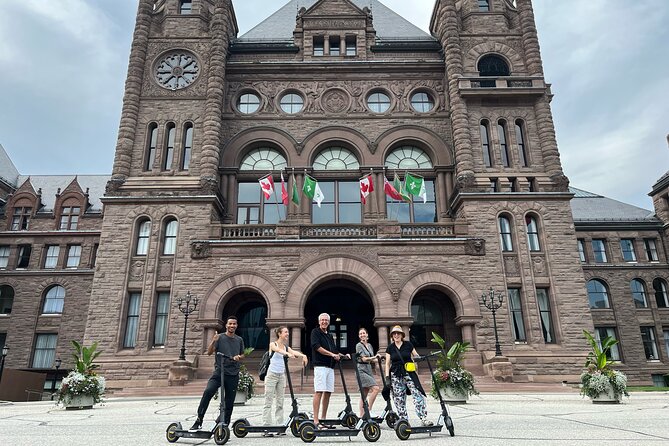
Philosopher’s Walk winds through U of T and connects you to the campus as a cultural hallway, not just an academic one. You’ll hear stories about how the path was built and what it was built on, plus how it connects people to art, history, music, and culture.
This is where the tour starts feeling like a “Toronto walk” rather than a checklist. The guide’s job is to help you see the connections—how a campus pathway becomes part of the city’s cultural identity.
Then you reach Koerner Hall, and the tour makes practical room for you. This stop is framed as a cultural highlight of the Royal Conservatory of Music, including the hall’s impact on culture and how new architecture connects with classic preservation ideas.
And yes, this is your real-world pause: the tour is set up so you can take a washroom and snack break here. That’s the kind of detail that makes a 2-hour walk feel comfortable instead of rushed.
Royal Ontario Museum finish: a strong endpoint even without tickets
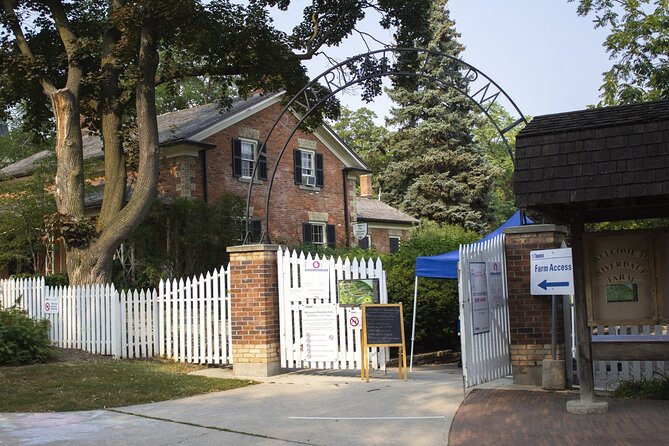
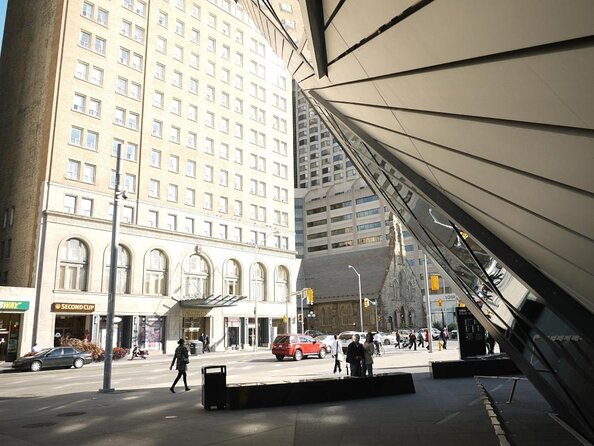
Your tour ends at the Royal Ontario Museum. You’ll focus on the building’s incredible exterior architecture on an outdoor-only stop, so you’re seeing the grand shape and design without needing to pay for entry as part of the tour.
This is a smart finishing point because it’s easy to continue your day nearby. You also avoid the “we spent the last hour in a line” problem. You reach a landmark, you get a photo, and then you can decide what comes next.
Practical tip: if you want to go inside afterward, plan your timing based on the museum’s hours. The walking tour itself is built around the exterior stop.
Price and value: what $34.99 buys you here
At $34.99 per person for about 2 hours, you’re paying for guided storytelling, not museum admissions. In fact, the stop descriptions indicate admission tickets are free for the tour moments, so your money goes to a local English-speaking guide, the route, and the interpretation.
This is also one of those tours where the structure matters. With around 10 minutes per main stop, the guide can give you a clear through-line from civic Toronto to campus Toronto to cultural Toronto. That’s difficult to recreate on your own in a short time unless you do a lot of pre-reading.
Another value layer: the tour includes local recommendations and tips for what to do after the walk. That’s often where a “nice tour” becomes a useful one—because you leave with a plan, not just photos.
Guides, pacing, and the small-group advantage
The tour’s format is built for interaction. With a maximum group size of 15, you’re not shouting across a crowd, and you can actually ask questions. That’s a big deal at places like U of T and the memorial stops, where people often want more context than a sign provides.
From guide-style feedback, names like Joel show up for making people fall in love with Toronto through humor and strong local knowledge. Tai is praised for keeping people interested and giving good eating recommendations. Wei-Ting is noted for adapting to interests and keeping the experience smooth, and Joshua is mentioned for fun, comfortable touring that still delivers learning.
Even if you don’t care about who the guide is, the takeaway is consistent: these tours work best when you treat the guide like a human source of local direction, not a microphone.
Logistics to get right: start on time, dress smart
Two small details will improve your experience a lot:
First, the meeting point is at 100 Queen St W, Nathan Phillips Square. If you arrive late or wander around looking, you lose time and stress yourself out. Aim to get there a few minutes early, especially if you’re dealing with wind, rain, or snow.
Second, you’ll be on foot for the full experience. Wear shoes you trust for city walking. The stops are close enough that it’s manageable, but it’s still an outdoor route.
Also, you’ll get a mobile ticket, and the tour is offered in English, with confirmation received at the time of booking. It’s near public transportation, so you’re not stuck if you’re coming in from the subway or streetcar.
Who should book this walking tour
This is a great fit if you:
- Want a quick orientation to Toronto’s civic core and university district
- Like learning the meaning behind landmarks, not just the landmark itself
- Prefer a small group over big bus-style sightseeing
- Want a guided photo moment at top spots like the Toronto sign area
- Appreciate a built-in break for washroom and snacks at Koerner Hall
If you’re traveling with limited time and you still want context, this 2-hour loop makes sense. If you’re the type who hates being “scheduled” at all, consider adding extra time on your own at whichever stop you like most.
Should you book this Toronto Discovery District 2-hour walk?
Yes, I’d book it if you want a smart first pass through central Toronto with a guide who helps you see more than the obvious views. It’s good value because admissions are free at the key stops, and you’re buying guidance, pacing, and local recommendations.
I’d hesitate only if you strongly dislike the idea of short, timed stops. Also, make sure you’re comfortable finding Nathan Phillips Square quickly; a smoother start day makes the whole thing better.
If you want a morning or afternoon plan that ends at one of the city’s major museums, this tour does that job well—clean route, clear stories, and enough breathing room to keep your day moving.
FAQ
How long is the Toronto Discovery District walking tour?
It lasts about 2 hours.
Where does the tour start and end?
It starts at Nathan Phillips Square, 100 Queen St W, Toronto, ON M5H 2N3, and it ends at the Royal Ontario Museum, 100 Queens Park, Toronto, ON M5S 2C6.
What is the meeting point address?
The start meeting point is Nathan Phillips Square at 100 Queen St W, Toronto.
Is the tour offered in English?
Yes, it is offered in English.
Are tickets or admissions included for the stops?
The stop descriptions indicate admission ticket free for the listed stops, and the Royal Ontario Museum stop is outdoor-only for architecture.
What is the group size limit?
The tour has a maximum of 15 travelers.
Do I need to print a ticket?
No. You’ll use a mobile ticket.
Is a guide included?
Yes. The tour includes a local English-speaking guide.
Are tips included in the price?
No. Gratuities are not included, and the information you’re given indicates $10 per person for your guide.
Can I cancel and get a full refund?
You can cancel for a full refund up to 24 hours before the experience starts. If you cancel less than 24 hours before start time, the amount paid is not refunded.
More Downtown Toronto Walking Tours
More Tour Reviews to line up around Toronto and Niagara



Not sure yet? Here is more to see and do across Toronto, just reviewed












More Downtown Toronto Walking Tours to size up.
 ★ 5.0Show me the City! A Small Group Walking Tour of TorontoFrom $39621 reviews
 ★ 5.0Downtown Toronto Bike TourFrom $93336 reviews
 ★ 4.5Old Town Toronto Highlights 3 Hour Walking Tour | Gratuity-BasedFrom $5290 reviews
 ★ 4.7Private Walking Tour with a LocalFrom $43150 reviews
 ★ 4.5Old Town Toronto History Walking TourFrom $4122 reviews
 ★ 4.42-Hour Downtown Walking TourFrom $28101 reviews
 ★ 4.8Old Toronto by Beer: A Craft Brew AdventureFrom $7191 reviews
 ★ 4.9Brothels of Old Toronto Walking TourFrom $1971 reviews
This tour also ranks in