
Reviewed · TORONTO CITY TOURS & CN TOWER
Old Town Toronto Highlights 3 Hour Walking Tour | Gratuity-Based
Toronto’s downtown has a secret underfoot. In this 3-hour, gratuity-based Old Town Toronto walk, you’ll move from classic parks and brick landmarks to the office towers of the Financial District and then go underground to experience The PATH. It’s an efficient “see the layout first” tour that also includes smart local tips for what to do next.
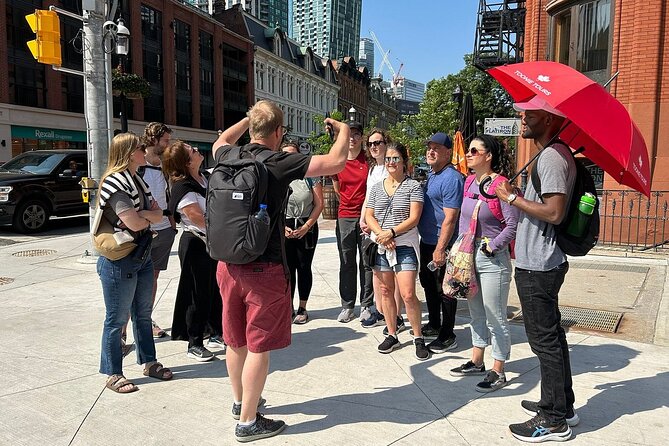
I love that it starts with easy, photogenic landmarks like Berczy Park and the Gooderham (Flatiron) Building, so you’re oriented right away without feeling rushed. I also like that the guide brings the city to life with specific stories and street-level details, and that the group stays small enough for questions and conversation, like when Alex used a photo book to help everyone picture older Toronto.
One thing to consider: this is a real walking tour. Even though it’s only labeled 3 hours, expect a steady pace, and build in water (and patience) for a long day of downtown feet.
In This Review
- Key highlights worth planning for
- A smooth start at Berczy Park and the Flatiron-style Gooderham Building
- Old Toronto facades, the Post Office, and the Financial District’s design quirks
- Going underground: The PATH tunnel walk you’ll actually use later
- Old City Hall and E.J. Lennox’s Renaissance details
- Campbell House Museum area and the story trail toward downtown entertainment
- Terry Fox at David Pecaut Square and the timed Toronto Sign break
- Brookfield Place, hockey energy, and finishing at Toronto Union
- Price, pacing, and what tips-based really means
- Should you book this Toronto Old Town walking tour?
- FAQ
- FAQ
- How long is the Old Town Toronto Highlights walking tour?
- What’s the meeting point and where does the tour end?
- Is the tour only in English?
- Is there an admission ticket cost for the stops?
- What does gratuity-based mean here?
- Is the group size small?
- Can I choose different starting times?
- Is there a mobile ticket?
- What happens if the tour is canceled due to minimum travelers?
- Can I cancel for free?
Key highlights worth planning for
- The PATH tunnel system: a practical walk through Toronto’s underground city
- Local guide style: strong storytelling, often with photo support (examples include Alex and Maya)
- Architecture stops: Flatiron-style shapes, Renaissance civic buildings, and downtown facades
- Real downtown orientation: you’ll pass through major areas like the Financial District and Entertainment District
- Photo moments: the Toronto Sign stop is timed for candid shots and a break
- Transit help near the end: you get guidance for using the TTC, GO, VIA, and buses
A smooth start at Berczy Park and the Flatiron-style Gooderham Building
You begin at Berczy Park near Wellington Street East. This is a fun way to kick things off because it’s not just “walk to the next photo spot.” You’re set up with context right away—what the park is, who William Berczy was, and why details like the dog fountain feel oddly whimsical for a downtown neighborhood.
Then the tour swings toward the Gooderham (Flatiron) Building—that classic triangular, wedge-shaped look that makes you do a double-take if you’ve only seen it in postcards. Your guide connects the form to the era and to the story of how the area developed, including chatter about how this was considered one of the most expensive buildings in Canada at the time. The payoff for you is simple: once you understand why these buildings look the way they do, the rest of the downtown walk makes more sense.
Practical tip: the first part tends to feel light and easy. If you’re deciding whether walking tours are your thing, this early stretch is where you’ll know fast.
See more of the skyline on our other Toronto city tours and CN Tower trips in Toronto


Old Toronto facades, the Post Office, and the Financial District’s design quirks
Next comes Old Toronto, where the tour leans into facades and how street walls carry stories. One highlight here is the Old Toronto Post Office, a building that may show up as a filming location. Even if you don’t care about movies, this stop is useful because it teaches you to notice design and layout as you walk—where entrances were meant to pull people in, and how the area’s role shaped what got built.
From there, you head into the Financial District, where the city’s height and power show up fast. You’ll pass the big banking headquarters and hear how the buildings relate to each other across a few blocks. Your guide also points out small but memorable choices—like why window tint colors were selected for those towers—and what you’ll see as the metalwork lines up against the sky.
If you like city details you can spot in real time, this section pays off. If you’re expecting a slow, sit-down lecture, the pace here is more “look and learn” than “stop and explain.”
Going underground: The PATH tunnel walk you’ll actually use later
Then comes the most uniquely useful part: The PATH. Your guide takes you down from Commerce Court and into the underground maze that connects a big chunk of downtown.
This isn’t just sightseeing. It’s the kind of Toronto trick you’ll feel grateful for later, especially if you’re dealing with snow, wind, or sudden rain. Your tour explains how different sections of The PATH have different design styles depending on the building owners, so it never feels like one long identical hallway.
You’ll also get a sense of how PATH fits into downtown life: where people walk, where you might detour, and how the connections help you move without constantly fighting street-level weather.
Heads-up: the PATH is underground and busy-feeling by nature. Wear comfortable shoes, because while it’s interesting, it’s still a walk.
Old City Hall and E.J. Lennox’s Renaissance details
The tour returns to more open-air streets with Old City Hall, built in a Renaissance-style design. This stop is about the details—your guide points out hidden elements and explains the creator behind it: E.J. Lennox.
What makes this stop more than a quick look is how your guide frames the building. Instead of treating it like a static landmark, you’ll understand the “why” behind the craft and the little design choices that make it still feel special over a century later.
This is also one of the best moments for a photo that looks like architecture, not just skyline. Slow down here and really scan the lines.
Campbell House Museum area and the story trail toward downtown entertainment
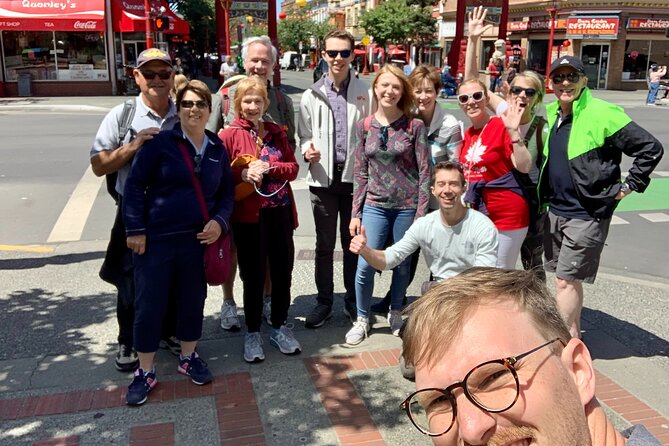
After Old City Hall, you’ll make another historical stop around Campbell House Museum. The tour focuses on facts and stories, noting the home dates to 1822. You won’t be going inside on this walk, but you’ll learn why you may want to return later—whether that’s for a visit or for cooking-related programming the museum runs.
This stop also includes local references that help you read the area like a map: maple syrup stories, and even a mention of the Canada Life weather tower in the distance. If you like history but get bored by long speeches, this is one of the more “story + place” moments.
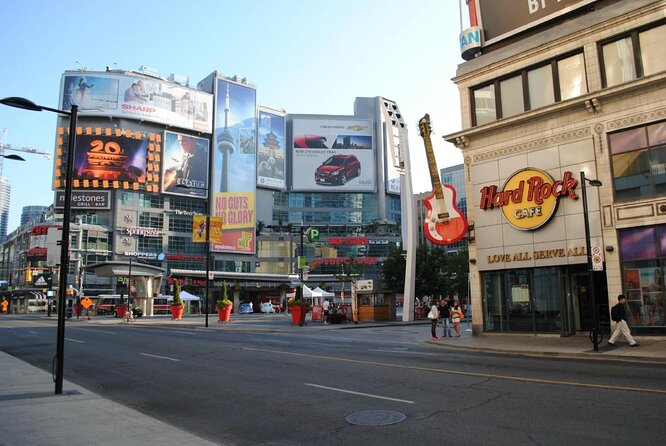
Then it’s onward to the Entertainment District, where the street tone shifts. Music venues and mural-style street art make it feel more like a creative zone. You’ll catch views and references to the CN Tower and hear how the area works at night—whether you’re thinking shows, drinks, or a night out that doesn’t require a plan you made three weeks ago.
A note about timing: you’ll pass several theatre- and music-related landmarks here (including an acoustics-focused concert hall connected with the Toronto Symphony Orchestra, a Beaux-Arts theatre building, and the TIFF festival venue area). This segment is great if you like seeing how Toronto’s arts scene sits right next to everyday downtown life.
Lace up for more downtown Toronto walking tours around Toronto





Terry Fox at David Pecaut Square and the timed Toronto Sign break
One of the tour’s most emotional stops is David Pecaut Square, anchored by the Eternal Flame of Hope for the Disabled. Here you’ll learn about Terry Fox, including the fact that he was diagnosed with cancer of the knee at a young age and how his actions shaped Canada.
Even if you know the story already, the location and the way your guide ties it to the city’s public memory makes it hit differently than reading about it later.
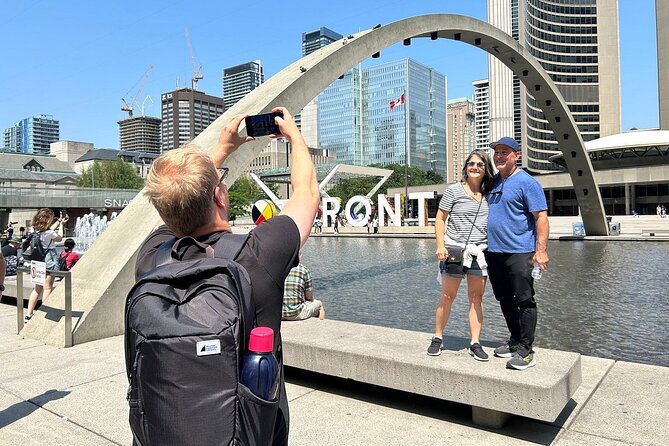
Then you get the classic payoff: a photo stop at the Toronto Sign in Nathan Phillips Square. This is also where you typically get breathing room—often timed so you can buy food, grab water, use the toilet, and reset your legs before the final stretch. One solo traveler even noted that a guide (Joel) helped take great photos by the sign, so this is a good moment to ask for a quick snapshot if you’re on your own.
Bring: water. Consider a small snack if you get hungry mid-walk. I’ve done enough city walking to know that the “I’ll be fine” plan only works in perfect weather.
Brookfield Place, hockey energy, and finishing at Toronto Union
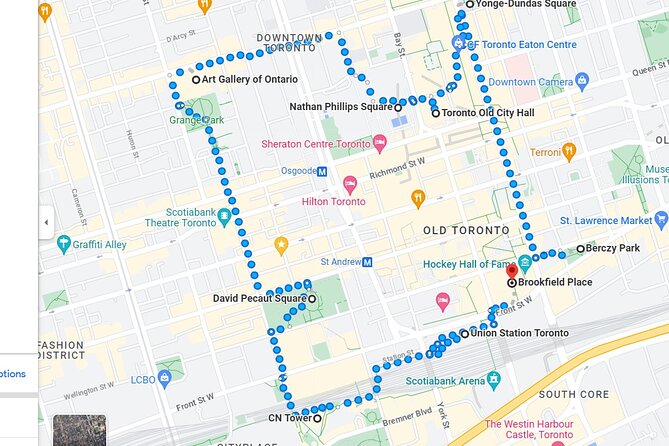
Next up is Brookfield Place, where the space changes again. The tour points out the high ceilings and the white arches and connects it to a major Canadian sports theme: hockey and the Hockey Hall of Fame nearby. Even if you don’t follow hockey closely, this stop is worth it because it shows how downtown entertainment and commerce overlap in real physical space.
You’ll finish with Toronto Union, a huge transit hub that makes a perfect end point for practical advice. Your guide answers questions about moving around—using the TTC, GO Train, VIA Rail, or bus options—so you can keep momentum after the tour without guessing.
And since the tour returns back to the meeting area, you’re not left wondering how to retrace steps.
Price, pacing, and what tips-based really means
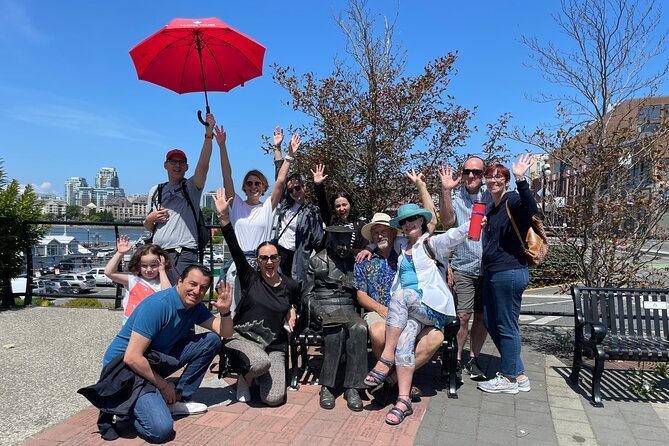
The price is listed as $5.00 per person, and the tour is described as gratuity-based, meaning the guide’s compensation relies on your tips. That small base cost can feel like an excellent deal for a 3-hour downtown orientation—especially if you’re the type who likes stories attached to real streets, buildings, and public places.
But the tradeoff is pacing and time in motion. Many guides are talkative in a good way—Maya, for example, often gets praised for trivia and a sense of humor—yet that can become a challenge if you want more walking and less standing still. One family review described the tour as tough for kids because the talking took longer than expected early on. Another review mentioned the guide moving fast enough that group members struggled to keep up.
So here’s the honest decision rule for you:
- If you enjoy history + architecture + photo stops, this tour is strong value.
- If you need lots of seated breaks or extremely slow movement, you might feel it quickly.
Also, because the tour is capped at a maximum of 30 travelers, it’s rarely a cattle-car experience. You can usually ask questions, and you’re more likely to feel like you’re part of a small walking group rather than a crowd.
Should you book this Toronto Old Town walking tour?
Book it if you want a smart first pass through downtown with two standout benefits: The PATH and a guided route that threads together history, architecture, and major districts without confusing you.
Skip or consider a different option if you:
- need frequent seating or have mobility limits that make long stretches difficult
- expect a very kid-focused format with short explanations and frequent movement
- want a purely scenic walk with minimal standing-and-listening
If you’re visiting for the first time, this kind of tour is one of the best ways to learn how Toronto’s parts connect—financial core, civic buildings, arts corridor, and the everyday routes people use underground.
FAQ
FAQ
How long is the Old Town Toronto Highlights walking tour?
It’s listed as about 3 hours.
What’s the meeting point and where does the tour end?
It starts at Berczy Park (35 Wellington St E, Toronto, ON M5E 1C6) and ends back at the meeting point.
Is the tour only in English?
No. The tour is offered in English and Spanish.
Is there an admission ticket cost for the stops?
Admission is listed as free at the stops included in the itinerary.
What does gratuity-based mean here?
The tour’s guides work for gratuities, and the amount you pay through booking is described as booking fees; gratuities are not included in the listed price.
Is the group size small?
Yes. The tour has a maximum of 30 travelers.
Can I choose different starting times?
Yes. The tour offers different starting times so you can fit it to your schedule.
Is there a mobile ticket?
Yes, the tour includes a mobile ticket.
What happens if the tour is canceled due to minimum travelers?
If it’s canceled because the minimum isn’t met, you’ll be offered a different date/experience or a full refund.
Can I cancel for free?
You can cancel for a full refund up to 24 hours before the experience’s start time.
More Toronto City Tours and CN Tower Trips
More Tour Reviews to line up around Toronto and Niagara

Not sure yet? Here is more to see and do across Toronto, just reviewed












More Toronto City Tours & CN Tower to size up.
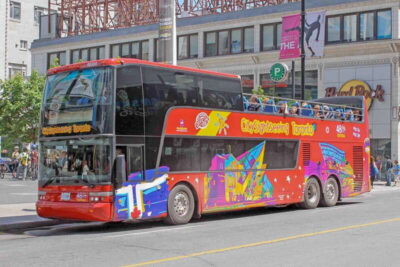 ★ 4.3City Sightseeing Hop-On Hop-Off Bus TourFrom $492,544 reviews
 ★ 5.0Niagara Falls Canada Open-Top (Wet) Jet Boat TourFrom $711,000 reviews
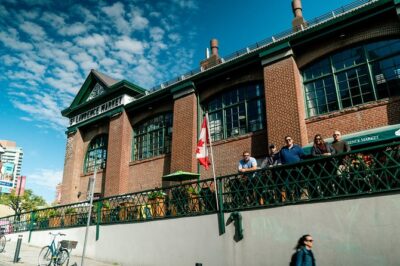 ★ 4.5Toronto Premium Small Group Driving Tour with CN TowerFrom $128833 reviews
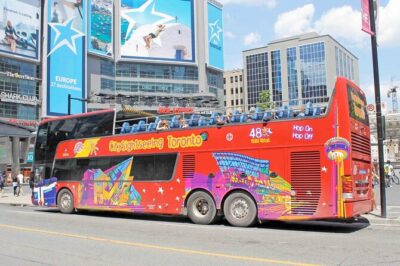 ★ 3.5City Sightseeing Toronto Hop-On Hop-Off Bus TourFrom $49726 reviews
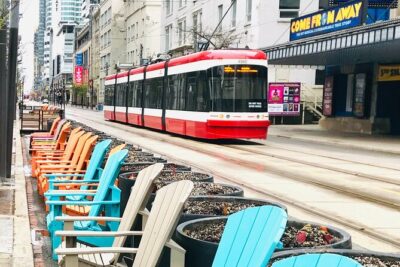 ★ 5.0Show me the City! A Small Group Walking Tour of TorontoFrom $39621 reviews
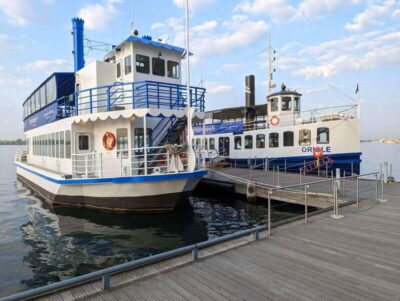 ★ 4.4City Views Harbor CruiseFrom $28557 reviews
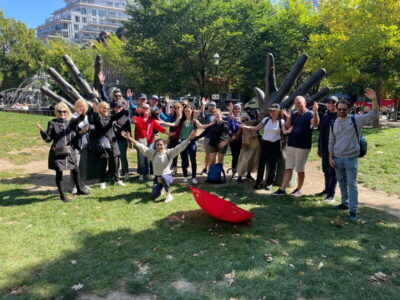 ★ 4.6City Highlights Walking Tour | 3-HourFrom $5306 reviews
 ★ 4.9City Sightseeing Helicopter TourFrom $160282 reviews