
Reviewed · DOWNTOWN TORONTO WALKING TOURS
Toronto: Casual Historic Walking Tour
One good walk, and Toronto starts making sense. This casual downtown route threads together big-city landmarks with story time at a pace that feels friendly, not rushed. You’ll end with a practical payoff: time at St. Lawrence Market to grab real local food after all the sights.
What I like most is the mix of famous buildings and the small human details that make them click. I also like that the guide is clearly invested in the group, not just the script, and names like CJ show up in the reviews for a reason.
The only real drawback is simple: this is a walking tour and it isn’t wheelchair-friendly, so if mobility is limited, you may want a different format.
In This Review
- Key takeaways before you lace up
- Meeting at Yonge and Dundas: starting where downtown rhythms begin
- Nathan Phillips Square: civic landmarks without the heaviness
- Old City Hall, New City Hall, and the Path: the downtown “connective tissue”
- Financial District stroll and the building from Suits
- Berczy Park break: a pause that makes the rest of the walk easier
- Flatiron (Gooderham) Building: the shape people notice
- St. Lawrence Market finish: food is the smart ending
- Why CJ’s guiding style makes a small tour feel worth it
- Price and value: what $18 gets you in two hours
- When this tour is a great fit (and when to pass)
- Should you book Toronto: Casual Historic Walking Tour?
- FAQ
- Where does the tour start?
- How long is the Toronto walking tour?
- How much does it cost?
- Where does the tour end?
- What’s included in the tour price?
- Are meals included?
- Is transportation included?
- What language is the tour guide?
- Is the tour limited to a small group?
- What should I bring and wear?
Key takeaways before you lace up
- Small-group pace (up to 10): you get more back-and-forth than on a giant bus tour.
- CJ’s on-the-spot energy: guides are praised for being personable and keeping things fun while still informative.
- The “Suits” stop: it’s a clever way to connect TV familiarity to real Toronto streets.
- Berczy Park break: you get a breather instead of a nonstop march.
- Finish at St. Lawrence Market: plan to eat there, since meals aren’t included.
- Comfort matters: comfortable shoes and water are part of the deal for a full two hours outdoors.
Meeting at Yonge and Dundas: starting where downtown rhythms begin
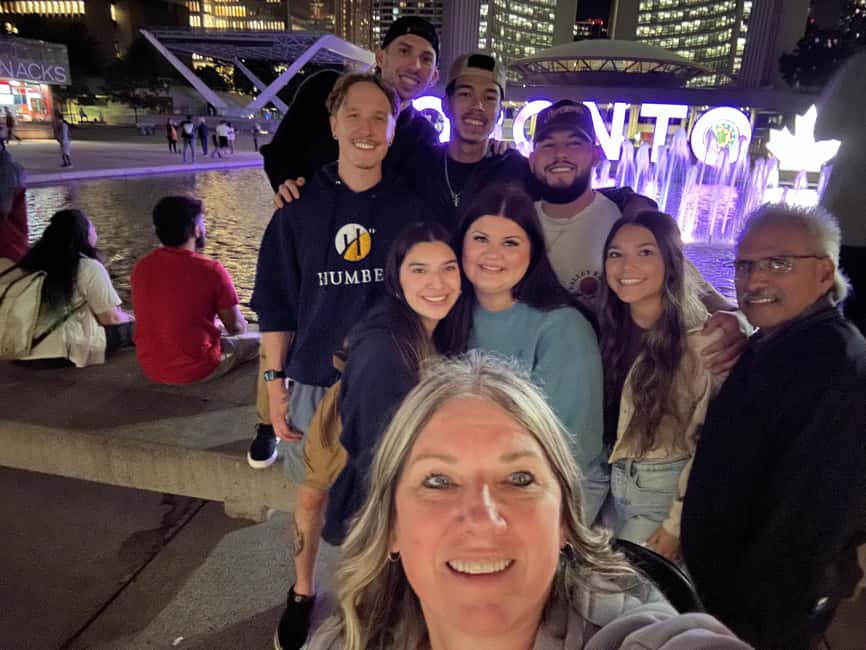
You meet at Sankofa Square at Yonge and Dundas, by the stage. That’s a smart choice, because you’re right in the thick of downtown, where the streets feel like they’re constantly moving.
In the opening minutes, you’ll get oriented fast. The tour moves like a good walking conversation: you start with a few anchors, then each next landmark earns its place. If you’re the kind of traveler who likes to connect the dots between neighborhoods, this start helps you see the downtown pattern rather than just collect photos.
Bring what you’d bring for any solid city walk: comfortable shoes, a camera, and water. You’ll be outside long enough that those basics become the difference between “nice walk” and “why did I do this.”
Lace up for more downtown Toronto walking tours around Toronto

Nathan Phillips Square: civic landmarks without the heaviness
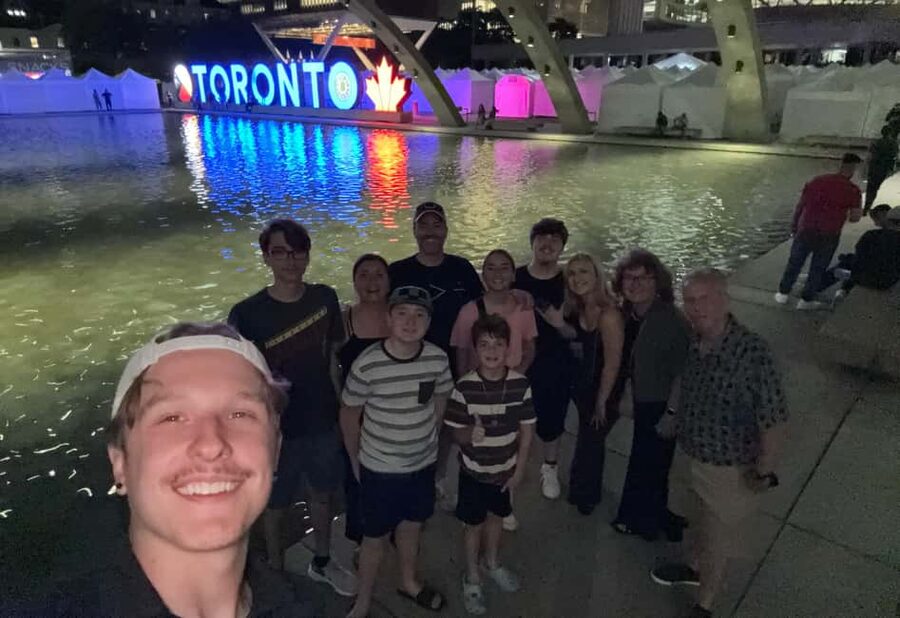
Next up is Nathan Philips Square. It’s guided and built into the flow for about 30 minutes, which means you get context without getting stuck in a lecture.
This stop works well because it sets the tone for the whole tour. You’re not just looking at a plaza—you’re learning how Toronto’s civic spaces shape the feel of the city center. If you’ve ever wondered why certain public buildings feel important even to people who don’t live there, this is the point where you start understanding it.
One practical tip: if the weather is turning, this is also a good place to pause, check your footing, and reset your camera settings before you move into tighter downtown blocks.
Old City Hall, New City Hall, and the Path: the downtown “connective tissue”
From there, the tour shifts into Old Toronto, including Old and New City Hall plus The Path. This section runs about an hour on foot, and it’s where the stories start stacking—without turning into a history exam.
The big value here is that you’re seeing civic Toronto from more than one angle. You get the sense of how the city developed and how downtown design affects everyday movement. And because the tour keeps walking instead of stopping forever, you’ll remember it better than if you only read plaques.
What to watch for during this part: transitions. The guide helps you spot what changes between nearby landmarks, so you don’t treat them as random photo stops. You’ll leave with a clearer mental map of where power, planning, and pedestrian space meet.
Financial District stroll and the building from Suits
Then comes a fun shift: the financial district walk and the sightline tied to the TV show Suits. This is one of those “I didn’t expect to care, but now I do” moments—because you’re using a pop-culture reference as a shortcut to real geography.
Instead of feeling like you’re chasing landmarks that mean nothing to you, the guide connects the spot to why people notice it in the first place. If you’ve seen the show, you’ll likely recognize the vibe immediately. If you haven’t, no worries; it still serves as an easy hook into downtown architecture and streetscape.
Keep your camera ready here, but also keep your eyes up. Downtown details can be subtle—stonework, scale, street-level design—and the guide’s commentary helps you pick out what’s worth your attention.
Berczy Park break: a pause that makes the rest of the walk easier
Between bigger stops, you get a breather at Berczy Park. The tour explicitly builds in this break, which matters more than people think. After a stretch of sidewalks and city blocks, a real pause keeps the energy up for the final push.
Also, parks in the city are good for absorbing the “in-between Toronto” feeling—how the downtown machine slows down for humans. Even if you only spend a few minutes there, it changes the tempo of the rest of your experience.
Use the break smartly: drink water, check your bearings, and take one easy photo that includes the surrounding buildings. It’ll give you a reference point for what you’ll see next.
More walking tours to stroll on foot through Toronto



Flatiron (Gooderham) Building: the shape people notice
From Berczy Park, you’ll look toward the Flatiron (Gooderham) Building. This is described as the old headquarters for the Distillery District, which gives the stop extra meaning beyond its famous silhouette.
The value of adding this on the route is that it breaks up the larger civic and financial landmarks with something more distinctive. When a building has a recognizable form, the story tends to stick. And when the guide ties that shape to an older downtown role—rather than leaving it as a one-line photo fact—you get a better sense of why it still lands in conversations about Toronto.
If you’re photographing, aim for angles from the walking side of the street so you capture the building in context, not just as a close-up. The guide’s pointing helps, and this is one of those moments where the “where to stand” advice is actually useful.
St. Lawrence Market finish: food is the smart ending
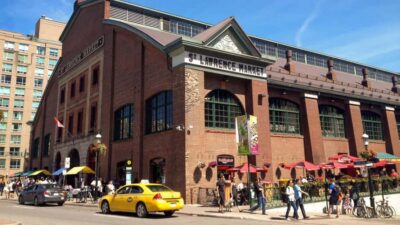
You finish at St. Lawrence Market, which is where you refuel with delicious Toronto food. Meals and drinks aren’t included, so you’ll be making your own choices—but that’s also part of the fun, because you can match what you buy to your tastes and budget.
This ending works because it gives your brain a reward after two hours of walking and absorbing information. Instead of ending with a vague “and then you go home,” you get a built-in plan: eat something local right away while you’re still in the downtown zone.
If you like browsing before committing, give yourself a little time. Markets are best when you slow down for a few minutes, not when you treat them like a vending stop.
Why CJ’s guiding style makes a small tour feel worth it
Across the feedback, the name CJ shows up for a reason: the guide is praised for being friendly, enthusiastic, and willing to make the tour feel personal. That matters because a walking tour can turn either into a smooth storytelling session—or into someone rattling facts while people stare ahead.
Here, the reviews highlight that CJ brings infectious energy and adds extras like photographs and restroom breaks. Those may sound minor, but they change the experience. A restroom break keeps the pace comfortable, and photos help you remember the places you saw without missing the walking momentum.
Also, the guide’s approach seems built for practical learning. The tour covers a lot of ground, but it’s described as happening at a nice pace—meaning you get information without feeling like your legs are doing all the work and your brain is left behind.
Price and value: what $18 gets you in two hours
At $18 per person for about 2 hours, this tour is priced like an easy add-on—something you can fit into a normal sightseeing day without overthinking it. The real value isn’t just the price tag; it’s what’s included for that time.
You’re getting:
- a live English guide
- a guided route through major downtown landmarks
- time built into the walk for breaks (including Berczy Park)
- a tour that’s kept to small group size (up to 10)
That small-group cap is a big deal at this price. In practice, it often means the guide can notice who needs clarification, who’s lagging slightly, and who wants extra context—especially compared with bigger group tours.
One caution tied to value: if your group is tiny, the price may feel more personal. A reviewer noted a very small group size, and that’s a reminder that the tour’s “worth it” feeling depends on you vibing with the guide and the pacing.
When this tour is a great fit (and when to pass)
This tour is ideal if you want a practical Toronto sampler with clear landmarks and real-world context. It also suits families and travelers of all ages, since the pace is described as relaxed and comfortable.
You’ll likely enjoy it most if:
- you like walking and don’t mind being outside
- you want downtown context without committing to a long museum day
- you enjoy story-driven sightseeing where buildings come with explanations
- you’re a fan of spotting pop-culture references, especially the Suits connection
The main reason to pass is accessibility. It’s not suitable for wheelchair users, so if you need that option, look for another itinerary format.
Also, if you want a stop-and-stay experience with lots of seated time, you might find the two-hour structure too mobile. This is a walking tour first.
Should you book Toronto: Casual Historic Walking Tour?
If your goal is an easy, high-signal introduction to downtown—Nathan Philips Square, City Hall areas, the financial district, Berczy Park, and St. Lawrence Market—then yes, this is the kind of tour that can make your next day in Toronto easier.
I’d book it when you:
- want a relaxed pace with a small group
- like learning from a guide who brings energy (CJ is consistently praised here)
- want an ending you can turn directly into your first or next meal
Skip it if you have limited ability to walk for two hours or if you prefer long, seated experiences over street-level sightseeing.
FAQ
Where does the tour start?
The meeting point is by the stage at Yonge and Dundas Square, at Sankofa Square.
How long is the Toronto walking tour?
It runs for 2 hours.
How much does it cost?
The price is $18 per person.
Where does the tour end?
The tour finishes at St. Lawrence Market.
What’s included in the tour price?
You get a guided walking tour of Toronto’s historic downtown, stops at iconic landmarks (including Nathan Philips Square, Old and New City Hall, and The Path), a stroll through the financial district, a break at Berczy Park, and a view of the Flatiron (Gooderham) Building.
Are meals included?
No. Meals and drinks are not included, so you’ll want to plan to eat at St. Lawrence Market on your own.
Is transportation included?
No. Transportation to and from the starting point is not included.
What language is the tour guide?
The tour is guided in English.
Is the tour limited to a small group?
Yes. It’s a small group limited to 10 participants.
What should I bring and wear?
Bring comfortable walking shoes, a camera, and water. Wear appropriate clothing for the weather since the tour operates in all weather conditions.
More Downtown Toronto Walking Tours
More Tour Reviews to line up around Toronto and Niagara


Not sure yet? Here is more to see and do across Toronto, just reviewed












More Downtown Toronto Walking Tours to size up.
 ★ 5.0Show me the City! A Small Group Walking Tour of TorontoFrom $39621 reviews
 ★ 5.0Downtown Toronto Bike TourFrom $93336 reviews
 ★ 4.5Old Town Toronto Highlights 3 Hour Walking Tour | Gratuity-BasedFrom $5290 reviews
 ★ 4.7Private Walking Tour with a LocalFrom $43150 reviews
 ★ 4.5Old Town Toronto History Walking TourFrom $4122 reviews
 ★ 4.42-Hour Downtown Walking TourFrom $28101 reviews
 ★ 4.8Old Toronto by Beer: A Craft Brew AdventureFrom $7191 reviews
 ★ 4.9Brothels of Old Toronto Walking TourFrom $1971 reviews
This tour also ranks in