
Reviewed · DOWNTOWN TORONTO WALKING TOURS
Private Jewish Walking Tours in Toronto
A few blocks, a whole world. This private walk connects Toronto’s Jewish story from late-1800s immigration to the neighborhood institutions that grew around it. I especially liked the street-by-street storytelling and the synagogue/architecture details that make the past feel concrete. One caution: if you’re hoping for lots of current-community scenes, this experience leans heavily on history rather than today’s life.
You’ll get a guided pace that works for real viewing time, not just photo stops. The route also finishes in Kensington Market, so you can keep exploring right after the walk without needing another plan. Good shoes help, since it’s a true walking tour and you’ll spend time standing and looking at building fronts.
In This Review
- Key highlights you’ll feel right away
- Price and the value of a 2-hour private format
- Starting at the Art Gallery of Ontario: the immigration context first
- Beverley Street: how immigrants found institutions and a foothold
- D’Arcy St school stories: Eitz Chaim and colorful character histories
- 186 Beverley St and the non-Jewish school context next door
- Henry Street’s transformation: the synagogue now Holy Trinity Russian Orthodox Church
- Cecil Street: the institutional hub with politics, schools, and entertainment
- Spadina Avenue’s two sides: El Mocambo, Grossman’s, and the market rise
- Finishing at 10 St Andrew St: the Minsker Synagogue in Kensington’s miniature
- What you’ll learn (and what you might miss)
- Who this private Jewish walking tour is best for
- Practical tips before you go
- Should you book it?
- FAQ
- How long is the private Jewish walking tour in Toronto?
- What does it cost?
- Is the tour offered in English?
- Where does the tour start and end?
- Is admission included for the Art Gallery of Ontario stop?
- What happens if the weather is bad?
- Can I cancel for a refund, and how late can I do it?
Key highlights you’ll feel right away
- Toronto’s Jewish immigration story on real street corners, not just in a classroom
- Synagogue architecture taught through what you can actually see on site
- Cecil Street as the institutional center, with politics, schools, and organizations discussed along the way
- Spadina Avenue street culture, from 1930s and 1940s cowboys to Yiddish storefront life
- Kensington Market ending point that makes it easy to continue on your own
Price and the value of a 2-hour private format
The price is $41.16 per person, and the tour runs about 2 hours. For me, the value comes from how much ground you cover with focused context, especially because it’s private. You’re not sharing your guide’s attention with strangers, and that matters when the story depends on small details like building facades and institutional locations.
It’s also booked fairly steadily, with an average booking window of about 21 days in advance. If you want a specific day and time, I’d treat that as a hint to reserve early rather than hoping something good opens up last minute.
A practical note: the tour is mobile ticket based and runs in English. Make sure your phone battery is decent, and plan to start on time so the first stop doesn’t become a rush.
Lace up for more downtown Toronto walking tours around Toronto

Starting at the Art Gallery of Ontario: the immigration context first
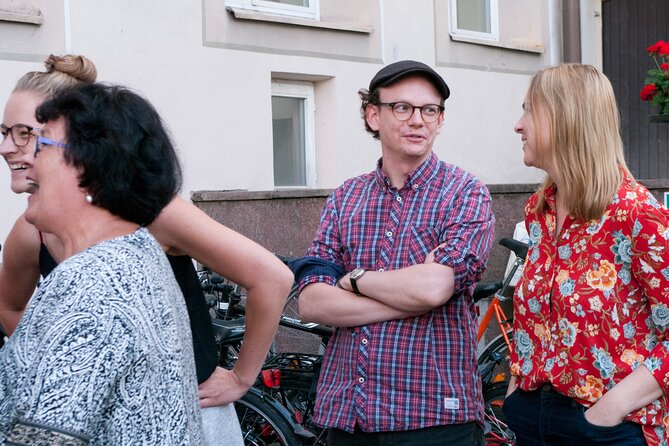
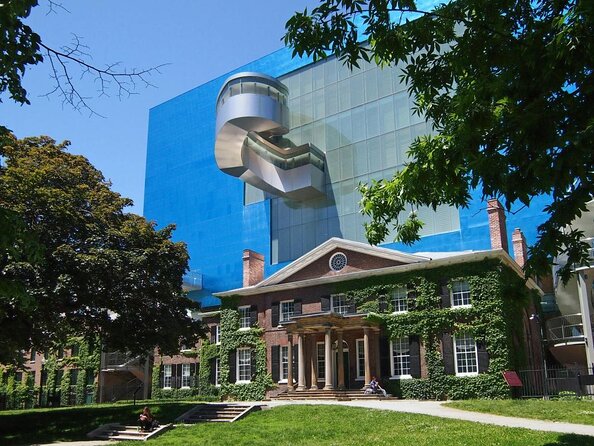
You begin at the Art Gallery of Ontario, at 317 Dundas St W. The first stop sets the tone by looking at the early history of Toronto’s Jewish community through mass immigration in the late 19th to early 20th century.
This is a smart opener. Before you hit the streets of Kensington and nearby areas, you get the big picture for why these communities formed when they did. You’ll also see how the guide threads the immigration story into the later institutions you’ll spot as you walk.
One drawback to plan for: admission isn’t included for the Art Gallery stop. If you want to avoid any extra cost or line pressure, check your timing and be ready to add the gallery visit into your day.
Beverley Street: how immigrants found institutions and a foothold
Next you move to 136 Beverley St for a quick but meaningful look at how the neighborhood’s character formed. Here the focus is on the establishment of Jewish institutions and the process of absorption of immigrants.
Then you hop to 147 Beverley St, where the story turns toward government immigration policies and the Jewish reaction to them. Even though these are short stops, the guide uses them to show cause and effect: policies shaped who came, and community leaders and families responded in real time.
You’ll notice a theme across these points. The walk doesn’t treat immigration as a one-time event. It shows it as something that kept shaping daily life and local organizations.
D’Arcy St school stories: Eitz Chaim and colorful character histories
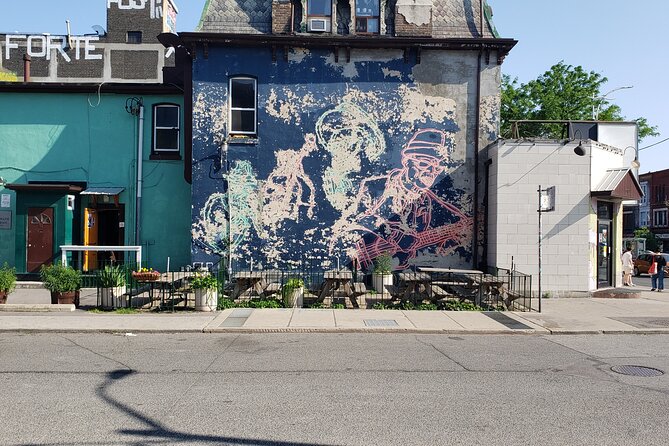
At 70 D’Arcy St, the tour highlights that a place tied to the Eitz Chaim school once stood there. The explanation gives you the human side: the history includes colorful characters and the kind of community energy that tends to happen when people build education where they live.
This stop is brief, but it adds balance. Earlier moments deal with larger forces like policy and migration. This one reminds you that the neighborhood grew through schools, mentors, and local leaders—often with less fanfare than you’d expect from big headlines.
186 Beverley St and the non-Jewish school context next door
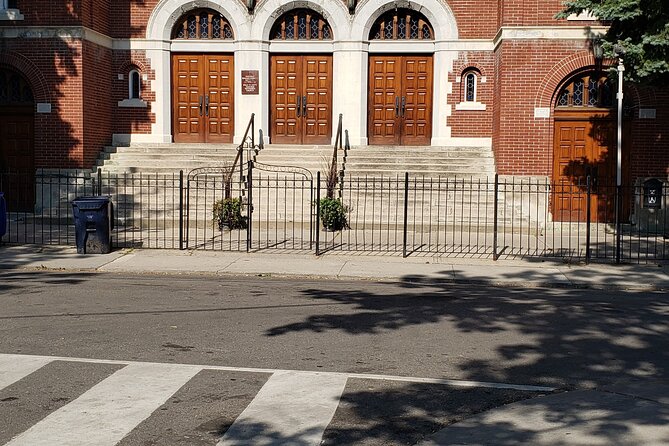
At 186 Beverley St, you pause at what’s called the George Brown House area. The point isn’t only about Jewish history. You get some non-Jewish Canadian context, plus the Jewish history connected to the public school next door.
I like this choice because it prevents the story from feeling sealed off in its own bubble. Neighborhood history rarely stays in one category. It mixes institutions, education systems, and everyday life across different communities.
More walking tours to stroll on foot through Toronto

Henry Street’s transformation: the synagogue now Holy Trinity Russian Orthodox Church
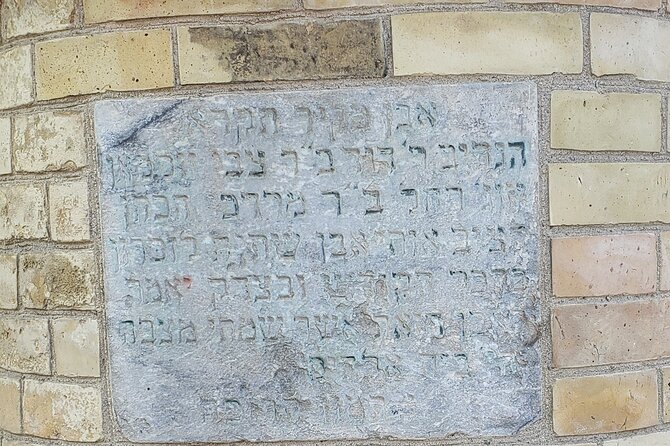
One of the most compelling parts of the route is at 23 Henry St, where you look at Holy Trinity Russian Orthodox Church, formerly the Henry Street synagogue. The guide talks about synagogue architecture and links it to early synagogues and Toronto’s first Jewish architects.
Even if you don’t know architecture terms, you can still follow the logic: buildings weren’t just places of worship. They were public statements—about identity, community permanence, and craft.
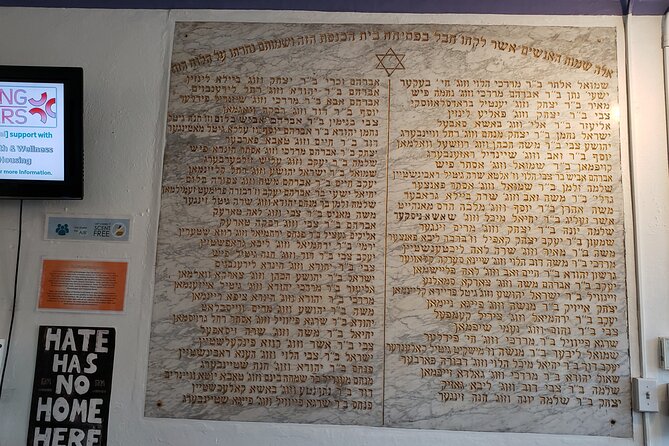
This is also where the tour starts feeling like more than facts. You’ll get story moments that make the buildings feel like characters. One review noted an original wall of names in an old synagogue setting; it’s the kind of detail that can turn a normal street glance into a real pause.
Cecil Street: the institutional hub with politics, schools, and entertainment
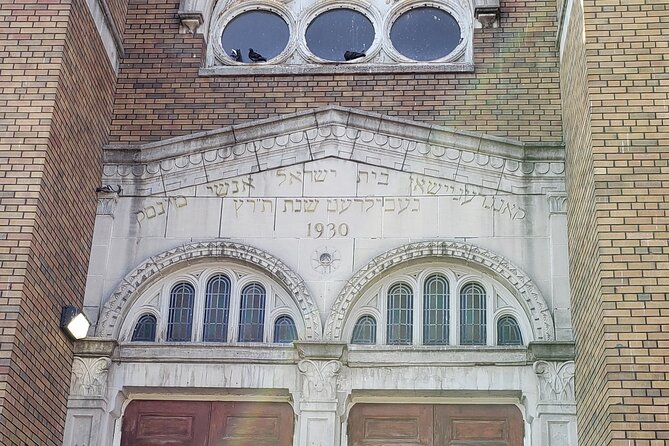
You then head to Cecil Street, which is where the older Jewish community becomes impossible to ignore. The tour sequence builds context as you move from key addresses to the wider institutional stretch.
You start with a mention of the rabbi of the Henry Street Synagogue, then zoom out to introduce Cecil Street as the institutional hub of the older community. As you keep walking, the stops broaden into how organizations, schools, and communal life fit together geographically.
Key moments include 24 Cecil Street, described as a Labour Zionist HQ and school, along with later political history. The guide then covers an overview of Jewish organizations and institutions once housed at addresses along Cecil Street, from 33 to 58 Cecil Street.
There’s also a stop at the Cecil Street Community Centre, explained here through its past as a synagogue and a centre for traditional entertainment. I like how the tour doesn’t only focus on religion. It treats the community as a full social system: politics, learning, gathering, and performance.
Spadina Avenue’s two sides: El Mocambo, Grossman’s, and the market rise
From Cecil Street you head toward Spadina Avenue, with a walking pattern described as northbound and southbound segments. Northbound, you go up toward the El Mocambo, and the guide shares the neighborhood’s less traditional side, including stories about cowboys in the 1930s and 1940s.
On the way back southbound, you hit Grossman’s Tavern, tied to commercial development and the Spadina music scene. This part widens the lens again. It shows you Jewish street life interwoven with broader Toronto culture, not tucked away in one lane.
As you cross west toward Baldwin Street, you get an explanation of how Kensington became a market. Then between Dundas and St. Andrew St, the tour points out the area’s street-level variety: Yiddish theatre, delicatessens, and dairy-related restaurants, plus the history connected to what’s described as the hat trick.
This section is fun because it’s visual. You’re not only listening—you’re watching how a street sells identity through shops, venues, and everyday commerce.
Finishing at 10 St Andrew St: the Minsker Synagogue in Kensington’s miniature
Your last major stop is at 10 St Andrew St, the Minsker Synagogue. The guide frames St. Andrew St as a neighborhood in miniature, and the discussion focuses on the synagogue’s history and the idea that it was the first in the Kensington area.
You’ll also hear about the Labour Lyceum across the street, which helps underline a repeated theme: these weren’t isolated religious buildings. They sat inside a web of social organizations.
The tour then ends at the corner of Kensington Ave and St. Andrew St in the heart of Kensington Market. That finish is practical. You can keep your momentum and grab food, browse shops, or just wander the market streets while the story is still fresh.
What you’ll learn (and what you might miss)
The tour is built around a clear timeline: immigration, institutions, policy pressure, education, synagogue life, and then street culture as Kensington takes shape. The best part is that each segment ties to a physical location, so the history doesn’t float away in your memory.
That said, there’s one likely mismatch to consider. One review comment highlighted that the story stays in the past and may not cover the current community in depth. If your goal is today’s Jewish Toronto—where people go, what organizations are active now, and what community life looks like—this walk may feel more like a focused historical route than a modern snapshot.
Who this private Jewish walking tour is best for
This is ideal if you:
- Like context-first walking tours, where you understand the why before you see the where
- Want a guide who can explain synagogue architecture and institutional history at street level
- Enjoy stories that move from immigration to education to politics, without turning into a long lecture
- Plan to spend time in Kensington Market afterward and want the neighborhood to make sense
It might be less ideal if you want:
- A tour focused mainly on today’s community life and current events
- Large indoor museum time, since this is a true walking route with mostly short stops
Practical tips before you go
Wear comfortable shoes. The tour is short, but the stops add up because you’ll be looking and listening more than you’d expect.
Bring a charged phone for the mobile ticket. And if you plan to pay for the Art Gallery of Ontario stop, set aside time so you don’t feel squeezed.
Finally, if you’re the type who likes to read street plaques slowly, you’ll enjoy this. The guide’s narrative works best when you pause and take in what’s in front of you.
Should you book it?
I think you should book this private Jewish walking tour in Toronto if you want a history-focused walk that’s grounded in buildings, street addresses, and how a community organized itself. The synagogue architecture moments, the way Cecil Street is explained as an institutional hub, and the shift into Spadina Avenue street culture are the kind of combination you don’t get from a generic walking tour.
Skip it if you want a heavy emphasis on current community life, or if paying for the Art Gallery of Ontario admission would feel like too much friction. For first-timers to Jewish Toronto with a love for place-based stories, it’s a solid choice—especially because you’re doing it privately.
FAQ
How long is the private Jewish walking tour in Toronto?
It’s about 2 hours (approx.).
What does it cost?
The price is listed as $41.16 per person.
Is the tour offered in English?
Yes, it’s offered in English.
Where does the tour start and end?
It starts at the Art Gallery of Ontario (317 Dundas St W) and ends in Kensington Market at 57 Kensington Ave, at the corner of Kensington Ave and St. Andrew St.
Is admission included for the Art Gallery of Ontario stop?
No. The Art Gallery of Ontario stop notes that an admission ticket is not included.
What happens if the weather is bad?
The experience requires good weather. If it’s canceled due to poor weather, you’ll be offered a different date or a full refund.
Can I cancel for a refund, and how late can I do it?
You can cancel for a full refund up to 24 hours before the experience’s start time. If you cancel less than 24 hours before, the amount paid isn’t refunded.
More Downtown Toronto Walking Tours
More Tour Reviews to line up around Toronto and Niagara

Not sure yet? Here is more to see and do across Toronto, just reviewed







More Downtown Toronto Walking Tours to size up.
 ★ 5.0Show me the City! A Small Group Walking Tour of TorontoFrom $39621 reviews
 ★ 5.0Downtown Toronto Bike TourFrom $93336 reviews
 ★ 4.5Old Town Toronto Highlights 3 Hour Walking Tour | Gratuity-BasedFrom $5290 reviews
 ★ 4.7Private Walking Tour with a LocalFrom $43150 reviews
 ★ 4.5Old Town Toronto History Walking TourFrom $4122 reviews
 ★ 4.42-Hour Downtown Walking TourFrom $28101 reviews
 ★ 4.8Old Toronto by Beer: A Craft Brew AdventureFrom $7191 reviews
 ★ 4.9Brothels of Old Toronto Walking TourFrom $1971 reviews
This tour also ranks in