
Reviewed · TORONTO BIKE & SEGWAY TOURS
E-bike Toronto’s Dynamic Neighbourhoods
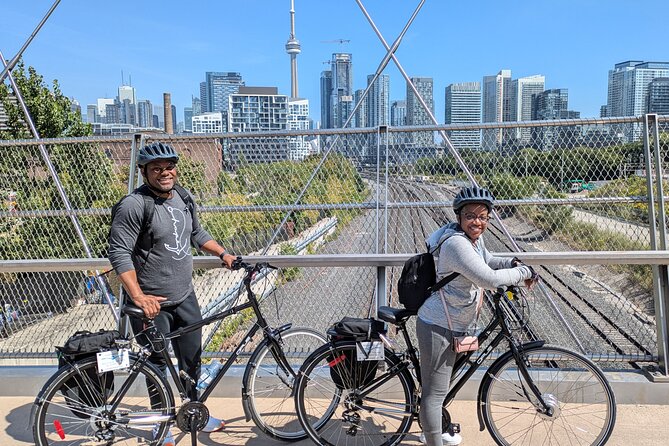
Toronto moves faster on an e-bike. This guided route strings together a bunch of contrasting Toronto neighbourhood chapters—so you get variety without spending the whole day hopping on and off transit. E-bike power also helps you comfortably handle the stops and starts that come with short sightseeing breaks across town in about 3.5 hours.
I especially liked the way the guide gets everyone ready before you hit the roads. One review highlighted Ryan making it easy and enjoyable, and another pointed out a careful comfort check on the bikes before traffic. I also liked the small, practical extras—helmet, bottled water, and a granola bar snack—so you can focus on the ride instead of logistics.
The main thing to consider is the weather. This experience requires good weather, and if it’s the kind of day where conditions aren’t right, the tour can get shifted or refunded instead of running.
In This Review
- Key highlights at a glance
- Toronto by e-bike: what 3.5 hours buys you
- Start at 124 St Patrick St: the ride setup that keeps it fun
- Lower Ossington: from forgotten to globally recognized hotspot
- St. James Town: a world within a block
- Bloor Street Cultural Corridor and Graffiti Alley: two kinds of creativity
- Rosedale: fashionable, quiet, and quietly changing
- Ontario Place & Trillium Park: iconic waterfront with controversy
- CAMH: mental health progress you can actually visit
- Trinity Bellwoods: the city’s evolving green heartbeat
- Price and logistics: the value equation that matters
- Weather and comfort: how to choose the right day
- Who should book this e-bike neighbourhood tour?
- Should you book E-bike Toronto’s Dynamic Neighbourhoods?
- FAQ
- How long is the tour?
- What does it cost?
- Where does the tour start?
- Where does the tour end?
- What’s included in the price?
- What language is the tour offered in?
- How many people are in each group?
- Is there admission to pay at the stops?
- What weather conditions are required?
- What’s the cancellation policy if my plans change?
- FAQ
- How long is the tour?
- What does it cost?
- Where does the tour start?
- Where does the tour end?
- What’s included in the price?
- What language is the tour offered in?
- How many people are in each group?
- Is there admission to pay at the stops?
- What weather conditions are required?
- What’s the cancellation policy if my plans change?
Key highlights at a glance
- Small group size (up to 8): easier conversation, less waiting, and a calmer pace for road riding
- Real neighborhood variety: from Lower Ossington’s transformation to St. James Town’s dense diversity
- Short, focused stops: you get time to look around without turning it into a long walking tour
- Art and street culture mix: Graffiti Alley and the Bloor Street Cultural Corridor both show different creative sides
- Mental health stops with local context: CAMH is included, with a spotlight on Toronto’s progressive approach
- Safety-first guidance: you’ll get coached before you ride on the roads
Toronto by e-bike: what 3.5 hours buys you
This tour is priced at $109.92 per person and runs about 3 hours 30 minutes. That time window is long enough to feel like you did something meaningful, but short enough that you’re not stuck in “tour mode” all day. For me, the best part of e-biking in a city like Toronto is the way it lets you cover ground while still stopping to actually look at places—rather than just getting transported past them.
You’ll also get a very “Toronto” mix of stops. The route isn’t only about the famous postcard spots. It touches neighbourhood change, cultural life, and even a mental health institution, with quick stops designed to give you a sense of how the city thinks and lives.
And the inclusions matter more than they sound. Helmet, bottled water, and a snack mean the ride feels like a planned outing, not a DIY scavenger hunt. The tour also uses a mobile ticket, and it’s offered in English.
Roll on with more Toronto bike and Segway tours around Toronto


Start at 124 St Patrick St: the ride setup that keeps it fun
Your tour starts at 124 St Patrick St, Toronto and ends back at the same meeting point. That simple loop is useful. It reduces stress—no need to figure out where to go next when the ride ends.
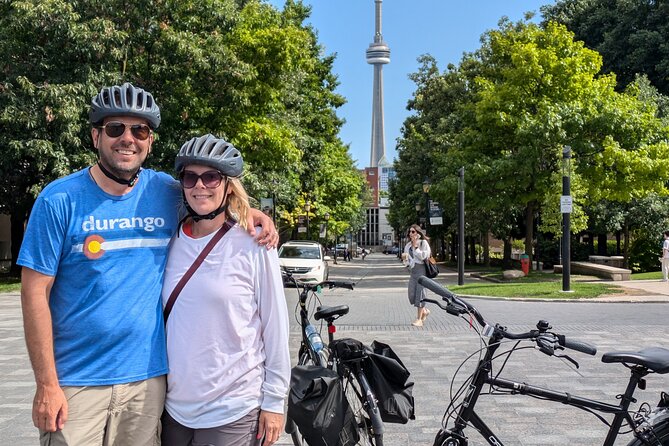
One review mentioned the guide taking time to make sure everyone felt comfortable before heading out on the roads. That’s a big deal. E-bikes can feel intuitive, but road riding still takes a bit of muscle memory: braking smoothly, holding a steady line, and knowing when to stop and regroup. If the guide watches you right away, you start the tour feeling confident instead of tense.
You’ll ride with a maximum of 8 travelers, which keeps the group manageable. Smaller groups usually mean fewer bottlenecks at intersections and less time waiting while someone re-orients or asks a question.
Lower Ossington: from forgotten to globally recognized hotspot
The first stop is Lower Ossington, where you’re shown the transformation from a mostly-forgotten area into a globally recognized hotspot. In other words: you get to see change in action, not just the polished result.
In a city tour like this, that matters because it trains your eyes. Instead of treating neighbourhoods like static “must-sees,” you start noticing how places shift—what’s new, what’s adapting, and what kind of energy draws people in. A 20-minute stop is brief, but it’s long enough to walk a few blocks at an easy pace, look at the storefront vibe, and get the sense of direction the neighbourhood is heading.
Possible drawback: transformation stories are easiest when you slow down and look around. If you rush your own wandering at the stop, you might miss details that help explain why the area feels different now.
St. James Town: a world within a block
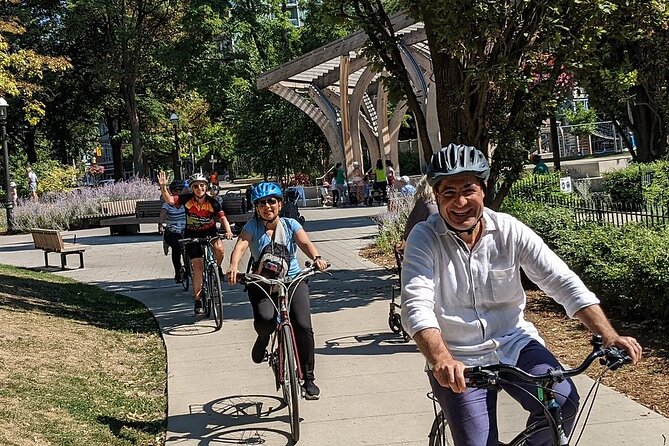
Next up is St. James Town, described as a world within a block. The highlight here is the neighbourhood’s dense population and deep diversity, plus how the community approaches challenges like social services, food, and healthcare.
I like including a place like this because it changes the tone of the day. Lower Ossington is about shift and momentum. St. James Town is about living at high density and building solutions right where people are. Even with a short stop (about 20 minutes), you’ll leave with a clearer picture of Toronto beyond the usual skyline scenes.
One thing to keep in mind: this kind of neighbourhood doesn’t feel like a theme park. You’ll see real streets and real communities. If you’re hoping for only sightseeing backdrops, you might feel the moment is quieter than expected. But if you want to understand the city, this stop is a strong choice.
Bloor Street Cultural Corridor and Graffiti Alley: two kinds of creativity
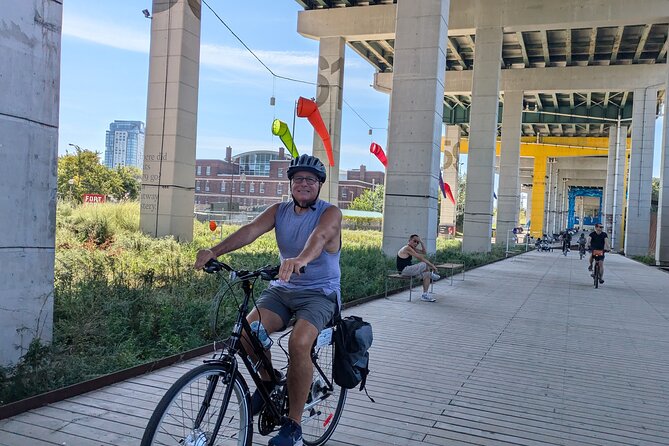
After the more residential energy, you head to the Bloor Street Cultural Corridor, Toronto’s arts-and-culture district. This area is known for its mix of museums, cultural centres, performance spaces, and restaurants. The stop gives you a taste of how many ways a city can produce culture—not just through one museum or one theatre, but through a whole cluster of institutions and everyday hangouts.
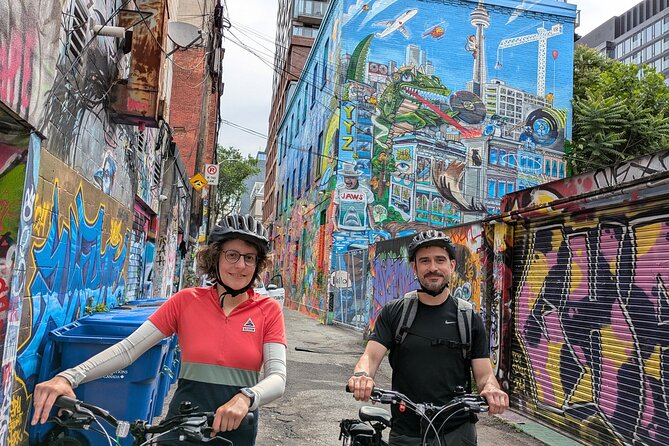
Then you go to Graffiti Alley, with its current cultural mood captured through street art. This one is about immediacy. It’s art you stumble into, not art you schedule. The stop is about 15 minutes, which is enough time to take in the style and get a feel for the themes showing up in the street art scene.
What I like about putting these two stops back-to-back is the contrast. Bloor shows culture through formal spaces and organized programs. Graffiti Alley shows culture in motion—what artists are reacting to right now. If you pay attention, you’ll start seeing how Toronto expresses itself in both directions.
Small consideration: because each stop is short, you’ll want to spend your attention efficiently. If you’re the type who likes to read every sign and caption, you may feel a bit rushed. If you’re okay with “get the vibe first,” you’ll have a great time.
More bike tours to spin through Toronto


Rosedale: fashionable, quiet, and quietly changing
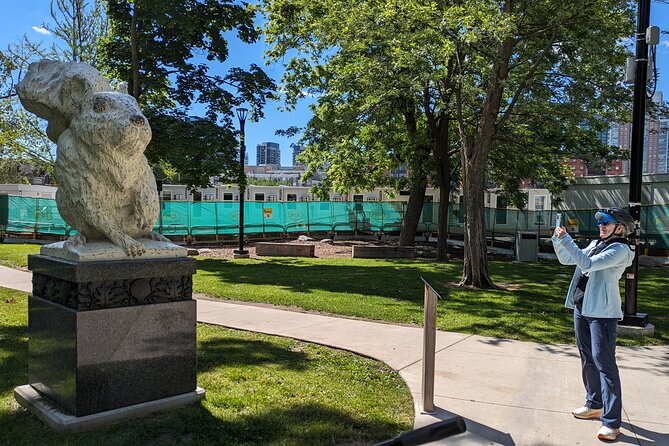
Rosedale is one of the tour’s mood shifts. It’s described as Toronto’s most fashionable address and also a quiet neighbourhood with picturesque parkland. At about 20 minutes, you’re not expected to study it like a long-form walking tour. Instead, you’re meant to feel the difference in atmosphere.
The interesting part is the wording about change: it’s undergoing subtle changes, revealing that there is more than meets the eye. That’s exactly what I’d watch for here. Even in calmer, more upscale areas, cities keep evolving. Small shifts—new patterns of use, small renovations, changing edges—can hint at what’s coming next.
Possible drawback: Rosedale is quieter than some of the earlier stops. If you’re hoping for nonstop action, this section might feel slower. But it’s also a nice breath in the middle of a day packed with different parts of Toronto.
Ontario Place & Trillium Park: iconic waterfront with controversy
Next comes Ontario Place & Trillium Park, an iconic waterfront venue currently in the midst of significant transformation and controversy. You’re getting a chance to see a Toronto landmark during a period of change, which adds an extra layer to the stop.
I find waterfront areas fascinating because they often reveal how a city balances public space, development, and politics. Since the stop is about 20 minutes, you’ll likely focus on the atmosphere—what the space feels like now—and then talk through what transformation can mean for how people use it.
Practical note: waterfront wind can make a short stop feel colder than you expect. Dress for the kind of day Toronto is giving you, not the weather you checked at the start of the ride.
CAMH: mental health progress you can actually visit
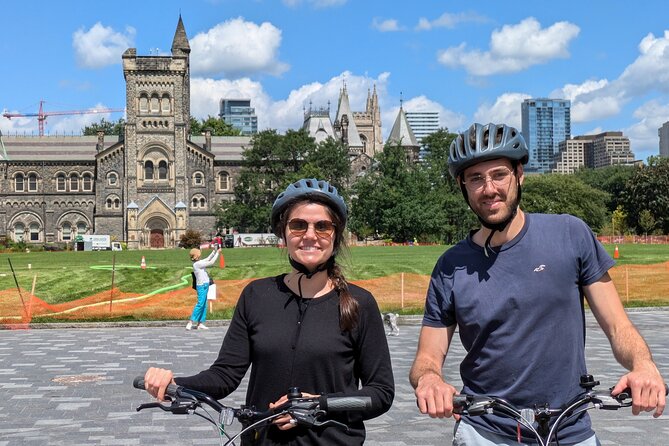
At CAMH (about 15 minutes), the tour spotlights Toronto’s progressive attitude toward mental health and the groundbreaking advancements made by CAMH. This stop is valuable because it shifts the tour from “where to go for fun” to “how this city thinks about care.”
Even if you don’t leave with a deep course of study, you’ll leave with a reminder that mental health institutions and public health conversations are part of city identity. A short stop like this works best when you approach it with open curiosity rather than expecting a big monument or a photo-friendly landmark.
Trinity Bellwoods: the city’s evolving green heartbeat
The final neighbourhood stop is Trinity Bellwoods (about 10 minutes). It’s described as a significant green space and cultural heartbeat that continually evolves with the city’s changing needs.
Ten minutes is tight, but short doesn’t have to mean shallow. If the group slows down at the right moment, you can get a sense of how Toronto uses parks as social space—somewhere people gather, people linger, and the city’s character shows up in everyday routines.
I also like that the tour ends with something green. It’s a psychological reset after streets and built spaces. You finish the day feeling like you’ve seen a human-scaled side of Toronto, not just its architecture.
Price and logistics: the value equation that matters
Let’s talk money and time. At $109.92 per person for roughly 3.5 hours, you’re paying for three things:
- Guided direction across multiple neighbourhoods
- E-bike + helmet so you’re actually doing a moving tour, not a walking tour
- Small comforts (water and a granola bar snack) that keep energy up
That price can feel steep if you’re only thinking in terms of attractions. But if you’re valuing convenience and time—seeing a wider slice of the city without organizing bike rental, route planning, and meeting points—it starts to make sense. Also, the average booking is about 20 days in advance, which often signals that demand stays steady.
Group size stays small (up to 8), which improves the experience. With a bigger group, road riding becomes harder and stop times get squeezed. Here, the setup is built for a smoother pace.
One more real-world detail from reviews: the bikes and gear are great, but at least one group experienced maintenance during the tour, including changing a battery now and then. The good news is that the guide handled issues efficiently. That tells me the operation expects the occasional problem and has a plan to keep things moving.
Weather and comfort: how to choose the right day
This experience requires good weather. That’s not a minor note. It directly affects whether your tour runs on your chosen date and whether you’ll have to pick another day or get a refund if it’s canceled due to poor conditions.
Plan around that. If Toronto is giving you steady rain or ugly wind, you’re better off choosing another date than hoping for the best.
Also, since you’re riding, consider layers and gloves if the day turns chilly. Short stops are forgiving, but being on the bike for the full ride length means you’ll feel the outdoor temperature more than if you were just walking from indoors to indoors.
Who should book this e-bike neighbourhood tour?
This is a great fit if you:
- want to see more of Toronto than the typical downtown sightseeing circuit
- enjoy neighbourhood character—change, density, art, and institutions—more than only landmarks
- like a guided structure with enough freedom to look around briefly at each stop
- prefer a smaller group and a safety-first start
It’s also a strong choice if you’re comfortable riding and want an easier effort level than a long all-bike-day solo route.
You might skip it if you:
- hate road riding or feel uneasy on bikes in traffic (ask questions beforehand so you know how they handle comfort and pacing)
- want long stops at each site
- are traveling on days when Toronto weather is likely to be rough, since the tour depends on good conditions
Should you book E-bike Toronto’s Dynamic Neighbourhoods?
Yes, if your goal is to get a smart, varied snapshot of Toronto in a short window and you like the idea of learning the city through neighbourhood contrast. This tour’s standout strength is the guide experience—especially the pre-ride comfort check—and the way the route mixes art, culture, quiet residential feel, and even mental health context in one ride.
At $109.92 you’re paying for time-saving city coverage plus real local guidance, not just a few photo stops. If the weather looks good and you’re up for a structured e-bike day with brief but meaningful neighbourhood walks, this one is worth booking.
FAQ
How long is the tour?
The tour runs for about 3 hours 30 minutes.
What does it cost?
It costs $109.92 per person.
Where does the tour start?
The meeting point is 124 St Patrick St, Toronto, ON M5T 2X8.
Where does the tour end?
The tour ends back at the same meeting point.
What’s included in the price?
You get use of the bicycle, a helmet, bottled water, and a granola bar snack.
What language is the tour offered in?
The tour is offered in English.
How many people are in each group?
The tour has a maximum of 8 travelers.
Is there admission to pay at the stops?
The stop entries listed for the route show free admission tickets.
What weather conditions are required?
The experience requires good weather. If it’s canceled due to poor weather, you’ll be offered a different date or a full refund.
What’s the cancellation policy if my plans change?
You can cancel for a full refund up to 24 hours in advance of the start time.
FAQ
How long is the tour?
The tour runs for about 3 hours 30 minutes.
What does it cost?
It costs $109.92 per person.
Where does the tour start?
The meeting point is 124 St Patrick St, Toronto, ON M5T 2X8.
Where does the tour end?
The tour ends back at the same meeting point.
What’s included in the price?
You get use of the bicycle, a helmet, bottled water, and a granola bar snack.
What language is the tour offered in?
The tour is offered in English.
How many people are in each group?
The tour has a maximum of 8 travelers.
Is there admission to pay at the stops?
The stop entries listed for the route show free admission tickets.
What weather conditions are required?
The experience requires good weather. If it’s canceled due to poor weather, you’ll be offered a different date or a full refund.
What’s the cancellation policy if my plans change?
You can cancel for a full refund up to 24 hours in advance of the start time.
More Toronto Bike and Segway Tours
More Tour Reviews to line up around Toronto and Niagara



Not sure yet? Here is more to see and do across Toronto, just reviewed












More Toronto Bike & Segway Tours to size up.
 ★ 4.9Heart of Downtown 3.5-Hour Bike TourFrom $90419 reviews
 ★ 5.0Downtown Toronto Bike TourFrom $93336 reviews
 ★ 5.030-Minute Distillery District Segway TourFrom $36214 reviews
 ★ 4.9Toronto Waterfront and Islands Guided Bicycle TourFrom $8080 reviews
 ★ 4.8Short Distillery District Segway TourFrom $3555 reviews
 ★ 5.0Guided Bicycle Tour – Toronto Waterfront, Island and DistilleryFrom $8231 reviews
 ★ 4.6E-bike through Toronto’s Dynamic NeighbourhoodsFrom $10712 reviews
This tour also ranks in