
Reviewed · TORONTO BIKE & SEGWAY TOURS
Toronto: Heart of Downtown 3.5-Hour Bike Tour
Downtown Toronto rolls by in 3.5 hours. This bike tour is interesting because it mixes major landmarks with local neighborhoods, while keeping you on bike lanes and quiet streets so you can actually enjoy the ride. I like the easy pace with lots of stops, and I also like how the guides turn the skyline into stories you can picture later. The one thing to consider: even at an easy pace, it’s still city cycling, so plan for weather and wear real cycling shoes.
You’ll cover a lot of ground without the stress of driving or the wrist-twist of a hop-on bus route. The roster of guides seems to stay strong—people mention Carlos and Oscar for smooth route leadership, and Ryan and Consuela for keeping groups together and comfortable (even if you’re a bit nervous). You’ll also get practical extras like water, snacks, and helmets, plus frequent photo stops.
You start at a parking garage just south of Dundas, then head straight into Toronto’s core: CN Tower, Union Station, Chinatown, Kensington Market, Eaton’s Centre, Queen Street West, the lakefront, and a run of cultural and civic highlights that most visitors only see from sidewalks.
In This Review
- Key points I’d plan around
- Why Toronto Looks Different When You Pedal
- Price That Makes Sense for 3.5 Hours of Guided City Time
- Starting at Dundas: How the Tour Begins
- The Big Start: CN Tower, Royal York Hotel, and Union Station
- Chinatown to Kensington and Eaton’s Centre: Real Neighborhood Pulse
- Queen Street West to the Lake: Views You Can’t Replicate on Foot
- Culture and Sports Hotspots: Art Gallery, Hockey Hall of Fame, and More
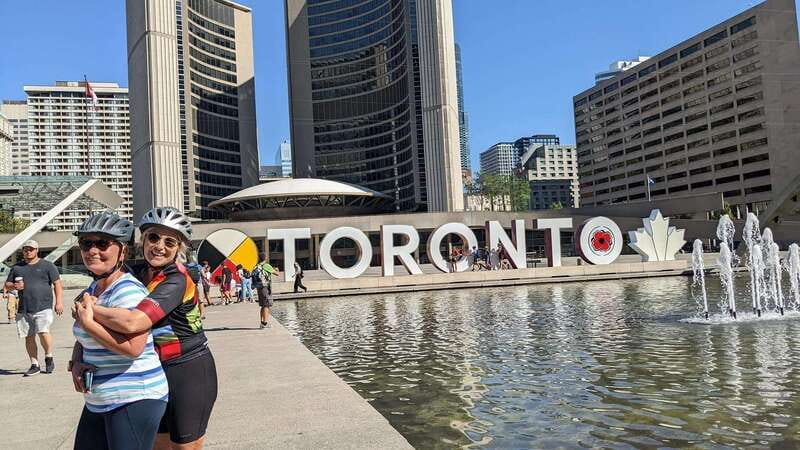
- Rogers Centre to City Hall: Architecture and Civic Power at Bike Speed
- St. Lawrence Market, Flatiron Building, St. James Square: The Downtown Core That Feels Old
- Sherbourne Common to Sugar Beach: Waterfront Calm and a Good Finish
- What Makes the Guides the Real Difference
- Who This Tour Fits Best (and Who Should Think Twice)
- Should You Book This Toronto Bike Tour?
- FAQ
- What is the duration of the Toronto Bike Tour
- How much does the tour cost
- What is included in the price
- Is the tour safe and beginner-friendly
- Do I need to bring a helmet
- Where do I meet the group
- What languages are the tours offered in
- Should I bring anything for the ride
- Is there storage for my items
- Can kids join the tour
- Is there free cancellation
Key points I’d plan around
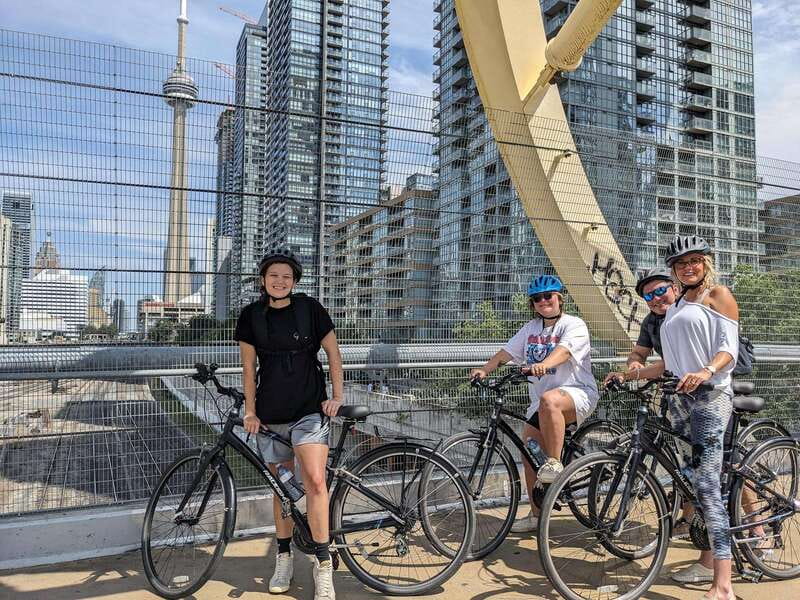
- 3.5 hours / street-level coverage of downtown highlights, stitched together in an easy ride
- Safety-first route choices using bike lanes, park paths, and quieter streets with a briefing before you roll
- Stops built for photos and stories, not nonstop pedaling
- Neighborhood variety from Chinatown to Kensington Market and back to the core museums and civic sites
- Comfort package included with a helmet, water, and snacks (plus locker space for items)
- Group vibe where guides like Carlos, Oscar, and Ryan are repeatedly praised for keeping everyone together
Why Toronto Looks Different When You Pedal
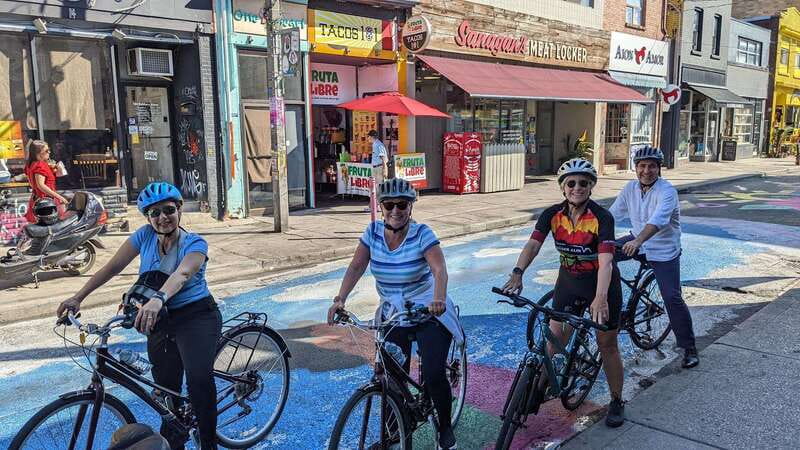
Toronto’s downtown can feel spread out if you’re walking block by block. On a bike, the city changes rhythm: you glide past big landmarks, then hop into smaller streets and paths that buses can’t reach the same way. That’s where the tour earns its value. You get the skyline, yes, but you also get the in-between stuff that makes Toronto feel like a real place, not a postcard.
I also like that the pace is designed to work for different riders. The tour is positioned as beginner-friendly while still fun for more confident cyclists. You’ll make plenty of stops to absorb what you’re seeing—then you roll on before you lose momentum. In many groups, guides keep the group tight and do regular comfort and safety checks, which matters when you’re sharing a road network.
One practical note: the route covers a lot of downtown, so you’ll want to treat this like an activity, not a casual stroll. Bring sunglasses and sunscreen, and keep your outfit simple. The tour guidance specifically says to avoid dress shoes or fancy clothing, because you’re on a bike for a few hours.
Roll on with more Toronto bike and Segway tours around Toronto



Price That Makes Sense for 3.5 Hours of Guided City Time
At $90 per person for 210 minutes, you’re paying for two things: time with local guides and a guided way to move efficiently through downtown. The tour includes a bicycle and helmet, plus water and snacks, which helps you avoid the usual small expense and planning that adds up on your own.
Many cycling tours cover a similar route length, but what you’re paying for here is the mix of big-name sights and neighborhood detours—plus the guide’s commentary that turns each stop into something you can remember. People also report that the ride is relaxed, often around 15 km spread over the tour with lots of breaks to listen and take photos. That’s a solid chunk of city at street level for one afternoon.
If you’re visiting for a short time, this is also a “buy once, benefit later” kind of tour. When you finish, you’ll have a mental map of where you want to return—markets, museums, or specific neighborhoods.
Starting at Dundas: How the Tour Begins
Your meeting point is in a parking garage about 50 m south of Dundas on the west side of the street. You enter the garage and follow the yellow signs down to level P2, section H. If you’re unsure, the operator asks you to call the local partner for directions.
This is one of those details that can make or break your start. If you’re arriving by transit, give yourself extra time to locate the garage entrance and the correct level. The good news is once you’re there, the experience is set up for you: bikes and helmets are handled, and the guide provides safety instructions before you roll.
You’ll also have locker space available to leave items. That’s helpful if you’re carrying a day bag, camera gear, or a light layer for the ride.
The Big Start: CN Tower, Royal York Hotel, and Union Station
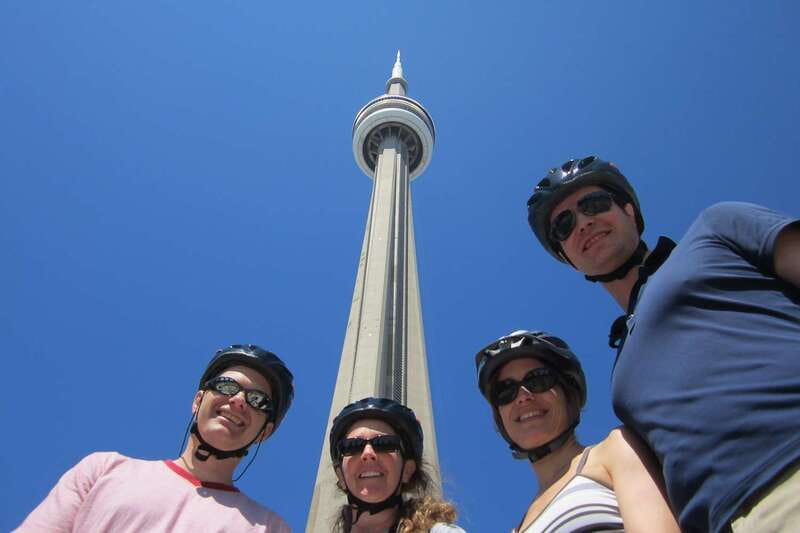
The tour kicks off downtown with a strong visual anchor. The CN Tower is more than a photo stop here—it’s a scale reference. When you cycle past it and then shift toward other landmarks, you start to understand how Toronto’s downtown blocks and transit corridors actually line up.
From there, you’ll move through the area around the Royal York Hotel and Union Station. These stops work well on a bike because you can appreciate the architecture from the street rather than just seeing a facade while walking past. Union Station is a huge transit hub, and cycling nearby helps you see the flow of routes and pedestrian space in a way that’s harder to grasp from a seated bus window.
A practical benefit: these early stops set your comfort level. The route is designed with safety in mind—quiet streets and bike lanes show up right away, and you get guidance before the main sightseeing legs. If you’re nervous about cycling in a city, this kind of start matters.
Chinatown to Kensington and Eaton’s Centre: Real Neighborhood Pulse
After the big civic and transit anchors, the tour shifts into neighborhoods where Toronto feels personal. Chinatown gives you a sense of the city’s cultural layers, and you’re not only looking—you’re moving at a pace that lets you notice details as you pass.
Next comes Kensington Market. This part of Toronto is famous for its mix of small streets and lively atmosphere, and it’s a great biking zone because you can weave along routes that are awkward by car. You’ll also hit Eaton’s Centre and Dundas Square, which adds contrast: the city’s shopping and media-bright energy alongside markets and older street patterns.
Why I like this segment: it’s a quick education in how Toronto shifts every few blocks. You’ll understand where the old and new overlap, and you’ll spot places you’ll want to revisit on foot later—especially for food, coffee, and browsing. One rider suggestion that makes sense: market stops can be short if you want a longer snack run. So if you care about lingering, plan to come back after your ride.
More bike tours to spin through Toronto



Queen Street West to the Lake: Views You Can’t Replicate on Foot
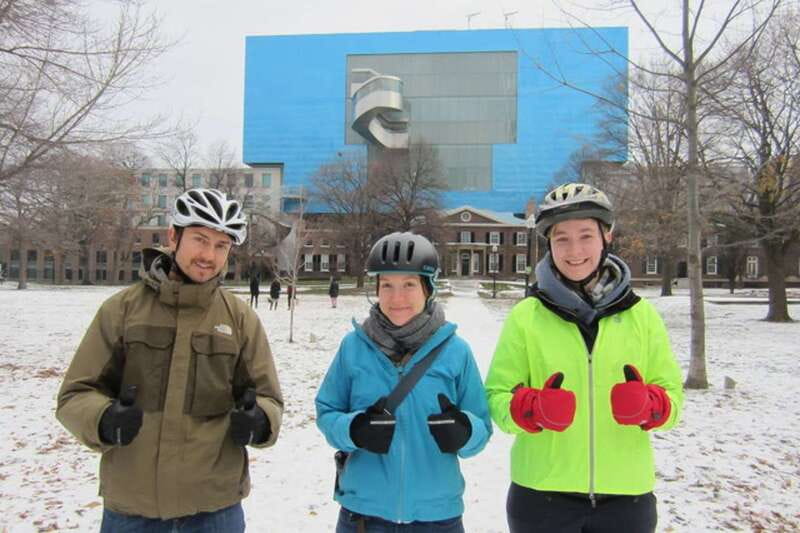
Queen Street West is a classic Toronto corridor, and biking gives you better “feel” than walking. On this tour, it also acts like a connector—moving you between shopping, creativity, and civic spaces while keeping the ride moving at an easy pace.
Then you swing toward Harbourfront and Lake. This is where the scenery changes from street grids to waterfront mood. You get a break in tempo. Even if you’re not the type who stops for long views, the lakefront portion helps the whole tour feel balanced: landmarks, neighborhoods, then air and water.
If you want a practical takeaway, it’s this: cycling here helps you map the waterfront access points. Later, when you want to spend an hour wandering near the harbor, you’ll know where to head and how to do it efficiently.
Culture and Sports Hotspots: Art Gallery, Hockey Hall of Fame, and More
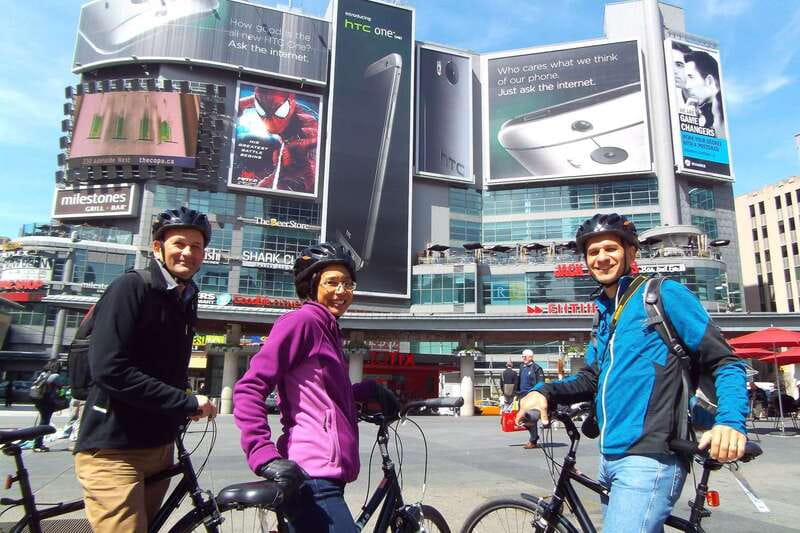
The tour weaves through a string of cultural and sports landmarks that most visitors squeeze into separate days. On wheels, they line up neatly.
You’ll pass by the Art Gallery of Ontario, and the bonus is you experience the area around it at street level—how it connects to nearby streets and public spaces. Nearby, the College of Art and Design stop adds another layer of Toronto’s creative identity, and it’s a good reminder that downtown isn’t only offices and attractions.
Then the tour goes into sports-fan territory with Hockey Hall of Fame, plus nearby stops like Massey Hall. Rogers Centre follows, and by this point you’ve seen enough downtown landmarks to start noticing how Toronto organizes its big venues around transit and pedestrian flow.
What I like about stacking these stops in one ride is the way it sets context. You don’t just see the building—you see how the city clusters its major “things to do.” It can make your planning for later days easier, because you’ll know what’s near what.
Rogers Centre to City Hall: Architecture and Civic Power at Bike Speed
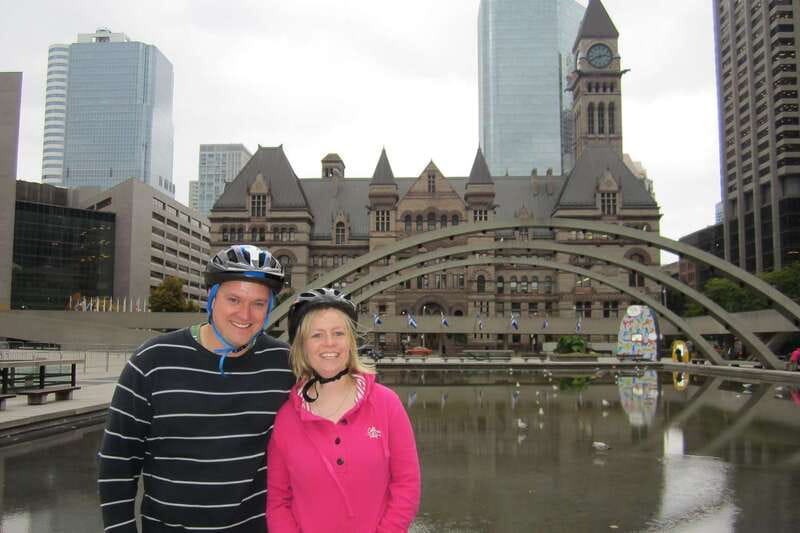
Next up is a run of major downtown anchors: Round House Park and City Hall. Even if you’re not an architecture obsessive, cycling past civic spaces is the fast way to understand how they relate to the street grid and the surrounding neighborhoods.
This is also where you can appreciate the tour’s movement style. People praise the majority of the ride as happening on dedicated cycle paths, and that translates to less stress for you. Instead of white-knuckling your way through the loudest roads, you can focus on the sights and the guide’s commentary.
If you’re coming in for only a day or two, this is a smart segment to experience early. It gives you a sense of where the civic core is, where parks and trails connect, and how to navigate without feeling lost.
St. Lawrence Market, Flatiron Building, St. James Square: The Downtown Core That Feels Old
Now you enter the part of Toronto many visitors immediately want to return to: the area around St. Lawrence Market. This stop gives you energy. It’s a place with real atmosphere, and cycling keeps you close enough to the street action to feel it without getting bogged down trying to find entrances.
Next you’ll see the Flatiron building and St. James Cathedral and Square. These are the kinds of landmarks that are easy to miss if you’re only walking a straight line. On a bike, you approach from the street angle and get a better view of how the buildings relate to the surrounding blocks.
Why it’s a good move on this tour: it balances “must-see” with “specific Toronto.” You can photograph the cathedral. You can also stand in the Square and see the downtown’s social center. Then you move on before the area gets too crowded—another reason cycling works.
Sherbourne Common to Sugar Beach: Waterfront Calm and a Good Finish
The last leg turns toward the water again, but in a calmer, more scenic way. You’ll pass by Sherbourne Common, then Corus Quay, and finally end with Sugar Beach.
I like finishing a city tour with water because it softens the whole experience. The earlier parts of downtown can feel tightly packed. By the time you reach the waterfront, you’ve built up context, and the views land differently—you’re not just seeing a spot, you’re recognizing the geography of the city.
Entertainment District also appears in the route, which helps close the loop. You finish with a sense of where nightlife and major shows happen, even if you’re not planning to go out that night. It’s one of those practical “now I know where I am” feelings.
What Makes the Guides the Real Difference
The stops and sights are great, but the reviews you’d hope for come back to the same themes: safety, pacing, and storytelling that doesn’t feel like a lecture.
People mention guides such as Carlos and Oscar for navigating smoothly and sharing plenty of facts, and Ryan is repeatedly praised for being safety-conscious and funny. Others, like Sydney and Consuela, are noted for checking how comfortable everyone feels—especially helpful if you’re a nervous rider.
A few guides also take group photos at locations, which is a small thing that can save you time later. If you’re traveling solo or with friends, that’s genuinely convenient.
Who This Tour Fits Best (and Who Should Think Twice)
This is a strong fit if you:
- Want a short introduction to downtown Toronto with a real sense of neighborhoods
- Enjoy cycling and want an activity that’s also city orientation
- Like museums, sports landmarks, markets, and waterfront views in one afternoon
- Prefer a guided route on bike lanes and quieter streets
It’s not ideal if you:
- Really dislike riding bikes in cities at all
- Don’t want to dress for changing weather
- Prefer to spend long stretches in one place rather than moving with a set route
A good strategy: do this early in your trip. You’ll come away with a mental map and some clear “return later” targets.
Should You Book This Toronto Bike Tour?
Yes—if you want a fast, fun way to see downtown Toronto without dealing with parking, traffic, or the limitations of a bus route. The value is strong for the included bike, helmet, water, snacks, and the guided pacing that makes a busy city feel manageable.
Book it when you can ride comfortably for 3.5 hours and you’re okay with short-to-moderate stops along the way. If you’re the type who likes lingering at markets or taking a slow museum day, treat the tour as orientation, then plan a follow-up walk or repeat visit to your top one or two stops.
FAQ
What is the duration of the Toronto Bike Tour
The tour runs for 210 minutes, which is about 3.5 hours.
How much does the tour cost
The price is $90 per person.
What is included in the price
You get a bicycle and helmet, plus water, snacks, and one or more tour guides.
Is the tour safe and beginner-friendly
It’s designed for beginners and advanced riders with an easy pace, and it uses quiet streets, park paths, and bike lanes. Helmets are mandatory and the instructor provides safety instructions before each tour.
Do I need to bring a helmet
No. Helmets are provided, and you must wear one during the tour.
Where do I meet the group
Meet at the parking garage at the meeting point address, about 50 m south of Dundas on the west side of the street. Enter the garage, follow the yellow signs down to P2, section H.
What languages are the tours offered in
The live tour guide is available in Spanish, English, and French.
Should I bring anything for the ride
Dress for the weather and the bike ride, avoid dress shoes or fancy clothing, and bring sunglasses, sun block, and a camera. There’s also a water bottle holder on each bike.
Is there storage for my items
Yes. Locker space is available for you to leave items.
Can kids join the tour
Children are welcome when accompanied by a parent or guardian.
Is there free cancellation
Yes. You can cancel up to 24 hours in advance for a full refund.
More Toronto Bike and Segway Tours
More Tour Reviews to line up around Toronto and Niagara



Not sure yet? Here is more to see and do across Toronto, just reviewed












More Toronto Bike & Segway Tours to size up.
 ★ 5.0Downtown Toronto Bike TourFrom $93336 reviews
 ★ 5.030-Minute Distillery District Segway TourFrom $36214 reviews
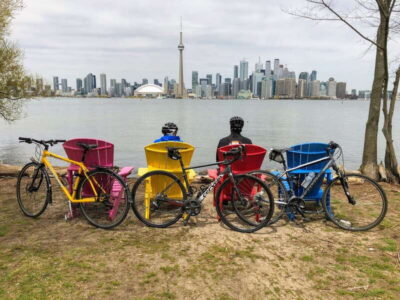 ★ 4.9Toronto Waterfront and Islands Guided Bicycle TourFrom $8080 reviews
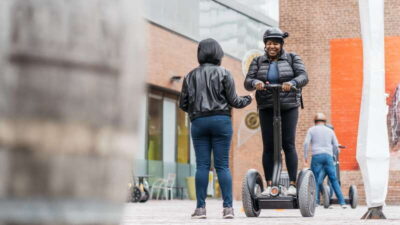 ★ 4.8Short Distillery District Segway TourFrom $3555 reviews
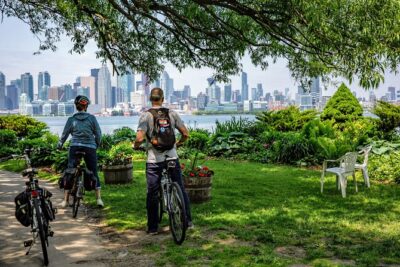 ★ 5.0Guided Bicycle Tour – Toronto Waterfront, Island and DistilleryFrom $8231 reviews
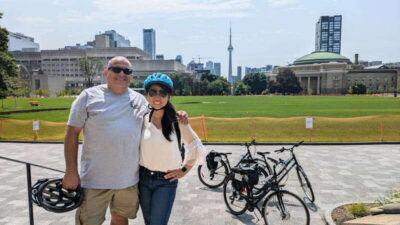 ★ 4.6E-bike through Toronto’s Dynamic NeighbourhoodsFrom $10712 reviews
 ★ 5.0E-bike Toronto’s Dynamic NeighbourhoodsFrom $1099 reviews
This tour also ranks in