
Reviewed · TORONTO BIKE & SEGWAY TOURS
E-bike through Toronto’s Dynamic Neighbourhoods
One great city ride beats 10 bus stops for perspective. This guided e-bike tour helps you cover real neighbourhood range, while still letting you look closely at street life, parks, and the places locals actually spend time. I like the mix of well-known areas with the less-obvious stops that explain how Toronto changes, not just how it looks in photos. The ride is also made easy for first-timers thanks to clear guidance and bikes that do the heavy work.
My other favorite part is the small group feel (maximum 8), which keeps the pace human and the questions flowing. You’re not stuck watching a guide disappear into the crowd. One drawback: if your visit is tightly scheduled, keep a backup plan in mind—small operators can have last-minute cancellations due to staffing or scheduling issues.
In This Review
- Key points at a glance
- The core idea: e-bikes make Toronto feel walkable
- Meeting the tour: where to park your plans at 124 St Patrick Street
- The ride style: fast enough for progress, slow enough for questions
- Stops that actually explain the city (not just label it)
- Lower Ossington: the street that went from overlooked to famous
- St. James Town: diversity and practical innovation side by side
- Trinity Bellwoods: where city life gets quieter
- Bloor Street Cultural Corridor: arts, museums, and food as identity
- Graffiti Alley: the city’s changing voice on plain sight
- CAMH: mental health progress you can point to
- Ontario Place and Trillium Park: waterfront energy during a big change
- Rosedale: pretty streets with quieter stories underneath
- Why the timing and pacing make sense
- Price and value: $107 for a lot of city learning time
- The best fit: who should book this e-bike tour
- One thing to plan around: last-minute changes can happen
- Should you book it?
- FAQ
- How long is the Toronto dynamic neighbourhoods e-bike tour?
- What is the group size?
- What’s included in the price?
- What should I bring or wear?
- Do I need to know how to ride a bike?
- Where do we meet?
- Is the guide in English?
Key points at a glance
- Electric assist means you see more with less effort, even when the route includes hills and longer distances
- Neighbourhood-to-neighbourhood routing helps you understand Toronto as a set of communities, not a single skyline
- Stop-by-stop focus gives context at each area, from arts and culture to mental health and the waterfront
- Max 8 people keeps the tour interactive and lets the guide adapt to the group’s comfort level
- Easier sightseeing: no traffic jams, just you, the bike, and a steady flow through the city
The core idea: e-bikes make Toronto feel walkable
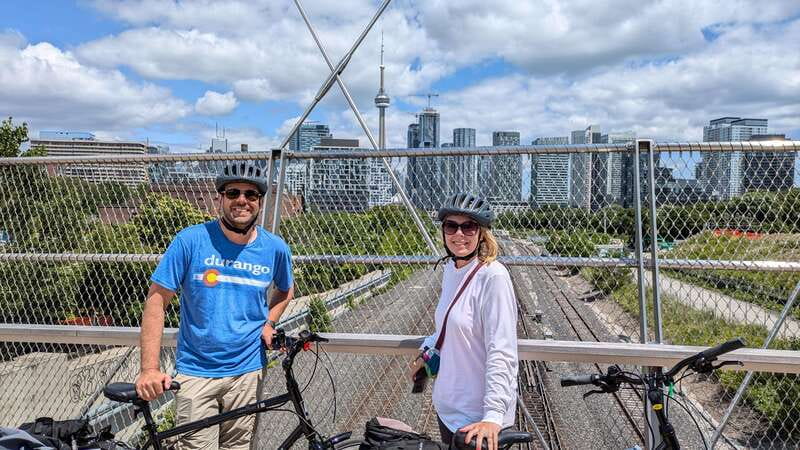
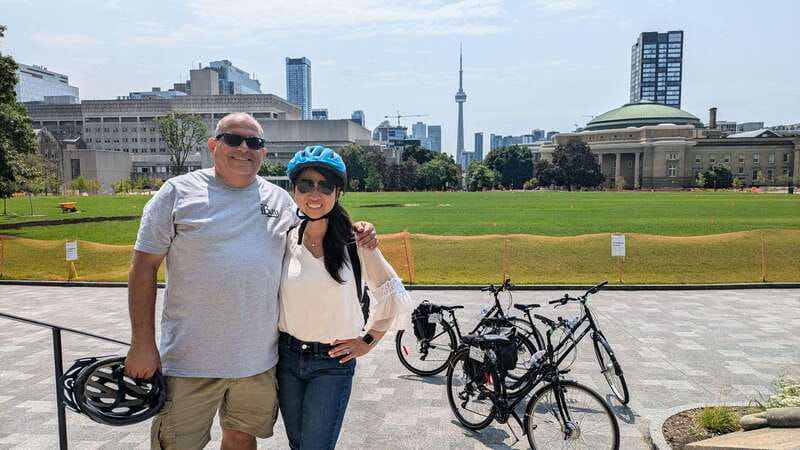
Toronto can be a lot on a classic walking tour. Distances add up fast, and you end up sprinting between “must-sees” instead of noticing what’s around the corner. An e-bike changes the math. The assist helps you keep a comfortable pace, so the tour feels active rather than exhausting—and you can actually enjoy the street scenes instead of nursing your legs.
This is also a city where neighbourhood personality comes through in small details: the shop signs, the feel of the street, the way people gather in parks, and the mix of old and new buildings. With the e-bike, you’re moving enough to stay oriented, but slow enough to take it in.
Roll on with more Toronto bike and Segway tours around Toronto


Meeting the tour: where to park your plans at 124 St Patrick Street
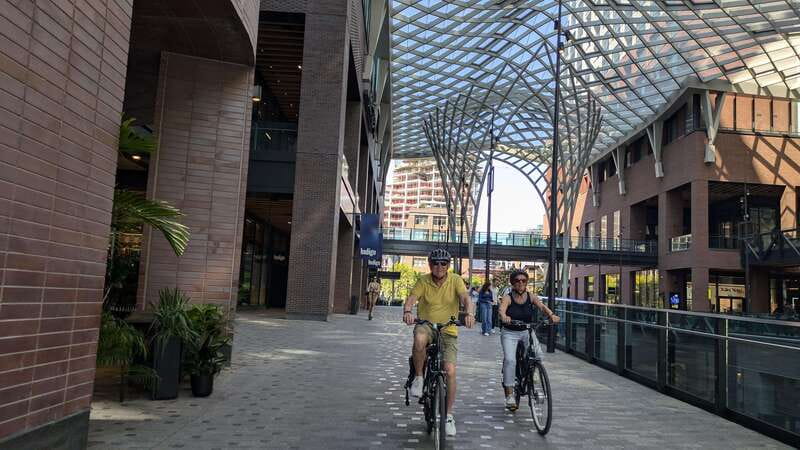
Your starting point is practical and central: the parking garage at 124 St Patrick Street (about 50m south of Dundas, west side). If the garage door is closed, step closer so it automatically opens. Go in, come down the ramp, then follow the yellow signs to P2, section H.
Bring comfortable clothes and assume you’ll spend most of the 210 minutes riding and stopping. The tour includes an electric bike, helmet, water, and a granola bar snack, so you’re not scrambling mid-route for basics. If there’s a coffee or refreshment stop, drinks aren’t included—you pay on the spot.
The ride style: fast enough for progress, slow enough for questions
This tour lasts 210 minutes (about 3.5 hours). That length is a sweet spot: you’re not rushed like you are on a short highlights loop, but you’re also not out so long that the day feels swallowed by logistics.
Because the group is capped at 8, you get something you rarely get on big-city tours: space for small conversations. If you’re new to e-bikes, you’ll likely appreciate the calm, step-by-step comfort level this format supports—there’s time for the guide to help you operate the bike confidently before you’re fully in the neighbourhood rhythm.
Stops that actually explain the city (not just label it)
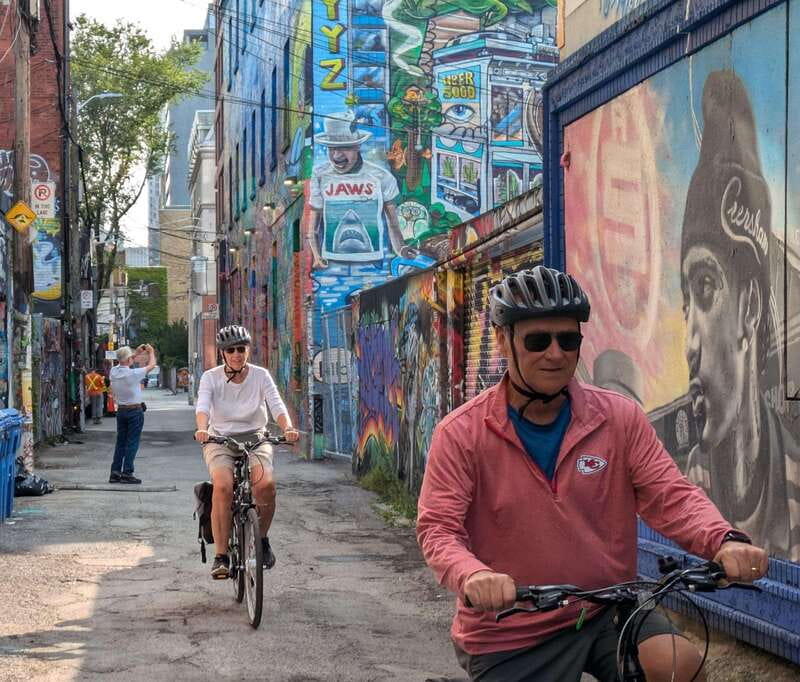
The route is built around multiple neighbourhood “chapters,” each with a different lens on Toronto’s evolution. You’ll spend time in places that cover culture, community initiatives, street art, the waterfront, and the city’s changing relationship with livability.
Here’s how the major stops fit together and what to watch for at each.
Lower Ossington: the street that went from overlooked to famous
Lower Ossington is the kind of place that looks local on a first pass and only later becomes obvious as a destination. The charm is in the street-level energy: shops and dining clusters, the sense that people are out on purpose, and a neighbourhood identity that feels earned rather than invented.
Watch how the area supports everyday nightlife and hangouts without turning into a theme park. You’ll also see why this stretch became a “cool factor” magnet while still feeling like part of the west side fabric.
More bike tours to spin through Toronto


St. James Town: diversity and practical innovation side by side
St. James Town is a reminder that Toronto’s story isn’t only about skyline glamour. It’s about community life—dense housing, busy streets, and everyday challenges. The tour framing here focuses on how residents and local organizations work on practical solutions connected to food, healthcare, and social services.
When you ride through, slow your attention down. Look at how the area holds people close: the walkability feel, the activity at street level, and how public life looks different than in more spread-out neighbourhoods.
Trinity Bellwoods: where city life gets quieter
Trinity Bellwoods is Toronto’s reminder that green space isn’t a break from the city—it’s part of it. Expect a slower vibe, good people-watching, and a park atmosphere that makes you understand why locals treat parks like living rooms.
If you’re visiting in warmer months, this stop is especially valuable for taking a breath without stepping away from the tour’s core goal: learning how Toronto lives day to day.
Bloor Street Cultural Corridor: arts, museums, and food as identity
Bloor Street isn’t just a street with attractions. It’s a corridor where arts and global influences show up in how people move and what they choose to do. Along the way, you’ll pass museums and performance venues, plus a serious range of international flavors.
The best way to use this stop is to look at the street as a system. Notice the relationship between cultural institutions and the commercial strip. That’s one reason this area matters: it shows how culture in Toronto is woven into daily life, not just saved for weekends.
Graffiti Alley: the city’s changing voice on plain sight
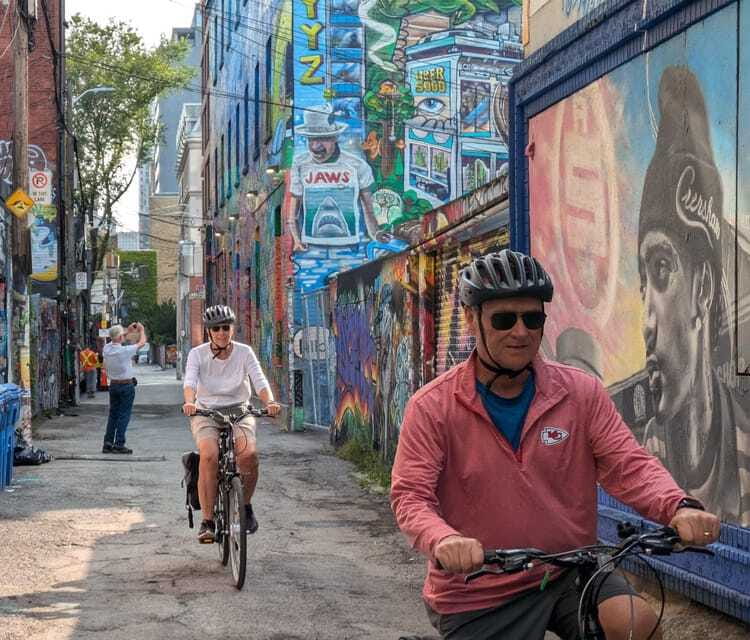
Graffiti Alley is where Toronto shows its public art personality in a very direct way. The big idea here is transformation: street art changes over time, and the space reflects the city’s new ideas as they arrive.
If you like photography, this is one of your easiest “stop and look” moments. Even if you’re not into street art, it’s a useful contrast to the more formal cultural spaces you’ll see elsewhere on the route.
CAMH: mental health progress you can point to
CAMH is part of Toronto’s progressive approach to mental health, and the tour highlights how the Centre for Addiction and Mental Health has inspired change. This stop adds meaning to the ride. It moves the conversation from entertainment and aesthetics into real-world systems that affect people.
As you pass through, pay attention to the tone shift. It’s a reminder that what a city builds—institutions included—shapes daily life for residents.
Ontario Place and Trillium Park: waterfront energy during a big change
The waterfront route matters because Toronto isn’t only inland. Ontario Place and Trillium Park give you that open-air feel and a sense of how the city uses the lakefront. You’ll also see the area in the middle of transformation, which is a good reminder that Toronto’s “today” is always under construction.
Look at how the waterfront functions as both recreation and a civic project. That combo is one reason Toronto feels different than many North American cities: the lake is a personality, not just a view.
Rosedale: pretty streets with quieter stories underneath
Rosedale is a contrast stop—more affluent, more hushed in feel, and lined with picturesque streets. The tour’s point here is to show that even the most visually polished areas have stories worth understanding.
Ride slowly through this segment. Notice the way the neighbourhood layout changes the street experience: fewer obvious bustle cues, more residential calm, and a different kind of Toronto identity. It’s helpful for balancing the louder parts of the route.
Why the timing and pacing make sense
At 210 minutes, you’re not just moving from one photo spot to another. You’re building a mental map of Toronto’s neighbourhood relationships. The e-bike assist keeps the pace steady, and you’re less likely to arrive at stops drained.
The rhythm also matters because Toronto’s city life is best experienced in motion. Walking can be great for detail, but you miss the flow. Here, you get both: motion with context.
Price and value: $107 for a lot of city learning time
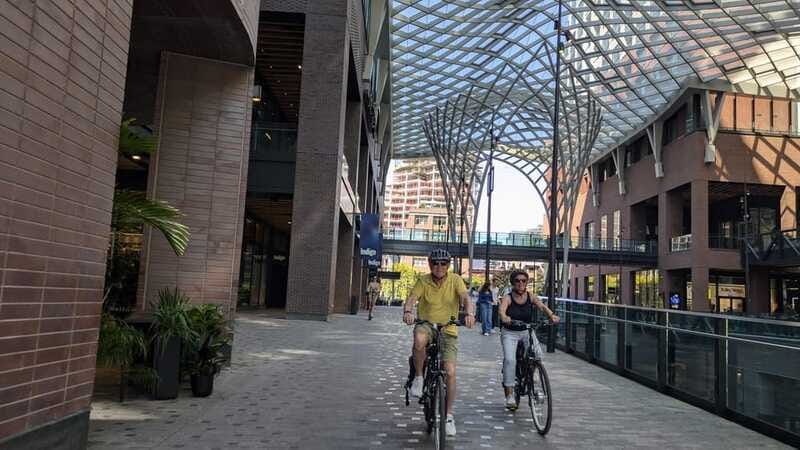
At $107 per person for a 210-minute guided ride, the value comes from three things:
- You’re paying for guided context, not just transportation. The stop themes connect to how Toronto works socially and culturally.
- You cover more ground than you would on foot without turning the day into a workout.
- Small group size means you get more interaction and less waiting around.
It’s not the cheapest way to see Toronto. But if you care about understanding neighbourhood identity rather than collecting landmarks, it’s a strong use of a day.
The best fit: who should book this e-bike tour
This tour is a great match if you:
- want a first-time Toronto framework beyond downtown highlights
- like city streets and neighbourhood variety (not only museums)
- want an easy ride that still feels like real exploring
- enjoy interactive guiding in a group up to 8
It’s not suitable if you can’t ride a bike, and it’s listed as not for children under 16. If you’re planning for accessibility or comfort, you’ll want to evaluate your comfort with urban cycling conditions before committing.
One thing to plan around: last-minute changes can happen
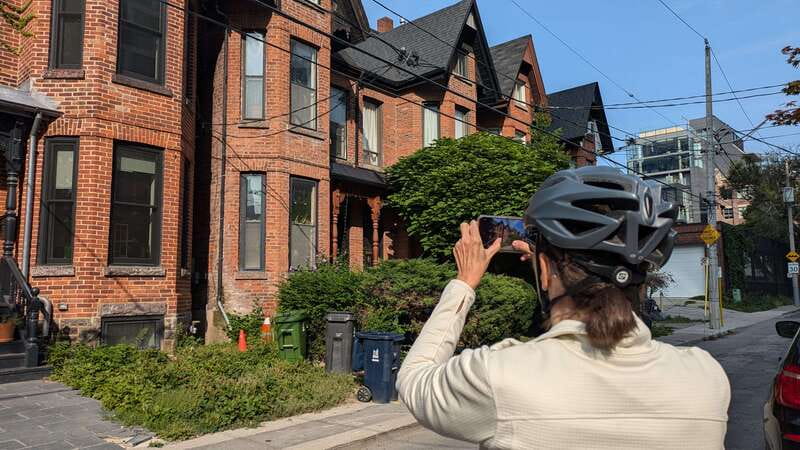
I’m going to be straight with you. You’re dealing with a small tour format and a real-world operation. There have been cancellations close to start time due to scheduling misunderstandings or staffing illness. That doesn’t mean it’s common, but it is enough to justify having a backup plan—especially if Toronto is your one-shot stop on a tight schedule.
Should you book it?
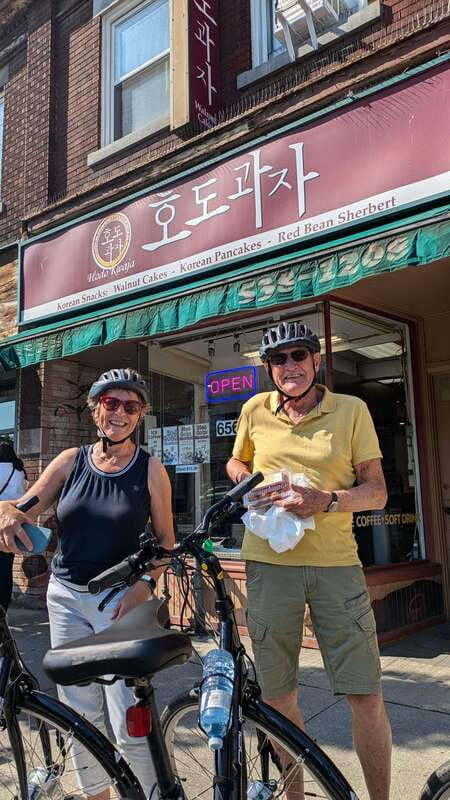
If you want a practical, neighbourhood-focused introduction to Toronto—one that goes beyond the usual tourist bubble—this e-bike tour is an easy yes. The small group size, the range of neighbourhood themes, and the ability to cover distance without crushing your energy make it a smart way to spend about half a day.
Book it if your body can handle bike riding and you want context as you roll. Consider a backup plan if you’re traveling on a strict timeline, and keep an eye on day-of updates.
FAQ
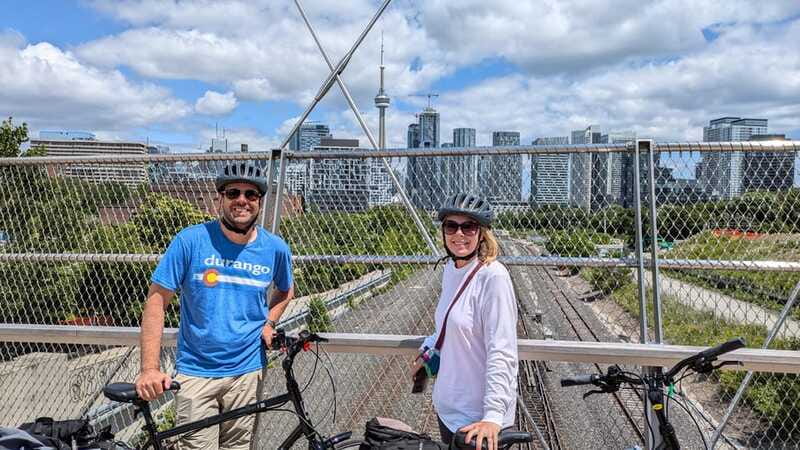
How long is the Toronto dynamic neighbourhoods e-bike tour?
The tour duration is 210 minutes (about 3.5 hours).
What is the group size?
The tour is limited to 8 participants, so it stays small and interactive.
What’s included in the price?
You get an electric bike, a helmet, water, and a granola bar snack.
What should I bring or wear?
Wear comfortable clothes. The rest (bike and helmet) is provided.
Do I need to know how to ride a bike?
Yes. The tour is not suitable for people who can’t ride a bike.
Where do we meet?
Meet at the parking garage at 124 St Patrick Street, Toronto, M5T 2X8, about 50m south of Dundas on the west side. Go down to P2 level and follow yellow signs to section H.
Is the guide in English?
Yes. The tour has a live guide in English.
More Toronto Bike and Segway Tours
More Tour Reviews to line up around Toronto and Niagara



Not sure yet? Here is more to see and do across Toronto, just reviewed












More Toronto Bike & Segway Tours to size up.
 ★ 4.9Heart of Downtown 3.5-Hour Bike TourFrom $90419 reviews
 ★ 5.0Downtown Toronto Bike TourFrom $93336 reviews
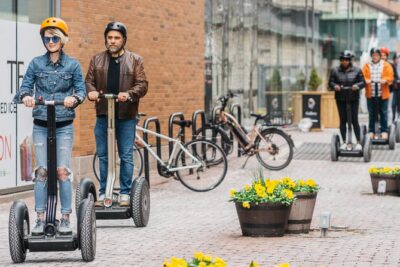 ★ 5.030-Minute Distillery District Segway TourFrom $36214 reviews
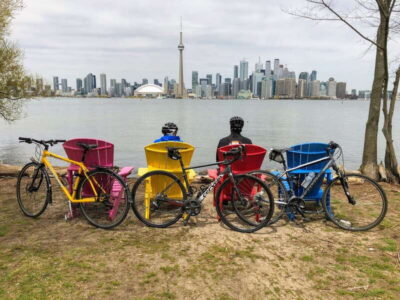 ★ 4.9Toronto Waterfront and Islands Guided Bicycle TourFrom $8080 reviews
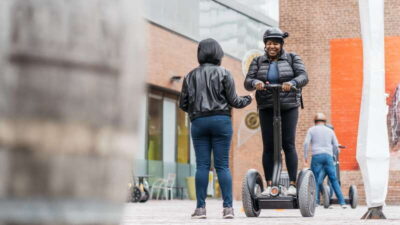 ★ 4.8Short Distillery District Segway TourFrom $3555 reviews
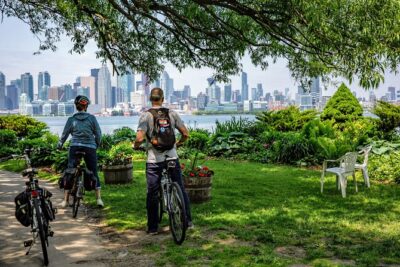 ★ 5.0Guided Bicycle Tour – Toronto Waterfront, Island and DistilleryFrom $8231 reviews
 ★ 5.0E-bike Toronto’s Dynamic NeighbourhoodsFrom $1099 reviews
This tour also ranks in