
Reviewed · TORONTO HAUNTED & TRUE CRIME WALKS
Toronto Old Town: Self-Guided Dark History Walking Game
A dark-history clue game in downtown Toronto? Sounds scary. I like how it turns the city into a self-guided mystery you control, and you’ll get 10 puzzle challenges tied to real landmarks. The possible downside is simple: you’ll be staring at your phone a lot, and if your battery dies, you’ll slow down.
What makes this one fun is that it’s not the usual guided slog. You start at Toronto City Hall and finish at St. Lawrence Market, moving stop to stop while the app keeps you pointed in the right direction. It also lets you pause and resume whenever you want, so the game fits around weather, hunger, or bathroom breaks.
One more thing I’d consider: the theme is Old Town’s dark history. The tour doesn’t say it is graphic, but if you prefer light sightseeing, you might want to skim and keep the mood in mind as you play.
In This Review
- Key points before you play
- Starting City Hall, ending St. Lawrence Market
- How the Questo app turns landmarks into a game
- Stop-by-stop: the real places you’ll look closely at
- The Toronto sign area: made for the 2015 Pan American Games
- Old City Hall: civic power and court life under one roof
- TD Centre (Financial District): modern scale with old roots
- Oscar Peterson Place: the in-between spaces
- Fairmont Royal York: a hotel tied to power and celebrity
- Hockey Hall of Fame area (via Brookfield Place): a hall with a relocated past
- King Edward Hotel: fireproof claims and big ambition
- Cathedral Church of St. James: the oldest congregation thread
- St. Lawrence Hall: meetings, culture, and politics in one building
- St. Lawrence Market South: ending in a place people actually use
- Price and value: what $8.44 buys you in Toronto time
- Timing, pacing, and what to do if you get stuck
- Who this self-guided dark-history game is best for
- Should you book it?
- FAQ
- How long does the Toronto Old Town dark history walking game take?
- Where does the experience start and end?
- Do I need Wi‑Fi during the game?
- Is there a physical tour guide?
- What’s included with the ticket?
- What language is the experience offered in?
- Is it a group tour?
- Is it accessible and can service animals join?
- What’s the cancellation policy?
Key points before you play
- $8.44 per person for a 90-minute indoor-outdoor walk with 10 challenges and storyline content
- Self-guided with step-by-step app directions, so you’re not waiting on a group schedule
- No Wi‑Fi needed after the initial download, which helps in real-world downtown coverage
- Private for your group, so you can move at your speed (no awkward herd herding)
- 10 clue stops at major downtown landmarks, from City Hall to St. Lawrence Market
- Pause and resume anytime, which is great when plans change mid-walk
Starting City Hall, ending St. Lawrence Market
This experience is built like a downtown corridor game. You begin at Toronto City Hall, 100 Queen St W, and you end at St. Lawrence Market (the south address listed). The app guides you step by step to your destination, so you’re not left guessing streets and crosswalks.
Why I think this matters: you’re walking through some of the city’s most recognizable civic and commercial buildings, then finishing in a food-and-market area where you can keep the day going. If you’re the type who likes a plan but hates feeling trapped in a timeline, this format hits that sweet spot.
Also, it runs basically all day. The listed operating hours for the experience show 12:00 AM to 11:30 PM daily, so you can choose a time that matches your energy level and the lighting you want for photos.
Spooked yet? There are more haunted and true-crime walks around Toronto

How the Questo app turns landmarks into a game
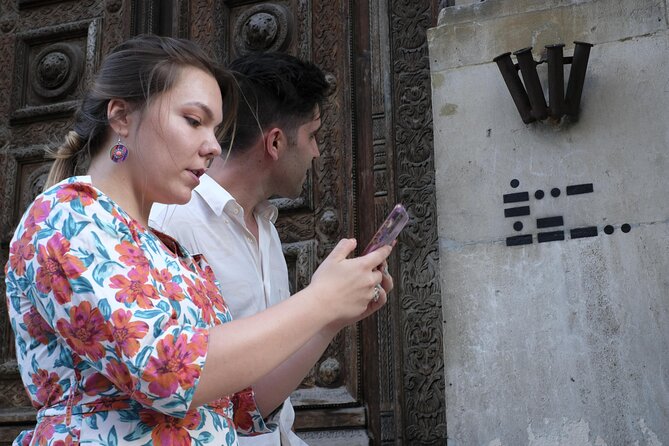
This isn’t a classic tour with a person talking at you. It’s a mobile ticket experience using the Questo app, with a mobile access code you use to get your storyline and challenges. You’ll work through the route like a scavenger hunt: the app gives you a challenge, you look around at the stop, then you answer to move forward.
Here’s what that means in real terms:
- You can play at your own pace, without trying to keep up with strangers.
- You can pause and resume, which is a big deal in a city where you might get detoured by traffic or just want to grab a snack.
- After downloading, you don’t need ongoing Wi‑Fi to keep going.
If you’re traveling with friends or family, it’s a surprisingly good group bonding tool. The game naturally creates little moments of teamwork: who spotted the clue, who read the detail, who’s trying to make the next step faster.
One practical note: charge your phone ahead of time. The experience is designed around your device, and the clues are triggered through the app.
Stop-by-stop: the real places you’ll look closely at
At every stop, the same pattern repeats: you look around to find the answer to the challenge, then the story carries you onward. The app’s storyline content is what ties these places together under Old Town’s dark history theme.
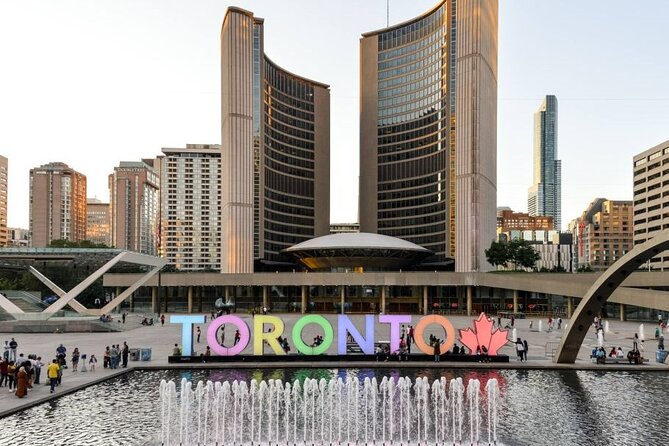
The Toronto sign area: made for the 2015 Pan American Games
The first stop starts with a twist of civic planning. The sign was installed for the 2015 Pan American Games as a temporary attraction, planned to be dismantled at the earliest in November 2016. Instead, the City of Toronto kept the sign running because it proved popular with both tourists and residents.
What you can expect here: you’ll be scanning the area for the clue the challenge wants. This is a warm-up stop—more about noticing what’s right in front of you than deciphering anything wildly technical.
Possible drawback: if this spot is busy, finding your clue quickly can take a minute. It’s still worth it because it sets the tone for how the game wants you to look.
Old City Hall: civic power and court life under one roof
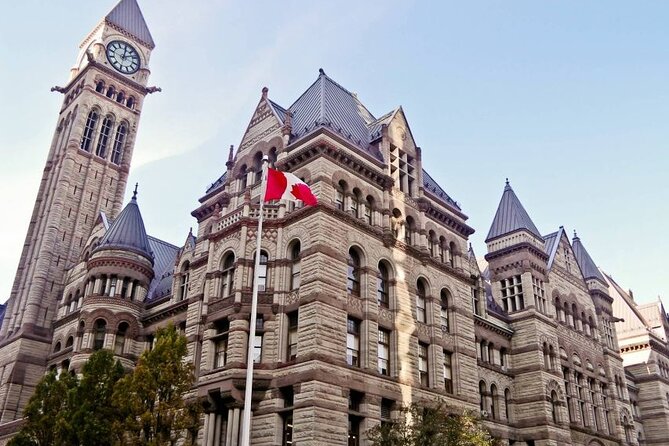
Next comes Old City Hall, described as one of Toronto’s largest buildings when it opened and the largest civic building in North America upon completion in 1899. It became Toronto’s third city hall, housing municipal government and courts for York County and Toronto, after taking over from the Adelaide Street Court House.
This stop has the kind of history that feels immediate because the building still looks like it should be in charge of something. For the game, you’ll again look around for the answer to advance.
What I’d watch for: any plaques, inscriptions, or architectural details the area offers. Since the challenge requires you to search, slow down just enough to read what’s meant to be read.
More walking tours to stroll on foot through Toronto





TD Centre (Financial District): modern scale with old roots
The next location is the Toronto-Dominion Centre, or TD Centre, an office complex in the Financial District. It’s owned by Cadillac Fairview and serves as the global headquarters for the Toronto-Dominion Bank, plus office and retail space for many other businesses. The complex includes six towers and a pavilion covered in bronze-tinted glass and black painted steel, with about 21,000 people working there.
This is where the game shifts from civic buildings to corporate downtown scale. In the middle of all that modern office energy, you’ll have a specific mission: find the clue at the stop you’ve arrived at.
What you might find yourself doing: looking between buildings and around the complex edges for the relevant detail. It can feel like you’re wandering at first, but the challenge keeps you focused.
Oscar Peterson Place: the in-between spaces
Between TD Centre’s towers are two large open areas known collectively as Oscar Peterson Place. The northern space is described as a more formal tract of granite, while the southern space includes a lawn and The Pasture, a sculpture by Saskatchewan artist Joe Fafard (noted here as having died in early 2019).
This stop is a nice breather, because open spaces are easier to move through than tight streets. It’s also a reminder that big downtown complexes have intentional public areas—places where people can pause, not just pass through.
For the game: you’ll still have to look around for the answer. The setting may be quieter than the office towers, which can make it easier to concentrate.
Fairmont Royal York: a hotel tied to power and celebrity
Then you reach Fairmont Royal York, described as having hosted royal guests, heads of state, celebrities, superstars of sport, and millions of other people over nearly 90 years. It’s presented as a key element in Toronto’s luxury history.
Even if you’re not staying at the hotel, it’s a good game stop because hotel architecture and identity are usually built for storytelling. Again, you’re scanning for the clue needed to move to the next point.
Watch for: anything that signals official history—names, dates, or formal markers. The game is asking you to connect the story to what you see, not just walk past.
Hockey Hall of Fame area (via Brookfield Place): a hall with a relocated past
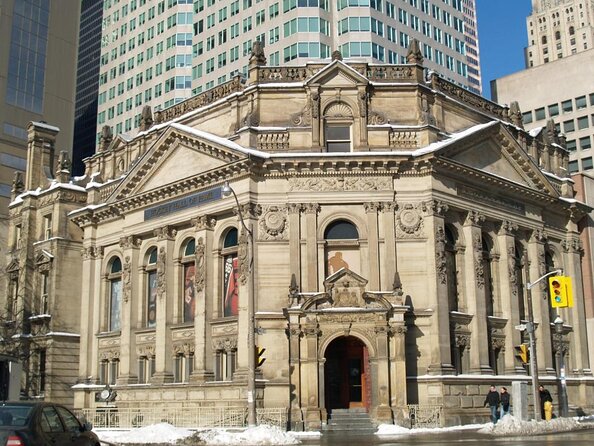
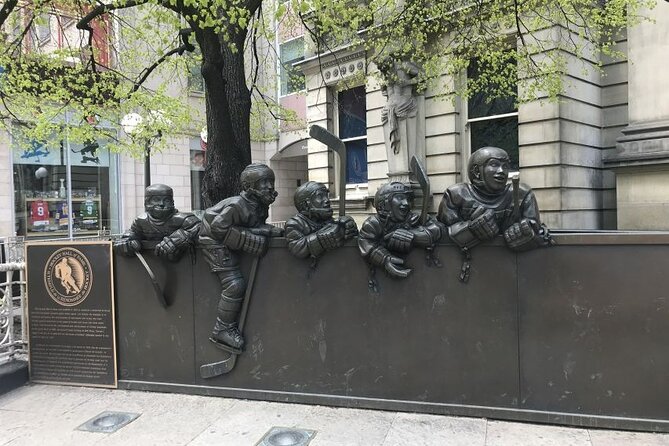
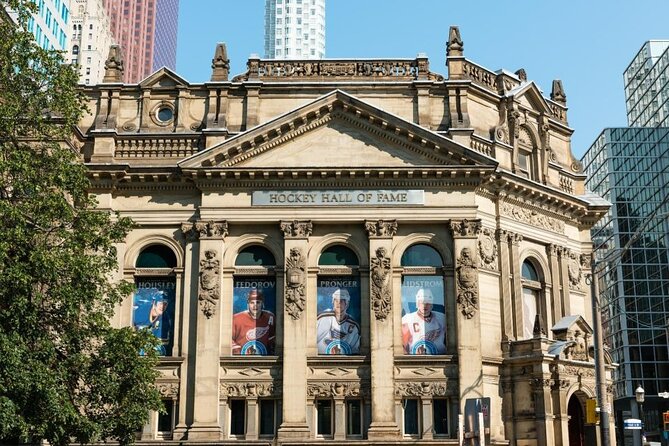
The experience then points to a space tied to the Hockey Hall of Fame. The data here is specific: its first permanent building opened at Exhibition Place in 1961, and the hall was relocated in 1993. Now it’s inside Brookfield Place, within a historic Bank of Montreal building, and the IIHF Hall of Fame and related exhibits have been there since 1998.
This is one of the stops where the game’s “dark history” framing might feel a little surprising, but that contrast is part of downtown’s reality. The clue you search for will help you anchor the story to the building’s role and changes over time.
Practical note: if the area is crowded, you may have to be patient and look closely rather than rushing.
King Edward Hotel: fireproof claims and big ambition
Next is the King Edward Hotel. It was designed by Chicago architect Henry Ives Cobb and Toronto architect E.J. Lennox for developer George Gooderham’s Toronto Hotel Company. It was granted its name by namesake King Edward VII and opened in 1903 with 400 rooms and 300 baths. It also claimed to be entirely fireproof.
This is a perfect “look closely” stop. The hotel’s identity is built on claims and design. For the game, you’ll again search around for the clue answer that advances you.
If you like architectural stories, this stop is likely your favorite. If you don’t, you’ll still enjoy the puzzle rhythm because the game forces you to pay attention.
Cathedral Church of St. James: the oldest congregation thread
Then comes Cathedral Church of St. James, described as an Anglican cathedral in Downtown Toronto. The parish is noted as being established in 1797, and the site is identified as the location of the oldest congregation in the city.
The feel here changes again—more grounded, more traditional. This makes the “look around for the answer” part feel calmer, because religious buildings often have clear features meant for reading and noticing.
St. Lawrence Hall: meetings, culture, and politics in one building
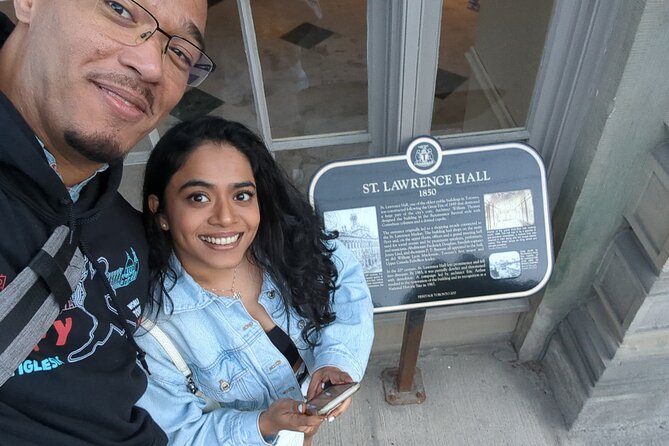
After that, you reach St. Lawrence Hall, which opened in 1850 and is described as Toronto’s first large meeting hall. Named for Canada’s patron saint, it served for many years as a center of cultural and political life in Toronto—hosting balls, receptions, concerts, exhibitions, and lectures.
This is a strong storytelling stop because it’s not just about who built it. It’s about what people did there. The game’s challenge asks you to find the right detail tied to that story.
Consideration: since it’s a meeting hall, it may be easier to identify the relevant features slowly instead of scanning quickly.
St. Lawrence Market South: ending in a place people actually use
Finally, you end at the St. Lawrence Market South building, described as a major public market building located at the southwest corner of Front and Lower Jarvis Streets. Along with St. Lawrence Market North and St. Lawrence Hall, it makes up the broader St. Lawrence Market complex.
This is a smart landing spot for a game. You finish with a real, active destination where you can keep moving after the 90 minutes. Even if you don’t plan to shop, the area gives you that end-of-route reward: something tangible and lively.
Price and value: what $8.44 buys you in Toronto time
At $8.44 per person, the value comes from three things you’re actually getting:
- A set duration (about 1 hour 30 minutes) that keeps the walk from ballooning.
- 10 puzzle challenges, which means you’re not just sightseeing—you’re interacting with the places.
- Storyline content tied to Old Town’s dark history, which helps you remember what you saw.
You’re also getting something underrated: you don’t need to coordinate with a tour group. The experience is set up as private for your group, so you can go at your speed, and pause/resume whenever life happens.
For families or friend groups, group discounts are listed, which can make it cheaper than booking separate activities. And because there’s no physical guide, you’re not paying for someone’s time—you’re paying for the structure and app-based storytelling.
One word of caution: it’s still a walking game. If you hate walking, you’ll probably feel it here. If you’re comfortable with downtown walking, it becomes a low-cost, high-attention way to see the core.
Timing, pacing, and what to do if you get stuck
The experience is designed for about 1 hour 30 minutes, but the big advantage is flexibility: you can pause and resume anytime. That means you don’t have to “win” by rushing.
If you get stuck on a clue, don’t catastrophize. Slow down and look for the specific detail the challenge is likely asking for—names, dates, or built elements around the stop. The game format is meant to train your eyes to notice rather than just pass through.
Also, plan your start time so you’re not racing the end. Since you finish at St. Lawrence Market, consider timing it near a meal. Even if you don’t buy anything, it’s a convenient place to land and reset.
Who this self-guided dark-history game is best for
I think it fits best if you:
- Want structured freedom: a route and story, without a strict group pace.
- Enjoy puzzles or at least don’t mind “find-and-figure-out” moments.
- Travel with friends or family and want an activity that’s not just another photo walk.
- Prefer phone-guided experiences where you can pause and pick up later.
It’s also ideal for short attention spans, because each stop hands you a new mini goal (a challenge answer) instead of a long lecture.
If you hate app-based experiences, you might find it less satisfying. There’s no physical tour guide here, so the app is the whole engine.
Should you book it?
Book this Toronto self-guided dark-history walking game if you want a 90-minute, low-cost way to connect key downtown buildings with a storyline, while keeping full control over pace. The best part is the structure: the app makes you look closely, and you’re not stuck listening or waiting.
Skip it only if you strongly dislike phone-based scavenger hunts or you’re looking for a traditional guided talk. Otherwise, this is one of those rare setups where you pay a small amount, get a clear route, and leave with the feeling that you actually paid attention.
FAQ
How long does the Toronto Old Town dark history walking game take?
It’s listed as about 1 hour 30 minutes.
Where does the experience start and end?
It starts at Toronto City Hall, 100 Queen St W, Toronto and ends at St. Lawrence Market, Toronto. The app provides step-by-step directions to the end point.
Do I need Wi‑Fi during the game?
The experience notes that you don’t need Wi‑Fi after the initial download.
Is there a physical tour guide?
No. It’s a self-guided experience using the Questo app.
What’s included with the ticket?
Included items are a mobile access code, 10 puzzle challenges, storyline content about Old Town’s dark history, and flexibility to pause and resume.
What language is the experience offered in?
It’s offered in English.
Is it a group tour?
It’s a private tour/activity, so only your group participates. Group discounts are listed.
Is it accessible and can service animals join?
The experience says service animals are allowed and most travelers can participate. It’s also noted as near public transportation.
What’s the cancellation policy?
You can cancel for a full refund if you cancel up to 24 hours in advance. Cancellation within 24 hours of the start time is not refundable.
More Toronto Haunted and True-Crime Walks
More Tour Reviews to line up around Toronto and Niagara


Not sure yet? Here is more to see and do across Toronto, just reviewed












More Toronto Haunted & True Crime Walks to size up.
 ★ 4.7Dark History Nighttime Walking TourFrom $20273 reviews
 ★ 4.5Ghost Tour of Toronto Original Haunted WalkFrom $25185 reviews
 ★ 4.9Brothels of Old Toronto Walking TourFrom $1971 reviews
 ★ 4.5Spirits of the Distillery District Ghost TourFrom $2556 reviews
 ★ 5.0Historic Brothels of Old Toronto Walking TourFrom $2123 reviews
 ★ 5.0Private 2-Hour Walking Crime Tour in TorontoFrom $2821 reviews
 ★ 5.0Prohibition and Spirits History Walking TourFrom $4416 reviews
 ★ 4.5University of Toronto Ghost Tour – Campus Secrets & SpectresFrom $2513 reviews
This tour also ranks in