
Reviewed · TORONTO CITY TOURS & CN TOWER
Private 2-Hour Walking Crime Tour in Toronto
Toronto has teeth, and this walk shows them. This private Toronto crime tour is led by retired law enforcement, and the stories run from early street crime to cases that still feel current. You’ll cover major downtown sights while learning how the city handled fear, punishment, and public panic—sometimes with shocking outcomes.
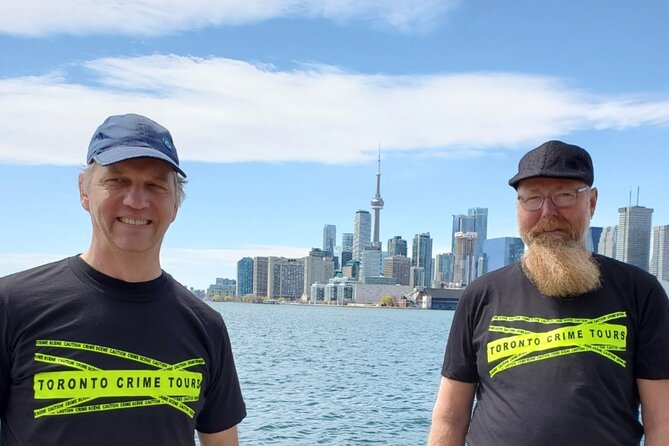
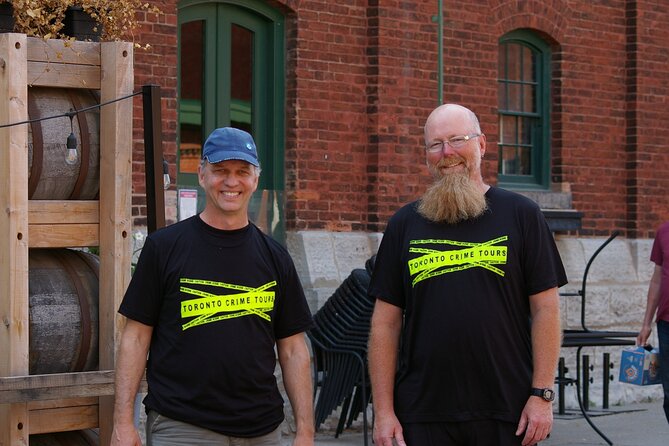
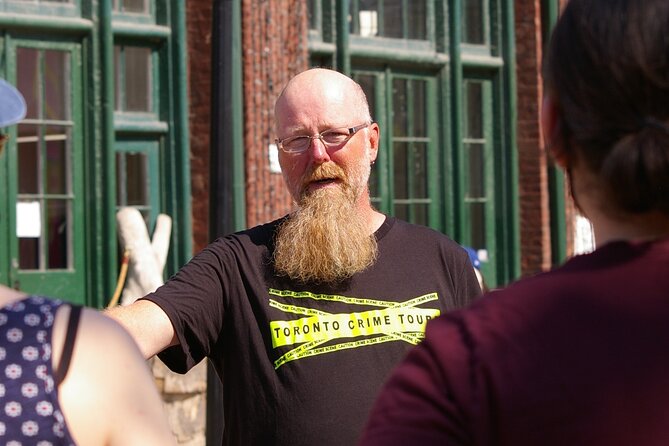
I really like two things about it. First, the guides are former detectives (Phil, Bob, and Dave), so the details land with real-world context instead of just spooky storytelling. Second, it’s private and customizable, so you can steer the tone toward what you care about most—crime, courts, social tensions, or the politics of policing.
One possible drawback: the subject matter can be grim, and it’s a brisk walking tour that assumes you can comfortably keep up for about two hours. If heavy topics (murders, capital punishment, a serial case) aren’t your thing, you’ll want to think twice.
In This Review
- Key points to know before you go
- A Private Toronto Crime Walk Led by Retired Detectives
- Price and what $28.21 buys you (and what it doesn’t)
- Start at 250 Yonge St and walk into downtown’s turning points
- Eaton Centre: the shoeshine boy murder that pushed downtown into cleanup mode
- Yonge Street: the Year of the Gun, Boxing Day violence, and a riot timeline
- The Path: how the criminal justice system treated mental illness
- The unsolved disappearance of Ambrose Small in 1919
- Courthouse Square and Canada’s last public gallows
- The 1915 trial of the century: Bert Massey’s murder
- The Boyd Gang and the escape-twice-from-the-Don-Jail angle
- St. Lawrence Market: the Jarvis Duel in 1817
- The Corner at Dundas & Jarvis and the 1939 gangland slaying
- Circus clowns vs. Hook & Ladder: 1855 and police reform that lasted
- The Village’s serial case: victims, a lack of proof, then the ravine
- Topless sunbathing in the park: illegal or immoral?
- Distillery Historic District: whiskey at Gooderham & Worts and the Wort ghost question
- Bootlegging at the Distillery and a rougher side of alcohol history
- What walking 2 hours 15 minutes feels like (and how to plan)
- Should you book this Toronto Crime Tour?
- FAQ
- How long is the Private 2-Hour Walking Crime Tour in Toronto?
- Is this tour private?
- Where does the tour start and end?
- What time does the tour begin?
- What should I bring or wear?
- What happens if the weather is bad?
Key points to know before you go
- Private, customizable route that’s built around your group
- Retired detectives (Phil, Bob, Dave) guiding with real policing perspective
- Short, story-dense stops across key downtown and Distillery areas
- Designed for history + society + the macabre, not just trivia
- Walking-friendly plan that still moves at a steady pace
- Bring your own water for warm days
A Private Toronto Crime Walk Led by Retired Detectives
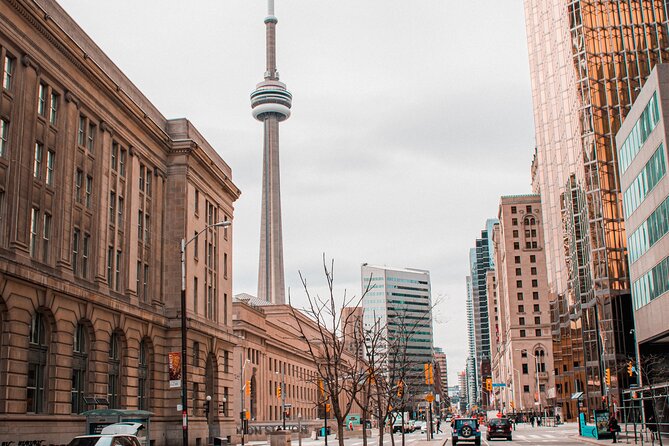
This tour works because it treats crime like a human story, not just a list of headlines. You start in central Toronto and follow a route that links place names to events—some infamous, some weirdly specific, and some outright brutal. It’s a “walk and talk” format, where each stop is a short window into how the city worked when fear took over.
What I like most is the guide mix of street-level facts and how the system responded. When a former detective is explaining why a case mattered, you get more than what happened. You hear how authorities thought, what the public believed, and how law and order played out on the ground.
And yes, it’s macabre. But it’s not just gore. You also spend time on social issues like how mental illness and policing intersect, how riots reshape public life, and how justice can turn messy fast.
See more of the skyline on our other Toronto city tours and CN Tower trips in Toronto



Price and what $28.21 buys you (and what it doesn’t)
The price is $28.21 per person, and the big value here is that you’re paying for a private, guided experience with professional storytelling. For a walking tour, it also hits a sweet spot: long enough to feel substantial, short enough that you’re not stuck for the whole day.
You should also know what’s included and what isn’t. All fees and taxes are included, and the tour uses a mobile ticket. Bottled water isn’t included, so bring your own—especially if you’re doing this on a warm afternoon.
What the price likely won’t cover is comfort support. There’s no mention of seating breaks or provided refreshments, so plan to walk, hydrate yourself, and wear shoes that won’t betray you after mile one.
Start at 250 Yonge St and walk into downtown’s turning points
The tour begins at 250 Yonge St (near easy public transit) and runs for about 2 hours 15 minutes. You end at 55 Mill St in the Distillery Historic District, which is a nice payoff if you want to keep exploring after the tour.
The day starts at 1:00 pm, and the stop cadence is quick—roughly 5 minutes per stop. That means you’ll get crisp context without getting bogged down. The trade-off is that this isn’t a slow stroll where you can linger for photos at every corner.
Also, you’ll want comfortable shoes. This is a walking experience that assumes you can keep moving for the full stretch (the tour says most travelers can participate, but you must be able to walk for about two hours).
Eaton Centre: the shoeshine boy murder that pushed downtown into cleanup mode

Your first major moment is at CF Toronto Eaton Centre, where you hear about the 1977 murder of a 12-year-old shoeshine boy. It’s one of those cases that helped change how people viewed the downtown core—how quickly “crime” becomes a public conversation about safety, policing, and neighborhood change.
What’s useful here is the cause-and-effect feel. You don’t just hear a tragedy. You hear how it moved the city—including efforts that followed to address the messy conditions people associated with the area.
If you’re the kind of traveler who likes to connect history to streets you can still stand on, this is a strong opener. Eaton Centre is familiar, so the story contrast hits harder.
Yonge Street: the Year of the Gun, Boxing Day violence, and a riot timeline
Then you’re on Yonge Street, where the tour leans into violence and social instability. You’ll hear about Year of the Gun in 2005 and the tragic killing of a 15-year-old girl caught in crossfire during a streetgang shootout on Boxing Day.
Even if you’re not a “crime documentary” person, this stop helps you understand how quickly city life can shift when gangs, weapons, and public spaces collide. It’s not only about a single case—it’s about how Toronto’s streets and public attention can get pulled into cycles of fear.
Right after that, you return to the Yonge corridor for another angle: riots and protest history. You’ll connect events from the Upper Canada Rebellion in 1837 through later upheavals, including the G20 riots of 2010. It’s a helpful reminder that unrest isn’t just modern—it’s a recurring part of how power and the public clash.
If your tour style prefers politics and crowd dynamics over detective work, this section will feel especially relevant.
Spooked yet? There are more haunted and true-crime walks around Toronto



The Path: how the criminal justice system treated mental illness

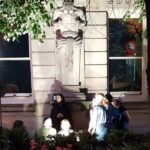
One of the more thought-provoking stops is at The Path, where the focus shifts from street crime to the way the justice system handled mental illness. This is where the tour stops playing “who did it” and starts asking a different kind of question: how society decides what to do with people it labels as dangerous or unwell.
This matters for modern travelers because you’ll likely notice the same themes everywhere—how stigma changes outcomes, and how systems can fail people even when they claim to protect everyone. It’s not an abstract lecture. It’s a story grounded in how policing meets mental health.
If you’re sensitive to heavy social issues, you may find this section more emotionally challenging than the murder stories. But it’s also the part that feels most like “why it still matters.”
The unsolved disappearance of Ambrose Small in 1919
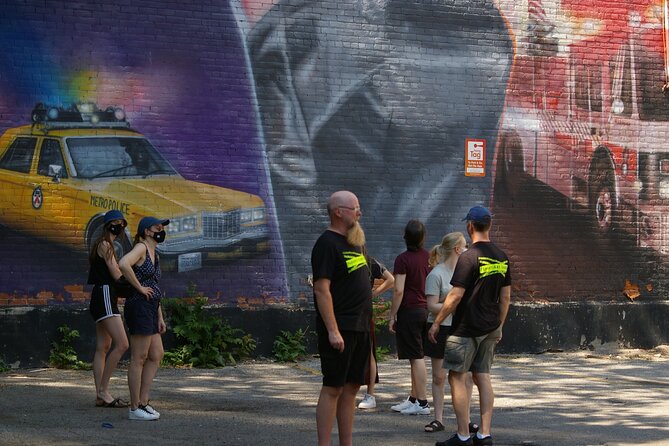
Downtown again, you get Toronto’s best-known “wait, what?” case: the disappearance of Ambrose Small, a wealthy theatre owner, in 1919. The tour treats it as an unsolved mystery tied to power, money, and the limits of what authorities can prove.
This is a good stop for a different type of traveler. If you’re not just chasing violent crime details, you’ll still feel hooked by the suspense: who had motive, what the public assumed, and why some cases stubbornly resist closure.
It also works as a pacing break. After shootings, trials, and punishment stories, a missing-person mystery gives your brain a new kind of question.
Courthouse Square and Canada’s last public gallows
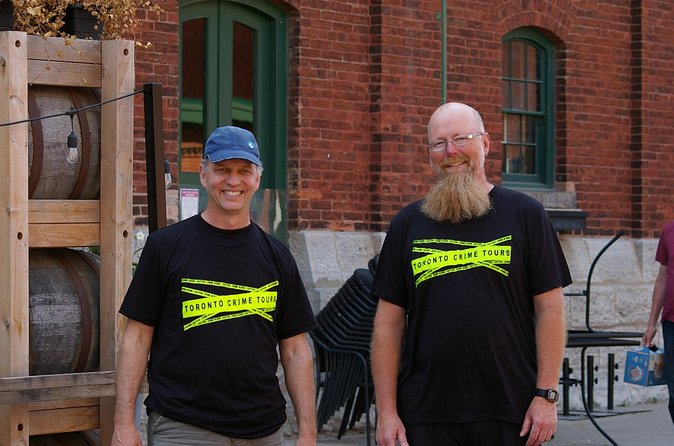
At Courthouse Square (in the Old Town area), you learn about something stark: the last public gallows in Canada. This stop doesn’t romanticize punishment. It highlights how the legal system once treated acts that would sound almost unbelievable today—like stealing turnips or stealing cattle—as capital crimes.
This is where you get a real sense of how “justice” changes over time. The tour uses these examples to show that laws aren’t fixed morality. They’re shaped by economics, public fear, and what a government wants to deter.
One thing to consider: if you don’t handle grim topics well, this is the most intense portion. It’s also the most educational about how quickly society’s rules can shift.
The 1915 trial of the century: Bert Massey’s murder
Still in the Old Toronto area, the tour moves into the trial of the century in 1915—the murder of Bert Massey, tied to the wealthy Massey Ferguson family.
This stop is especially valuable because it connects crime to status. Wealth changes attention. It can also change how the public watches investigations and how politicians manage fallout.
You’ll get more than plot points. You’ll see how a case becomes a media event and how law and public trust can get dragged into the same spotlight.
The Boyd Gang and the escape-twice-from-the-Don-Jail angle
No Toronto crime walk is complete without the Boyd Gang. You’ll hear about their bank heists and, more memorably, their escape story—escape twice from the Don Jail.
The reason this works so well is that it flips the expected script. Instead of only focusing on victims, the story emphasizes bold criminal strategy and how institutions responded. It’s also a reminder that criminal reputation can become entertainment, even when the crimes were serious.
If you enjoy criminal networks, getaway plans, and the clash between criminals and authorities, this is one of the more fun stops in the lineup—still dark, but almost athletic in its confidence.
St. Lawrence Market: the Jarvis Duel in 1817
At St. Lawrence Market, you hit the Jarvis Duel (1817), described as the last such duel in Toronto. This stop gives you a different style of violence—less modern street crime, more code-of-honor conflict.
It’s also a smart way to show how “violence” isn’t always only about gangs or courts. Sometimes it’s about reputation, class, and a culture that treated dueling as a way to settle public disputes.
Even though the facts are older, the idea feels modern: people still find ways to escalate when pride and status are on the line.
The Corner at Dundas & Jarvis and the 1939 gangland slaying
Next is Old Town, where you hear about Canada’s first “gangland” slaying in 1939. The story points you toward the sordid reputation of The Corner at Dundas & Jarvis.
This stop is practical in a way people don’t expect. When you walk through a city that’s been cleaned up and redeveloped, it helps to know what it once was. It changes how you read the neighborhood now.
It’s also a good reminder that urban branding and urban reality don’t always match. The city can look stable while the past is still part of the place’s identity.
Circus clowns vs. Hook & Ladder: 1855 and police reform that lasted
Here the tour gets wonderfully strange. You hear how a riot between circus clowns and the Hook & Ladder fire company in 1855 helped lead to revamping Toronto Police structure, which the tour notes has remained influential for generations.
This stop is a great example of why a crime tour can be more than murder stories. It’s about systems, not just villains. Public disorder pushed institutions to change, and that change echoes forward.
If you like history that includes the odd and human side of city life, you’ll probably enjoy this one the most. It’s weird, but it’s also grounded.
The Village’s serial case: victims, a lack of proof, then the ravine
Then you reach another heavier topic: a serial killer targeting gay men in The Village. The police initially said there was no proof or links among victims. Later, the case reportedly led to the discovery of 8 victims buried in a ravine.
This is the kind of stop where your guide’s tone matters, and the former-detective perspective helps. You get to hear how investigators might misread patterns at first, and how assumptions can delay recognition—something that sadly can repeat in many eras.
If you’re visiting Toronto with a partner or group, this is a section where it’s worth having a respectful pace and talking quietly afterward.
Topless sunbathing in the park: illegal or immoral?
Between major crime and court stories, the tour adds an angle that feels surprisingly current: a discussion of topless sunbathing in the park—and whether it was illegal, immoral, or both.
This is a useful break from death and crime, but it still fits the theme. It brings you back to social control: what counts as acceptable behavior, who decides, and how “morality” gets enforced.
This is also one of the stops where a private tour shines. If you care about law and public norms, you’ll probably want your guide to expand. If you just want the basics, you can keep it lighter.
Distillery Historic District: whiskey at Gooderham & Worts and the Wort ghost question
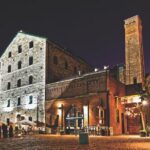
You finish in the Distillery Historic District, starting with the 1832 growth of whiskey making and Gooderham & Worts. Then you get the lingering story question of whether Wort’s ghost is still here.
This finale is smart because it changes the emotional tone. After murders, trials, and punishment, the Distillery District feels like a place where you can process everything while still keeping the same storytelling style.
Even if you don’t buy ghost legends, the stop works as cultural context. It connects industry, wealth, and the way communities remember their past.
Bootlegging at the Distillery and a rougher side of alcohol history
The next Distillery stop shifts to bootlegging in 1922. This keeps the crime theme alive while turning it from street violence to a more structured underground economy—one driven by prohibition-era rules and profit.
It also gives your brain variety. You’ve spent much of the walk on modern-style investigations and public panic. Here you see crime as supply chains and demand, not just individual cases.
And then you end at 55 Mill St, right in the heart of the area—easy to grab a snack or keep exploring on your own.
What walking 2 hours 15 minutes feels like (and how to plan)
Because it’s a private tour, the pace is controlled, but the route is still brisk. The stop format is short, which means you’ll be walking more continuously than you would on a slower heritage stroll.
Here’s how I’d plan it:
- Wear comfy shoes with grip.
- Bring water (the tour doesn’t include bottled water).
- If you want photos, do quick shots and don’t count on long pauses at every corner.
You can also bring your own personality into it. If your group likes court drama, ask about the trial stories. If your group prefers street-level dynamics, focus on gang violence and riots. A private format makes it easier to match the emotional intensity and topic focus.
If the weather turns bad, the tour notes it can be canceled for poor conditions and you’ll be offered a different date or a full refund.
Should you book this Toronto Crime Tour?
Book it if you want a private, guide-led walking experience that treats crime as part of Toronto’s social and legal story—not just scary names. It’s a great fit if you like the blend of former detectives, real case context, and major landmarks like Eaton Centre, Yonge Street, Courthouse Square, St. Lawrence Market, and the Distillery Historic District.
Pass or choose a different kind of tour if you’re uncomfortable with heavy material. This walk includes murder stories, capital punishment context, a serial case, and discussions tied to marginalized communities and mental illness. Even when the telling is respectful, the topics are real and intense.
Finally, decide based on your walking tolerance. If you can handle about two hours of steady walking, this is an efficient way to see a lot of Toronto while learning why the city’s past still shapes what you notice today.
If you want, tell me the month you’re going and your group’s comfort level with dark topics, and I can suggest the best starting schedule and what to pair it with afterward in the Distillery area.
FAQ
How long is the Private 2-Hour Walking Crime Tour in Toronto?
It runs for about 2 hours 15 minutes.
Is this tour private?
Yes. It’s a private tour/activity, and only your group participates.
Where does the tour start and end?
The tour starts at 250 Yonge St, Toronto, ON M5B 2L7, Canada. It ends at 55 Mill St, Toronto, ON M5A 3C4, Canada (Distillery Historic District).
What time does the tour begin?
The start time listed is 1:00 pm.
What should I bring or wear?
Wear comfy shoes because it’s a walking tour. Bottled water is not included, so bring your own beverage, especially on warm days.
What happens if the weather is bad?
The experience requires good weather. If it’s canceled due to poor weather, you’ll be offered a different date or a full refund.
More Toronto City Tours and CN Tower Trips
More Tour Reviews to line up around Toronto and Niagara


Not sure yet? Here is more to see and do across Toronto, just reviewed











More Toronto City Tours & CN Tower to size up.
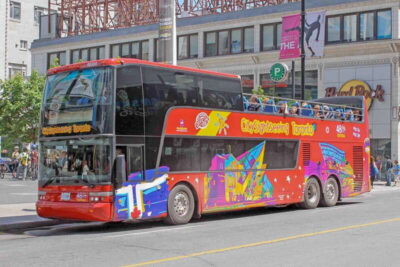 ★ 4.3City Sightseeing Hop-On Hop-Off Bus TourFrom $492,544 reviews
 ★ 5.0Niagara Falls Canada Open-Top (Wet) Jet Boat TourFrom $711,000 reviews
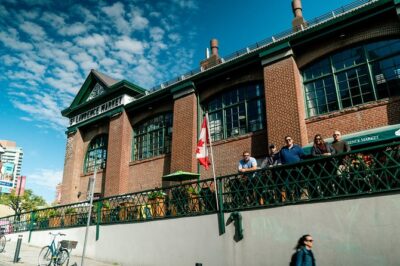 ★ 4.5Toronto Premium Small Group Driving Tour with CN TowerFrom $128833 reviews
 ★ 3.5City Sightseeing Toronto Hop-On Hop-Off Bus TourFrom $49726 reviews
 ★ 5.0Show me the City! A Small Group Walking Tour of TorontoFrom $39621 reviews
 ★ 4.4City Views Harbor CruiseFrom $28557 reviews
 ★ 4.6City Highlights Walking Tour | 3-HourFrom $5306 reviews
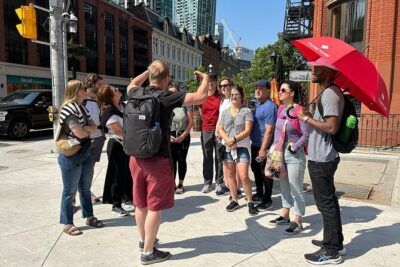 ★ 4.5Old Town Toronto Highlights 3 Hour Walking Tour | Gratuity-BasedFrom $5290 reviews