
Reviewed · TORONTO CITY TOURS & CN TOWER
Toronto: Night Sightseeing Tour on a Double-Decker Bus
Night falls, and Toronto glows.
On this Toronto double-decker night tour, the city’s main sights light up as you cruise downtown, with an English-speaking guide calling out what you’re seeing and why it matters.
Two things I really like: the guaranteed upper-deck seating (it’s a big deal for getting good sightlines), and the way the live guide commentary turns landmarks into a quick, easy overview. When Marilyn was guiding and Steve was driving, the ride felt upbeat and packed with practical context you could use later while exploring.
One consideration: sound and visibility can vary. A clearer mic/speaker setup would help, especially if you’re seated farther back, and low street trees or bus movement can sometimes block the best photo angles.
In This Review
- Quick hits before you go
- Why a 90-minute double-decker night tour makes sense in Toronto
- Meeting at Yonge-Dundas Square and how the upper deck changes everything
- The downtown route: what you’ll see, and why each stop matters
- Yonge-Dundas Square: the neon start button
- Fairmont Royal York: classic hotel lights
- University of Toronto – St. George Campus: where architecture meets street life
- Chinatown, Toronto: color and character under the lights
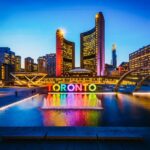
- Nathan Phillips Square: civic space with big-night presence
- Yonge Street: the main line of downtown
- Flatiron Building: a shape that reads in the dark
- Church Wellesley Village and Queens Park: neighborhood edges and city form
- Old Toronto: heritage feeling without the museum pace
- Financial District: skyline drama
- The Esplanade: a calmer closing note
- Photo tips that actually help from a bus seat
- Live guides: facts, local context, and a smoother ride
- Open-top vs closed-top: dress smart for Toronto weather
- Price and value: is $32 worth it?
- What could disappoint: sound clarity and occasional view blocks
- Who this night tour is best for
- Should you book this double-decker night tour?
- FAQ
- How long is the Toronto night sightseeing tour?
- Where do I meet for the tour?
- Does the price include a bus and a guide?
- Is the upper deck guaranteed?
- Is the tour open-top or closed-top?
- Is the tour wheelchair accessible?
- Does the tour include food and drinks?
- FAQ
- What’s included in the tour?
- Is free cancellation available?
- Are there any items or substances not allowed?
Quick hits before you go
- Guaranteed upper-deck views: You’re set up to see Toronto’s skyline without hunting for a good seat.
- Live English narration: The guide’s running talk keeps the ride from feeling like pure sightseeing.
- A compact 90-minute loop: Great when you want a downtown overview without committing to a full night out.
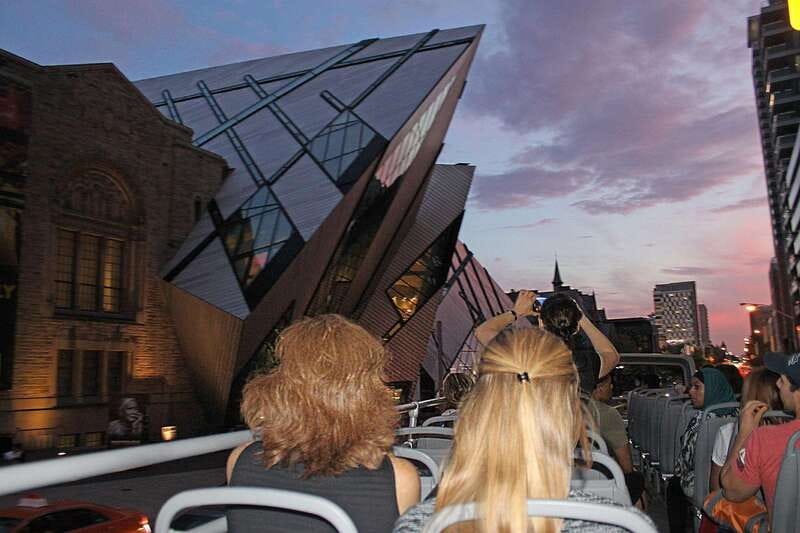
- Classic downtown photo moments: Expect dramatic building lighting, especially in the core.
- Open-top most months, closed-top in winter months: The bus setup changes in November and December.
- Bring weather-appropriate clothing: You’ll be outside enough that rain and cold matter.
Why a 90-minute double-decker night tour makes sense in Toronto
Toronto at night has a particular energy. The streets look cleaner and sharper under lights, and the tall buildings read differently once the sun is gone. This tour is built for that feeling: a 90-minute ride that gives you a fast, city-wide “map in motion,” without asking you to walk long distances in the dark.
I also like that it’s not trying to be a complicated production. You get on, you sit top deck if you want the views, and you let the guide connect the dots between neighborhoods and major downtown landmarks. If you’re visiting for a short time, or you just want to understand where things are, this is a smart use of an evening.
See more of the skyline on our other Toronto city tours and CN Tower trips in Toronto
Meeting at Yonge-Dundas Square and how the upper deck changes everything
You meet at the Visitor Information Kiosk in Yonge-Dundas Square (it’s noted as soon to be Sankofa Square). It’s a convenient starting point because it’s already central to a lot of your later sightseeing options.
The big practical advantage is the guaranteed seating on the upper level. On open-top buses, that’s often where the best photos happen and where you feel the night air most. Even if you’ve never taken a double-decker tour before, the setup makes it harder to get stuck with a bad view.
If the tour is operating with a closed top vehicle (noted for November and December), the upper level still matters, but you’ll be dealing with a different feel. It’s more sheltered, less breezy, and usually better for chilly rain nights.
The downtown route: what you’ll see, and why each stop matters
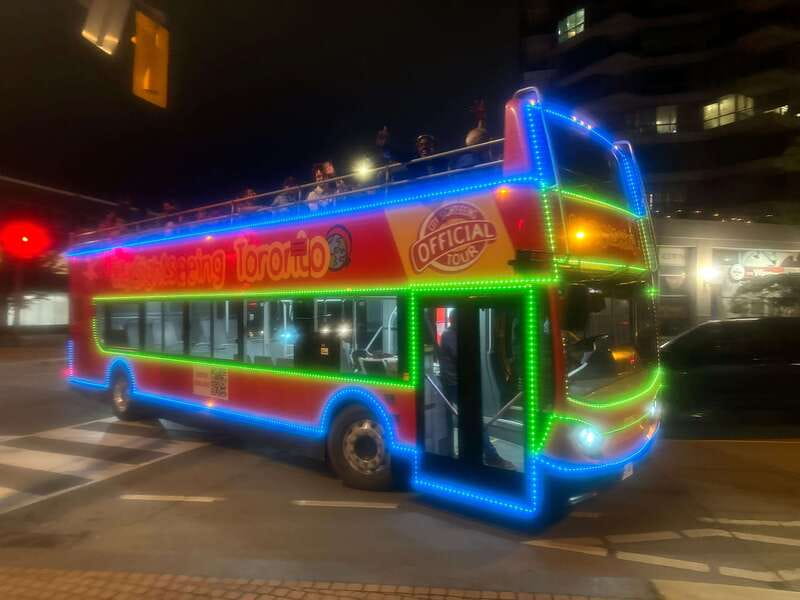
This is a “see a lot fast” style route. You’ll pass major areas while the guide provides live commentary, so you’re not stuck waiting for long stops. Here’s how the stops usually break down and what to look for at each one.
Yonge-Dundas Square: the neon start button
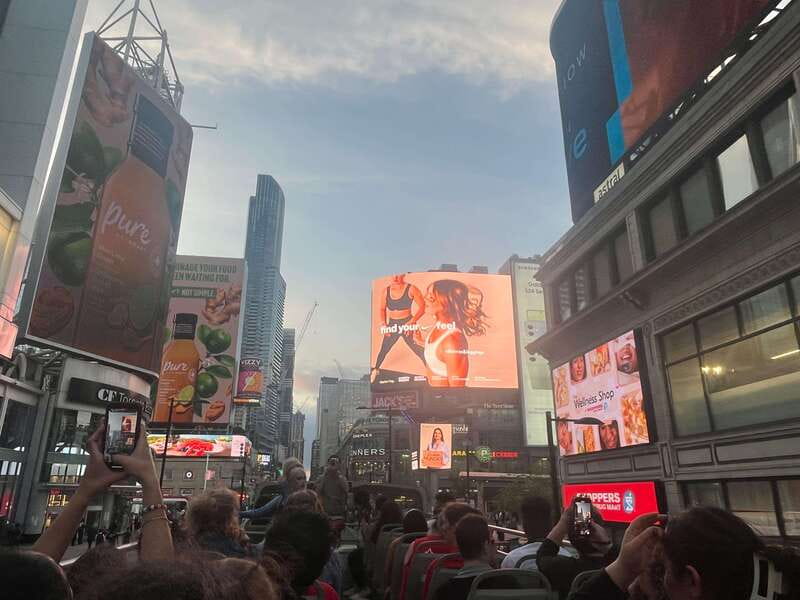
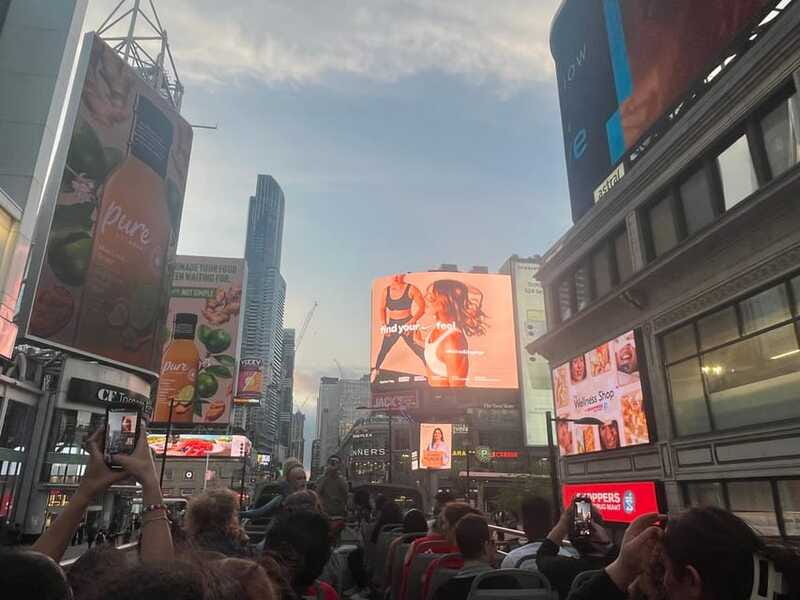
You’ll begin in the heart of the action at Yonge-Dundas Square. At night, this kind of plaza area reads like a switching station for the whole city: lights, signage, and the sense of Toronto as a connector. Even if you’re not sure what you’re looking at yet, it helps you calibrate quickly.
Fairmont Royal York: classic hotel lights
Passing the Fairmont Royal York gives you that “downtown landmark” feeling early. Hotel facades often look especially dramatic at night because the windows and architectural lines catch light well. It’s a good moment to notice how Toronto’s identity shows up in older, established buildings.
More things to do after dark in Toronto
University of Toronto – St. George Campus: where architecture meets street life
When you pass the University of Toronto’s St. George campus area, you get a different vibe than pure business downtown. Even without getting out, you can often spot how the streetscapes feel more academic and structured. It’s also one of those areas that can frame the city’s skyline and long sightlines differently than the core financial blocks.
Chinatown, Toronto: color and character under the lights
Passing through Chinatown is where the tour shifts from towers and civic space to neighborhood texture. Night lighting can make storefront streets and lane visuals feel more alive. If you like recognizing areas you’ll want to return to on foot later, this segment helps with that.
Nathan Phillips Square: civic space with big-night presence
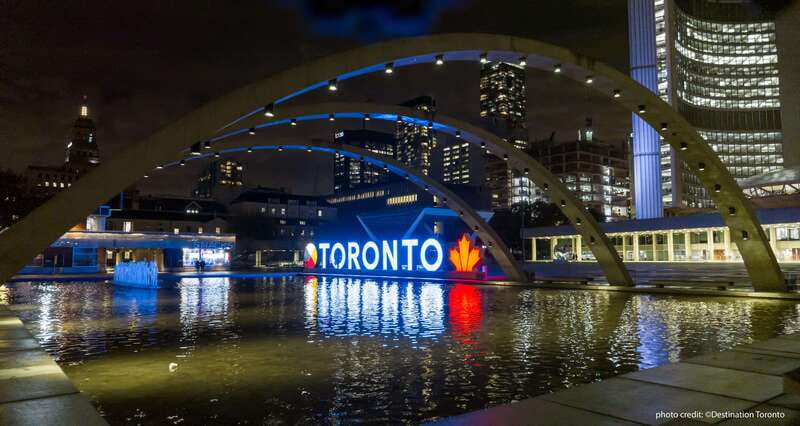
Nathan Phillips Square is one of those places where buildings and open space create strong visual geometry at night. You’ll catch a clear sense of downtown planning here, plus the way city landmarks stand out when everything else is dark.
Yonge Street: the main line of downtown
When you cruise along Yonge Street, you’ll feel how the city organizes itself. This is Toronto’s long-running spine, and at night the lighting creates a strong “corridor” effect. It’s useful for orientation because you can later connect what you saw from the bus to where you want to go next.
Flatiron Building: a shape that reads in the dark
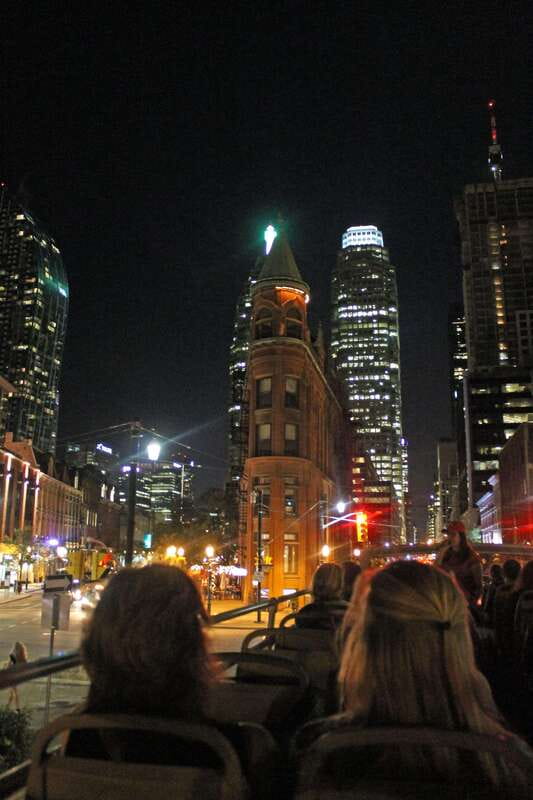
The Flatiron Building is a standout visual because its form is noticeable even when you’re moving. On night tours, dramatic lighting and distinct silhouettes help your brain remember what you saw. If you like architecture, this is the kind of stop that makes the ride feel more than routine sightseeing.
Church Wellesley Village and Queens Park: neighborhood edges and city form
Passing Church Wellesley Village and Queens Park adds variety. You get a shift from dense core structures to areas that feel more defined by layout and public space. This is also where top-deck views help, since you can look across the street grid rather than just at the buildings right in front of you.
Old Toronto: heritage feeling without the museum pace
When you pass Old Toronto / Old Town areas, the lighting tends to emphasize character buildings and older downtown streetscapes. The guide’s commentary helps you connect the idea of the city’s past with what you’re seeing now, without slowing down the ride.
Financial District: skyline drama
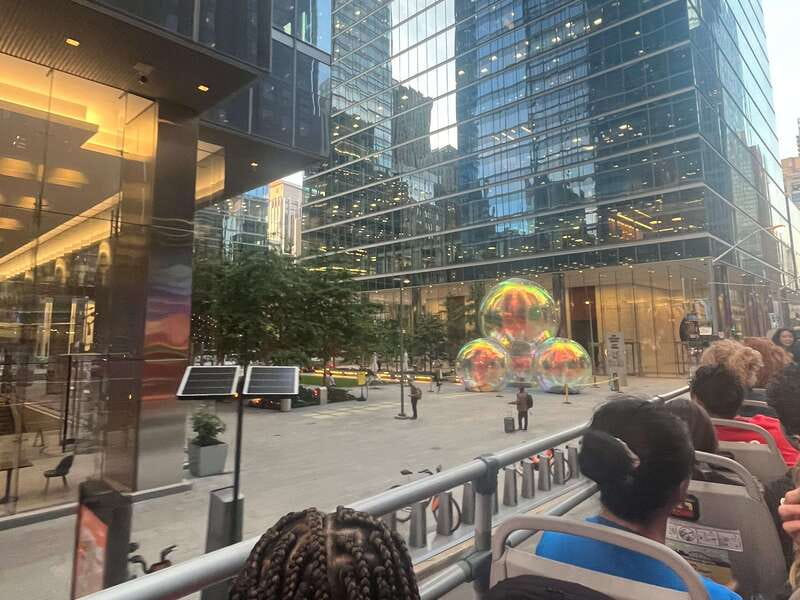
The Financial District is where Toronto’s height and density show up hardest. Night lighting turns towers into sharp shapes, and the contrast between lit windows and dark facades makes skyline views feel cinematic. If your goal is simply to get that “wow” picture, this part of the loop is a big reason to book.
The Esplanade: a calmer closing note
Passing The Esplanade gives you a softer landing after the densest downtown area. It’s a useful transition point, especially if you’re heading out after the tour and want to know where things loosen up a bit.
Photo tips that actually help from a bus seat
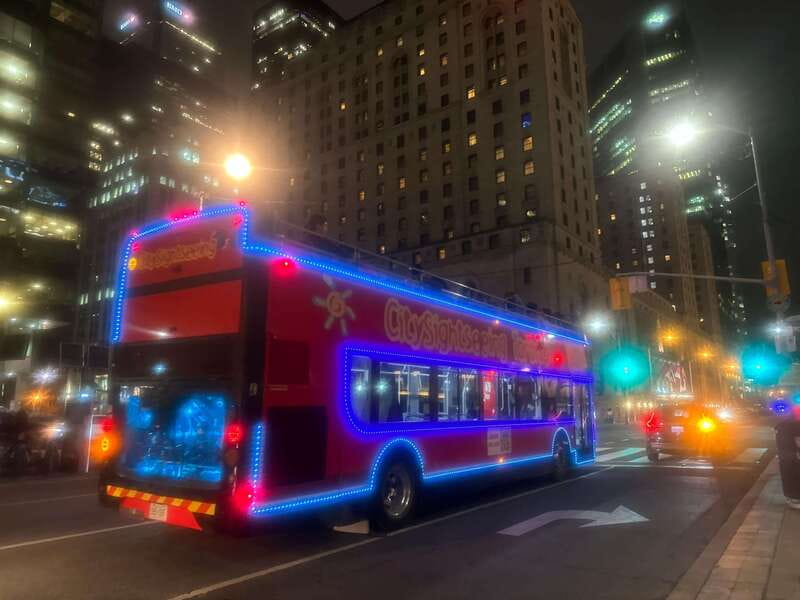
Night photos can be frustrating from a moving vehicle. Here’s what I’d focus on to improve your odds.
- Plan for reflections: If you’re near glass or in a bus section with any cover, reflections can sneak into your shots.
- Pick moments when the bus slows or angles: When the bus changes speed or direction, your frame steadies for a second.
- Watch for blocked sightlines: Low branches and the height of your seat matter. One practical tip from the experience side of the ride: you may end up ducking a bit for clearance, which also tells you the view can be imperfect in tight spots.
- Shoot wide first, then zoom: When the skyline pops, start with a wider framing so you capture the whole scene, then try a tighter shot if conditions allow.
And if a specific photo angle doesn’t work, it’s not you. Downtown streets can be crowded with trees, poles, and passing elements that sit between your camera and the skyline.
Live guides: facts, local context, and a smoother ride
The tour’s not just a set of landmark photos. It’s the guide’s running commentary that makes it feel like an actual orientation experience.
I like it when the guide delivers the information in a way you can remember later, and this tour seems to aim for exactly that. Guides mentioned include Marilyn (with Steve driving), Mohammed, and Grace. Names aside, the common thread is lively storytelling and an overview that helps you place what you’re seeing into a bigger picture.
In practical terms, you’ll likely walk away with:
- a faster sense of where downtown neighborhoods are relative to each other
- a few landmark “anchors” you can use when you’re planning the rest of your trip
- simple explanations that make architecture and streets feel less random at night
Open-top vs closed-top: dress smart for Toronto weather
The tour is typically described as an open-top double-decker experience, but closed top double-decker vehicles may be used in November and December. Either way, you should treat this like a night-out that includes time outdoors.
The guidance is straightforward: bring weather-appropriate clothing and check the weather forecast, since you’re meant to dress for water and cold conditions that can pop up after sunset. If rain is likely, dress as if you might get misted; you’ll feel it more up on the top deck.
A good rule: wear layers you can manage without turning the ride into a wardrobe change. You’ll be happier focusing on the city lights instead of adjusting every few minutes.
Price and value: is $32 worth it?
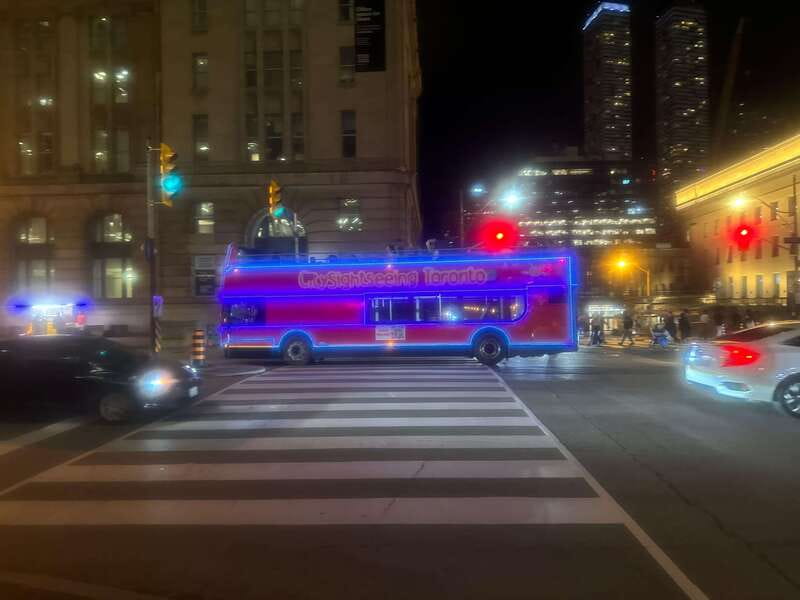
At $32 per person for 90 minutes, you’re paying for three things: guided narration, a structured downtown loop, and the guaranteed upper-deck view.
Where the value really shows up is the combination of time and seat quality. A short tour that includes a sight-heavy route can save you from spending your night trying to figure out where to go. And if you’re paying for a night tour, you usually don’t want to waste money on a seat where you can’t see much.
Two things to keep in mind for value:
- Food and drinks aren’t included, so plan to eat before or after.
- No hotel pickup, meaning you should plan to get yourself to Yonge-Dundas Square on time.
If you want a low-effort downtown orientation with strong skyline views, this price sits in the “yes, that’s practical” zone.
What could disappoint: sound clarity and occasional view blocks
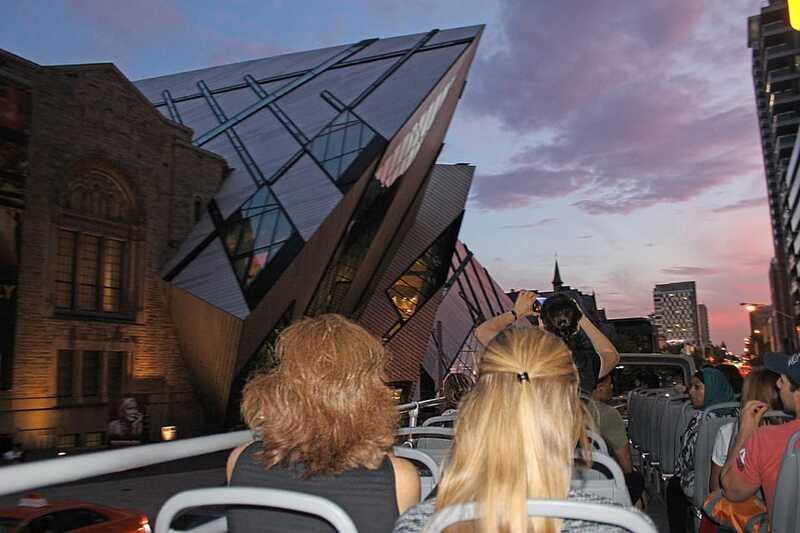
This tour is close to perfect for many people, but a couple of real-world issues can affect your experience.
- Audio clarity from farther back: One concern was that the mic and speaker weren’t clear enough for seats farther away. Even with live commentary, if the sound is weak where you sit, you’ll miss some of the story.
- Photo opportunities can be blocked: Tree branches and bus movement can interfere with certain angles. If your goal is very specific shots, accept that downtown has obstacles and the bus won’t stop forever.
Also, one note that came up was about cleanliness. It’s not the norm you should expect, but it’s worth keeping in mind. If bus comfort matters a lot to you, you might want to aim for a seat area that feels cleaner to start.
Who this night tour is best for
This works especially well if you:
- want a fast overview of downtown Toronto without navigating streets at night
- care about top-deck skyline views and don’t want to gamble on seating
- like tours with live commentary that explain what you’re seeing, not just where you’re passing
It’s also a good choice if you’re traveling with someone who doesn’t want a long walking itinerary. The ride format lets you see a lot while staying seated and comfortable, even when the weather shifts.
Should you book this double-decker night tour?
If you want an easy, high-impact Toronto night that centers on downtown landmarks, I’d book it. The guaranteed upper-deck seating and the live English guide make it feel like more than a drive-by bus ride.
I’d be slightly more cautious if you know you struggle with audio in noisy situations or you get frustrated when views are blocked by trees and street clutter. Even then, the core skyline lighting and the downtown “orientation” effect usually still do the job.
If your goal is simple: see the highlights, learn a few useful pointers, and get memorable night photos without over-planning, this is a solid pick.
FAQ
How long is the Toronto night sightseeing tour?
The tour lasts 90 minutes.
Where do I meet for the tour?
Meet at the Visitor Information Kiosk in Yonge-Dundas Square (soon to be Sankofa Square).
Does the price include a bus and a guide?
Yes. The tour includes a double-decker bus tour with live commentary and guaranteed seating on the upper level.
Is the upper deck guaranteed?
Yes. Seating on the upper level is guaranteed.
Is the tour open-top or closed-top?
It’s described as an open-top double-decker tour, but closed top double-decker vehicles may be used in November and December.
Is the tour wheelchair accessible?
Yes, the tour is wheelchair accessible.
Does the tour include food and drinks?
No. Food and drinks are not included.
FAQ
What’s included in the tour?
The tour includes the double-decker bus tour and live commentary, plus guaranteed seating on the upper level.
Is free cancellation available?
Yes. You can cancel up to 24 hours in advance for a full refund.
Are there any items or substances not allowed?
Alcohol and drugs are not allowed.
More Toronto City Tours and CN Tower Trips
More Tour Reviews to line up around Toronto and Niagara
Not sure yet? Here is more to see and do across Toronto, just reviewed


More Toronto City Tours & CN Tower to size up.
 ★ 4.3City Sightseeing Hop-On Hop-Off Bus TourFrom $492,544 reviews
 ★ 5.0Niagara Falls Canada Open-Top (Wet) Jet Boat TourFrom $711,000 reviews
 ★ 4.5Toronto Premium Small Group Driving Tour with CN TowerFrom $128833 reviews
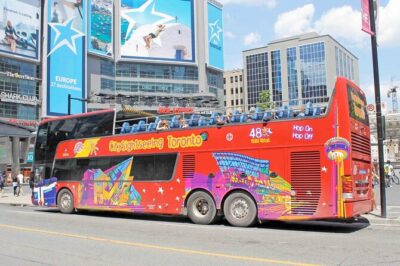 ★ 3.5City Sightseeing Toronto Hop-On Hop-Off Bus TourFrom $49726 reviews
 ★ 5.0Show me the City! A Small Group Walking Tour of TorontoFrom $39621 reviews
 ★ 4.4City Views Harbor CruiseFrom $28557 reviews
 ★ 4.6City Highlights Walking Tour | 3-HourFrom $5306 reviews
 ★ 4.5Old Town Toronto Highlights 3 Hour Walking Tour | Gratuity-BasedFrom $5290 reviews
This tour also ranks in