
Reviewed · DOWNTOWN TORONTO WALKING TOURS
Toronto Essentials Tour: Old Town & Downtown Highlights (PWYC)
Toronto changes fast when you’re seeing it on foot. This tour gives you the downtown spine plus a few Old Toronto stops, all wrapped into about 90 minutes to 2 hours. I love the clear orientation you get right away at Union Station, and I love the CN Tower viewpoint moments that make the skyline feel close. One thing to consider: it moves at a walking-tour pace, and you’ll want to be on time because the guide can’t wait.
The best part is how the route mixes big-name landmarks with behind-the-scenes city life. You’ll get inside stories on the PATH underground network and why downtown spaces feel designed for people (and shoppers) even below street level. If you want a slow, museum-style visit, this may feel a bit too fast—think getting bearings, not lingering.
In This Review
- Key moments I’d plan around
- A PWYC price that makes sense for first-timers
- Union Station meet-up: the detail that saves your morning
- CN Tower from street-level: the skyline lesson
- The Royal York Hotel outside: why grandeur here matters
- PATH underground: useful orientation, not a tunnel horror story
- Brookfield Place and Calatrava’s white-vault design
- Hockey, the Stanley Cup moment, and a market tip to use later
- Berczy Park’s dog fountain: quirky Toronto, no extra time wasted
- St. James Cathedral: Muddy York meets Gothic Revival
- Financial District: banks as cathedrals and the fire that shaped rules
- City Hall and Nathan Philips Square: the perfect ending photo
- Tour rhythm: how you learn without it feeling like a lecture
- Who should book this Toronto Essentials Tour?
- Should you book it? My call
- FAQ
- How long is the tour?
- Where is the meeting point in Toronto?
- Where does the tour end?
- Is the tour offered in English?
- Can the guide wait if I’m late?
- How big is the group?
Key moments I’d plan around
- Meet at the Union Station Great Hall: inside, near the info booth under the clock, so you don’t play guessing games.
- CN Tower skyline hits: you’ll get prime angles and context for why it’s such a Toronto symbol.
- A practical taste of the PATH: learn what it is and how not to get turned around.
- Brookfield Place by Calatrava: white steel-and-glass vaults that photograph like a dream.
- Old Toronto stops with real texture: Berczy Park, St. James Cathedral, and the Financial District.
- Finish at City Hall and Nathan Philips Square: a photo-ready ending with public space vibes.
A PWYC price that makes sense for first-timers
This Toronto Essentials Tour is listed at $4.50 per person and runs in a pay-what-you-can style. For that kind of money, you’re buying direction: a route that hits major landmarks without you burning your day on trial-and-error.
I like that the tour doesn’t pretend you’ll learn everything in two hours. Instead, it helps you understand what matters so your later exploring feels easier—like you’re walking with a map made of stories.
Lace up for more downtown Toronto walking tours around Toronto


Union Station meet-up: the detail that saves your morning
The meeting point can be confusing at Union Station, because the station has several high-traffic spots. This tour starts inside the Great Hall, above ground, with huge windows, flags on one wall, and—most important—a tourist info booth under a clock in the middle.
The easy mistake is heading for the food court, the other tourist desk, or the clock outside on the sidewalk. I’d arrive a few minutes early, stand where you can spot that central booth, and wait right there. The tour leaves on time, and if you’re late, the guide can’t wait—so being ready matters.
CN Tower from street-level: the skyline lesson
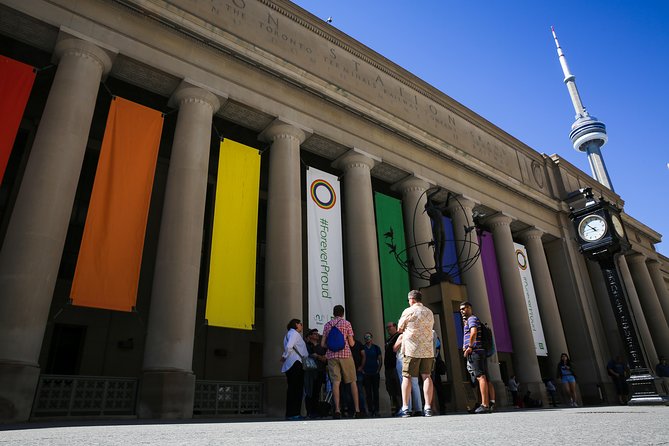
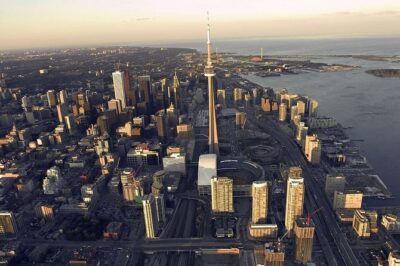
Toronto’s CN Tower isn’t just a tall thing to point at—it’s a piece of the city’s tech and identity. Your guide frames it as the world’s tallest free-standing structure before the Burj Khalifa, but also as a practical tool: the tower boosted TV and radio reception around the area in the 1970s.
What I like here is the timing. Instead of saving the skyline for the end, you get it early, so the rest of downtown starts to click. When you know where the tower sits, the streets and blocks feel less like a maze.
The Royal York Hotel outside: why grandeur here matters
You’ll also take in the exterior of the Fairmont Royal York Hotel, built as the “luxury rail travel” answer for Toronto. The story is that rail across Canada was expensive and slow, so rail companies promoted grand hotels near stations to make the journey feel like part of the appeal.
Then reality hits: the Royal York opened in 1929, right as the global economy collapsed. You’ll learn how the hotel held on as a beloved landmark even as other hotels rose, and you’ll see why it became a symbol of Toronto’s prosperity. Tour groups aren’t taken into the lobby, so the value is in the street-view context—watching the building as a downtown anchor.
PATH underground: useful orientation, not a tunnel horror story
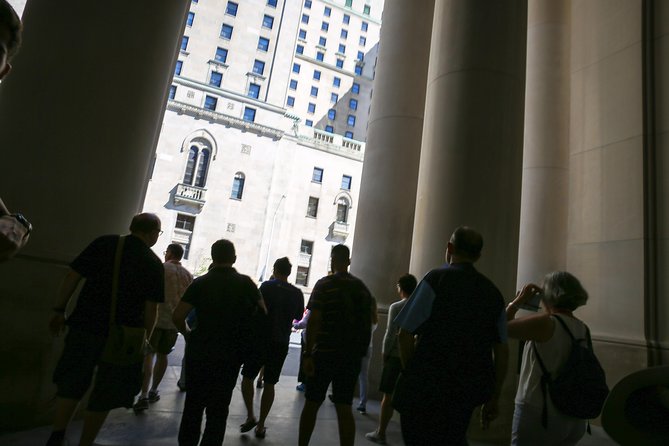
One stop that changes how you experience downtown is the PATH. This is Toronto’s underground network of corridors and food courts that links basements across the financial core to subway stations.
The tour gives you a short, guided walk and the history behind it, which helps you understand why it exists: weather, convenience, and density. The guidance also matters because the PATH isn’t intuitive. You can absolutely feel turned around, so staying close to your guide is the whole point here.
If you’re the kind of person who hates wandering underground without a plan, this is where the tour pays for itself. After you know the basics, you’ll feel more confident returning on your own.



Brookfield Place and Calatrava’s white-vault design
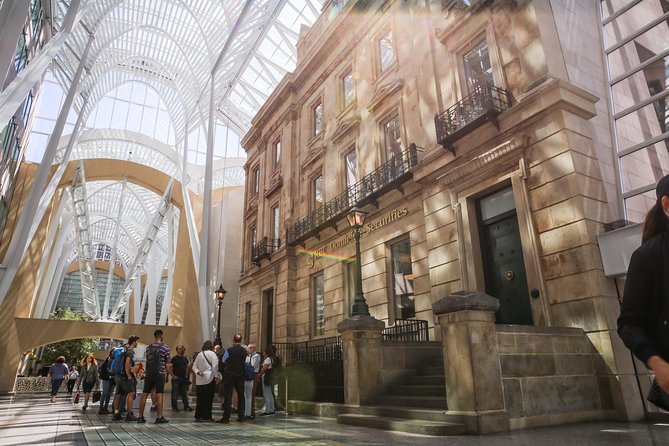
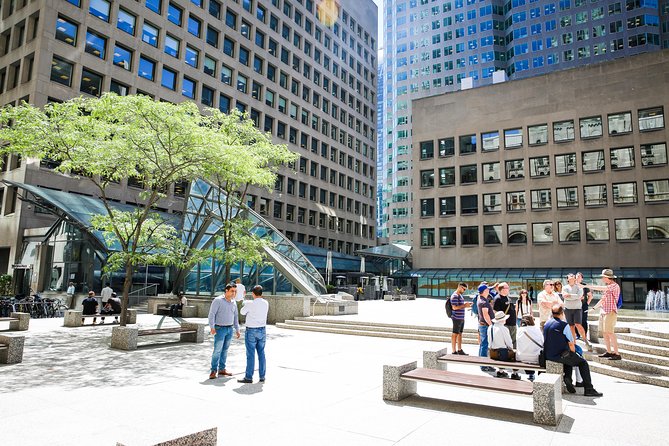
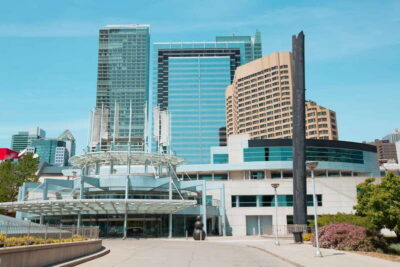
At Brookfield Place, you get a visual palate cleanser. The building was designed by Santiago Calatrava, and the public space—white steel and glass with high vaulted ceilings—creates an airy, otherworldly feel.
This stop also helps you understand a Toronto quirk: the idea of private space that feels public. Your guide talks about how these downtown areas are built for movement, comfort, and social life, not just commerce. If you like architecture with a purpose (and not just decoration), this is one of the most satisfying parts of the route.
Hockey, the Stanley Cup moment, and a market tip to use later
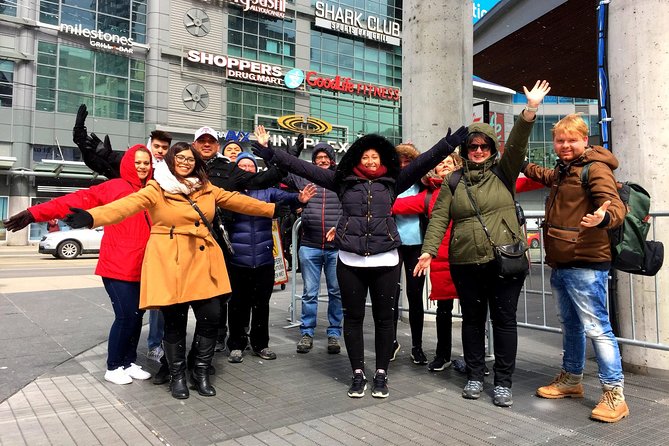
This tour doesn’t linger long, but it does point you toward a hockey-focused destination you can find easily when you return. One of the highlights is that the guide helps you locate the entrance so you don’t waste time asking or backtracking.
There’s also a stop where your guide references Canada’s national winter sport and even shares why the Toronto Maple Leafs may not win another Stanley Cup. The tone stays light, but the takeaway is practical: you’ll leave knowing where to go if hockey is your next mission.
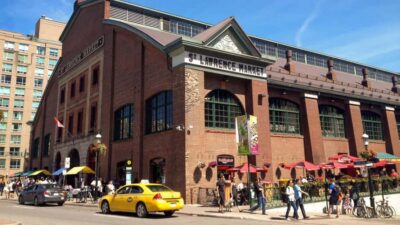
After that, you’ll get tips for visiting the market. The guide explains its role in the city’s development and gives pointers for what to do next. I love this because it turns your walk from a “look-only” experience into a plan for the rest of your trip.
Berczy Park’s dog fountain: quirky Toronto, no extra time wasted
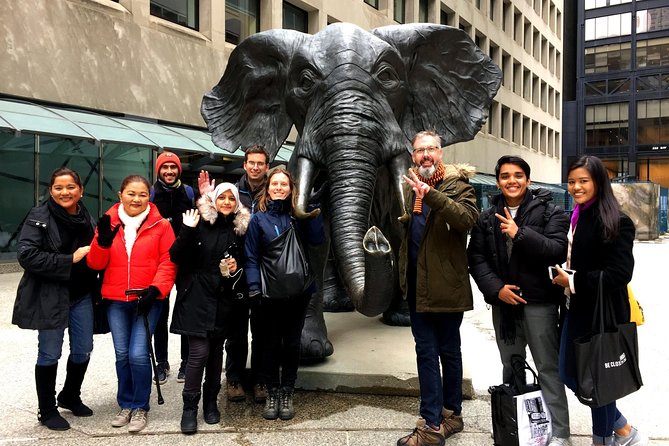
Next comes Berczy Park, famous for the “dog fountain.” It’s the kind of place that could be skipped in a rushed tour, but it’s actually useful: it breaks up the skyscraper-heavy blocks with something human-scale and memorable.
Your guide connects the fountain to the idea that Toronto does charming, slightly theatrical things in public space. You get a quick moment, but it lingers. It’s also a good pause point to reset your legs before the next historical cluster.
St. James Cathedral: Muddy York meets Gothic Revival
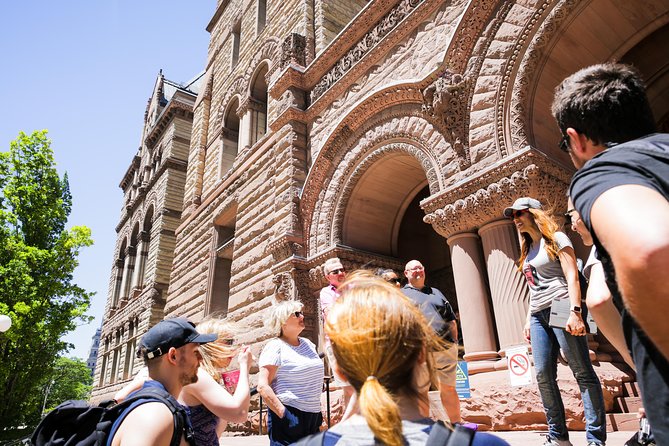
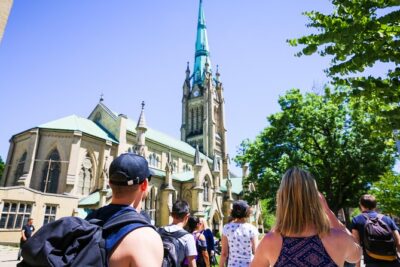
The Cathedral Church of St. James is where the tour slows just enough to feel meaningful. Your guide frames it as the spiritual center of Old Toronto and also as a seat of power in the 19th century.
You’ll learn how religion and politics intertwined here—especially through the story of Muddy York, Toronto’s early identity. The cathedral is Gothic-Revival, and even if you don’t do “big church” as a rule, this stop helps you see how downtown governance and belief shaped the city’s early backbone.
Financial District: banks as cathedrals and the fire that shaped rules
In the Financial District, you’re walking among some of the biggest skyscrapers in Canada, but the tour’s angle is about character. Your guide explains the big Canadian banks and gives the kind of local detail that makes architecture feel alive.
One story stands out: the Great Fire of 1904, tied to John Croft in a way that makes the name memorable for the wrong reasons. You’ll also get a feel for what downtown commuting looks like—work where the goal is buy low and sell high. It’s said with a little wink, but the point is clear: this is a place built around finance and power.
A note on the pace: because downtown has so many “wow” buildings, your guide doesn’t overstuff this stop. If you’re hungry for deeper building stories, you’ll notice there are a few details kept for other tours. That’s not a problem—it just means you’ll likely want to do a second pass at some point.
City Hall and Nathan Philips Square: the perfect ending photo
The tour’s final stop lands at Toronto City Hall, completed in 1965. It’s iconic for its futuristic design and for how it shows Toronto’s aspirations—modern, concrete, and confident.
You’ll also see the Toronto sign out front, and the guide sets you up for a group photo moment. Then you finish at Nathan Philips Square, a public space where the city gathers for holidays, farmers markets, and protests. The idea here is simple: this is more than a building; it’s where Toronto performs its public life.
The practical bonus is that public washrooms are nearby. That matters on a tight walking route, especially if you’re planning to keep exploring after the tour ends.
Tour rhythm: how you learn without it feeling like a lecture
This tour works because it has a clean tempo. You get big visuals—CN Tower angles, Brookfield Place vaults, downtown skyscrapers—then you get a short story that explains why the place exists.
Guides like David and Michael are praised for balancing history, architecture, and fun. You can also see the pattern in other guide names like Aaron and Ulysses: the style is clear communication plus practical orientation. The effect is that you leave understanding what you saw, not just where it is.
If you like learning through walking, you’ll enjoy it. If you prefer to sit and absorb, you might find some stops too short. Still, the route is smart for short trips because it gives you a framework for what to look for next.
Who should book this Toronto Essentials Tour?
I’d book it if you:
- are visiting Toronto for the first time or have only a short window
- want quick downtown orientation with skyline and landmark hits
- like architecture and city planning stories more than museums
I’d skip or pair it with something else if you:
- hate walking and want long indoor stops
- want deep, slow dives into one neighborhood
- plan to spend the day in one specific area, like only Old Town or only the waterfront
The tour size is capped at 30 travelers, which keeps it manageable. It’s also offered in English, with mobile tickets and service animals allowed.
Should you book it? My call
If your goal is to get your bearings fast and feel confident exploring the core of Toronto afterward, this tour is a strong pick. The low PWYC-style price plus the mix of CN Tower, PATH orientation, and City Hall makes it good value even if you’re not a hardcore history person.
The main reason not to book is simple: you don’t want a walking route with tight timing. If you can be on time and you’re happy with a fast orientation day, you’ll get more out of your remaining time in Toronto.
FAQ
How long is the tour?
It runs about 2 hours (approx.), with the downtown walking portion commonly described around 90 minutes.
Where is the meeting point in Toronto?
You meet at 55 Front St W, inside Union Station, in the Great Hall near the information booth under the clock.
Where does the tour end?
The tour ends at Nathan Phillips Square at 100 Queen St W, near the famous TORONTO sign.
Is the tour offered in English?
Yes, the tour is offered in English.
Can the guide wait if I’m late?
No. The tour leaves on time, and if you’re late the guide cannot wait.
How big is the group?
The tour has a maximum of 30 travelers.
More Downtown Toronto Walking Tours
More Tour Reviews to line up around Toronto and Niagara


Not sure yet? Here is more to see and do across Toronto, just reviewed












More Downtown Toronto Walking Tours to size up.
 ★ 5.0Show me the City! A Small Group Walking Tour of TorontoFrom $39621 reviews
 ★ 5.0Downtown Toronto Bike TourFrom $93336 reviews
 ★ 4.5Old Town Toronto Highlights 3 Hour Walking Tour | Gratuity-BasedFrom $5290 reviews
 ★ 4.7Private Walking Tour with a LocalFrom $43150 reviews
 ★ 4.5Old Town Toronto History Walking TourFrom $4122 reviews
 ★ 4.42-Hour Downtown Walking TourFrom $28101 reviews
 ★ 4.8Old Toronto by Beer: A Craft Brew AdventureFrom $7191 reviews
 ★ 4.9Brothels of Old Toronto Walking TourFrom $1971 reviews
This tour also ranks in