
Reviewed · HISTORICAL TOURS
Sports, Street Skateboarding, Economics, History & Culture
Toronto has a street-skate pulse.
This 90-minute downtown tour connects history, sports culture, and the city’s economics through real places you can see on foot. I like how it uses Toronto’s PATH and street architecture as a kind of open-air textbook, and I like that the guide, Duncan, tells stories that make famous landmarks feel personal and specific. One thing to keep in mind: it’s weather-dependent and you’ll be walking, so wear grippy shoes and plan to stay out for about 1.5 hours.
You’ll start near Queen Street and end outside Scotiabank Arena on Raptors Way, close to the PATH. The route is built for pacing and sightlines, but if you’re easily tired by downtown sidewalks, think of it as a “smart walk” not a slow stroll.
In This Review
- Key highlights worth your attention
- A small group, a big city story: what this walking tour feels like
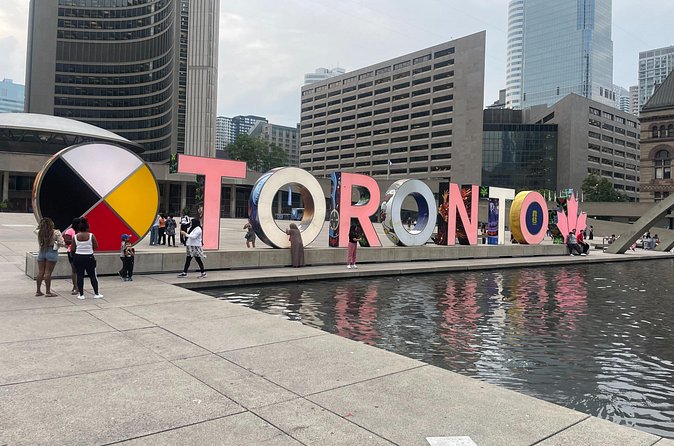
- Nathan Phillips Square: Toronto Sign vibes and the city’s big-event DNA
- Bay Street Corridor: Suits, Meghan Markle, and the reality of filming downtown
- The PATH section: using wayfinding, then seeing what changed after 2020
- Canada’s Financial District: where the economy shows up in headcount and symbols
- Street skateboarding downtown: the urban architecture lesson
- Brookfield Place and the NHL Situation Room: buildings with job descriptions
- Legends Row outside Scotiabank Arena: Maple Leafs legacy to Raptors ambition
- Duncan’s extra value: the Google Maps food map and end-planning help
- Who should book this tour?
- Should you book this downtown Toronto street-skate, sports, and economics walk?
- FAQ
- How long is the tour?
- What language is the tour offered in?
- Is there any admission fee for the stops?
- How much walking should I expect?
- Does the tour run in any weather?
- Where does the tour start and end?
- Is gratuity included in the price?
Key highlights worth your attention
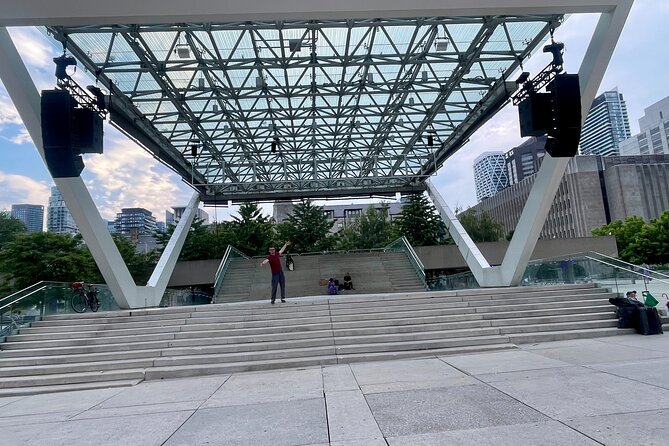
- Nathan Phillips Square details you’ll notice right away, including the Toronto Sign by the ice rink
- Bay Street pop-culture context, from the Suits lobby filming connection to what Meghan Markle’s presence meant on site
- The PATH after the pandemic, including how closure and reopening changed foot traffic and how people navigate it
- Street skateboarding in downtown Toronto, with how pros learned to film tricks on urban architecture
- Brookfield Place and the NHL Situation Room, tying architecture to how hockey operations run behind the scenes
- Legends Row to Raptors Way, linking Maple Leafs history and the Kawhi Leonard era for the Raptors
A small group, a big city story: what this walking tour feels like
This is a compact, high-signal downtown experience. It runs about 1 hour 30 minutes, with a maximum of 25 people, so you won’t feel lost in a crowd. You’ll mostly be on foot, hitting major corners and then slipping into the pedestrian-friendly side of downtown through the PATH for part of the route.
The best part is how the tour turns “downtown sights” into something you can actually read. Instead of memorizing facts, you’ll learn why certain buildings matter, how entertainment and sports shape the streets, and how even the ground-level details connect back to money, media, and daily life.
If you care about street culture as much as landmarks, this tour makes that mix feel normal, not forced. And if you’re visiting Toronto for the first time, you’ll get your bearings fast—while still learning stuff that isn’t in every basic brochure.
More history to dig into across Toronto



Nathan Phillips Square: Toronto Sign vibes and the city’s big-event DNA
The tour starts by setting the tone at Nathan Phillips Square. You’ll learn about its history and how it hosted what’s described as the largest event in Canadian history. That’s the kind of claim that can sound vague until you’re standing in the space and hearing how it became a stage for major moments.
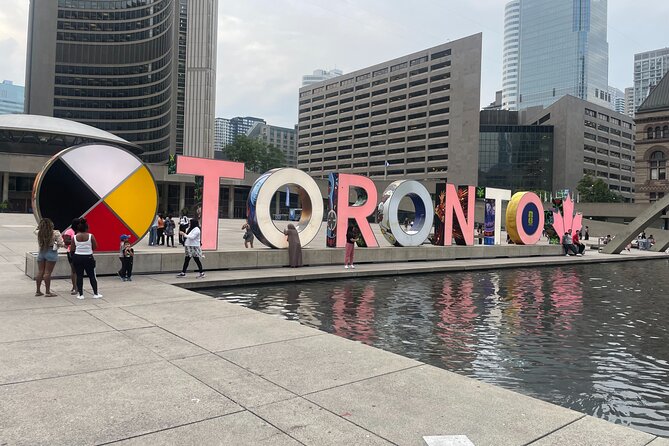
You also get the Toronto Sign context, located at the ice rink. It’s a small detail that usually gets photographed and forgotten, but here it connects to how the square works seasonally and why it’s become a public symbol.
A nice extra from the guide’s approach: there’s mention of a Reconciliation Garden next to Nathan Philips Square. Even without a long stop, it nudges you to look past the obvious skyline views and notice how public space reflects current cultural priorities.
Why I like this stop: it grounds the tour in place first. Before Bay Street or finance, you understand where the city likes to gather when it wants attention.
What to watch for: if you’re coming at a busy time of day, you may have to wait a minute or two for the group to look around comfortably.
Bay Street Corridor: Suits, Meghan Markle, and the reality of filming downtown
Next you move along the Bay Street Corridor, and the tour treats this street like a film set you can still walk through. You’ll hear about the Suits lobby location and the connection to Meghan Markle, who starred as a paralegal on the show. The tour also covers what her presence meant for filming—encounters with press and fans, plus on-site safety considerations while shoots were happening.
This stop isn’t just trivia. It’s also about how Toronto’s film industry operates—and what challenges it faces now. That context matters if you care about how a city earns attention. Toronto isn’t only “where things get filmed.” It’s also a business ecosystem dealing with logistics, costs, and changing conditions.
Practical takeaway for you: even if you’ve watched the show, don’t expect this to turn into a scavenger hunt of recognizable scenes. It’s more about how production affects real streets and why that’s part of modern Toronto culture.
Possible drawback: if you’re not into TV or film, this stop might feel a little more niche than the sports or finance sections. Still, the bigger story—how downtown turns into a working location—lands for most people.
The PATH section: using wayfinding, then seeing what changed after 2020
After Bay Street, you’ll walk through the PATH for part of the route. The tour explains the history of this network and, importantly, what happened during the pandemic—especially the closure and how it changed patterns of movement.
You’ll also hear how businesses adapted to less foot traffic in the post-pandemic hybrid world. That’s the kind of detail that makes the PATH feel less like a bland tunnel system and more like a living response to how office work and commuting habits changed.
Another strong point here is the mention of wayfinding technology used in the PATH. You’ll get a practical sense of how the system guides people through a complex space, which is useful not only for today’s walk but for navigating on your own afterward.
Why this matters: Toronto’s downtown is famously layered—street level, office towers, and underground connections. The PATH stop helps you understand that layout so you don’t feel trapped or confused when you’re trying to get somewhere later.
What to expect: you’ll likely switch between outdoor streets and pedestrian corridors, which keeps the pace varied and helps you stay oriented.
Canada’s Financial District: where the economy shows up in headcount and symbols
Then the tour turns to the Financial District, focusing on both history and economic importance. You’ll learn about how this area grew into a core engine for the Canadian economy and, specifically, that it supports a major number of jobs—so it’s not just about impressive buildings. It’s about employment scale and day-to-day impact.
During this stretch, the guide also points out culture through details. One example from the tour’s storytelling style: a stop-and-explain moment around the law society building and its fence, where the structure becomes part of a narrative rather than just an architectural feature.
The tour also mentions a 2020 statue—described as a mesmerizing head sculpture—framed as something worth actually seeing up close. That’s a good sign of what this tour does well: it trains your eye to treat public art as part of civic identity, even in the office-heavy zones.
If you’re skeptical about “finance tours”: you don’t need an economics degree here. The point is to connect the economic center to the city’s daily rhythm and the human scale underneath it: work, people, movement, and meaning.
Wear-smart advice: financial districts often have open plazas with wind. Bring a light layer even if the forecast looks mild.




Street skateboarding downtown: the urban architecture lesson
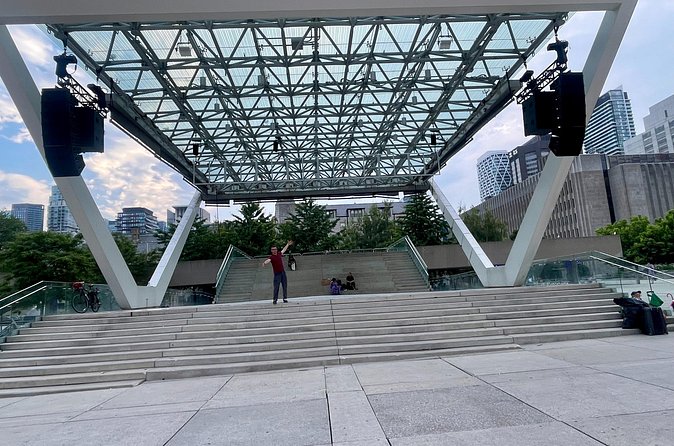
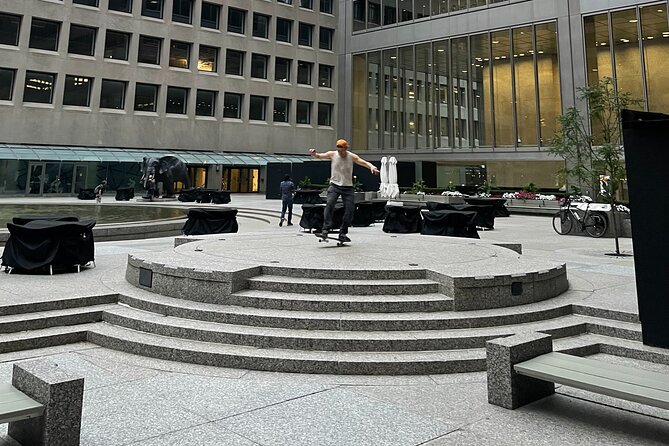
This is one of the most praised parts of the experience. You’ll learn about the history and evolution of street skateboarding in downtown Toronto, and how professional skateboarders got their careers started filming tricks using urban architecture as the backdrop.
The tour frames skateboarding as more than sport. It’s a relationship between youth culture and city design—steps, rails, ledges, curbs, and the “real world” surfaces that turn downtown into a playground for creative movement.
You’ll also hear about the current climate for street skateboarding in downtown Toronto. That’s important, because street skating always exists alongside rules, policing, and public space tensions. The tour keeps it grounded in what’s possible in the city today, not just how it used to be.
Why this works on a downtown walking tour: skateboarding stories make you slow down. You start noticing the exact features skaters look for, and that changes how the same streets feel compared with a standard sightseeing walk.
Good fit for you: if you like sports culture, street art energy, or “how people use the city” stories, this stop will likely be a highlight.
Brookfield Place and the NHL Situation Room: buildings with job descriptions
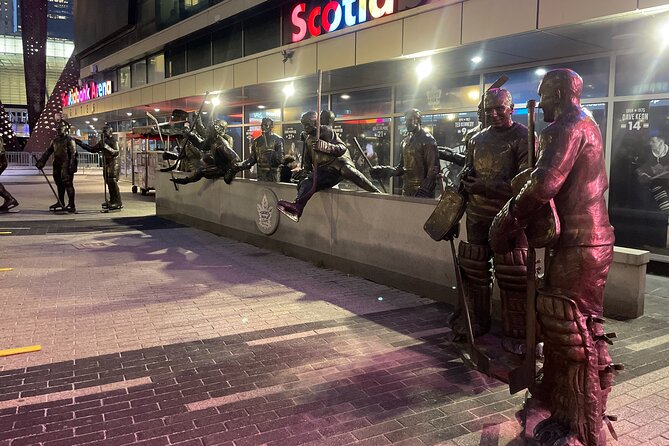
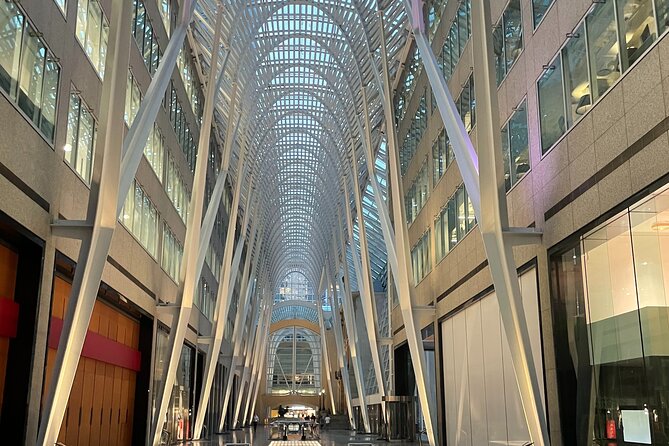
Next comes Brookfield Place, where the tour shifts from street culture into corporate architecture and sports operations. You’ll learn about the history and architecture of Brookfield Place, then connect it to hockey in a very direct way: the NHL Situation Room and its role in the NHL.
The description is specific that this Situation Room is located in the southwest tower. That detail makes it feel less abstract. This isn’t just “hockey is important.” It’s “here’s a place where hockey decisions and events are managed.”
Even if you’re not a die-hard hockey fan, you’ll still understand why this matters for sports-business culture. It’s the intersection: money, media attention, and operational control in one downtown footprint.
Potential drawback: if you already know the NHL structure well, you might not learn brand-new tech details. But the architectural and location-specific framing is still useful if you like seeing where sports power lives in the physical city.
Legends Row outside Scotiabank Arena: Maple Leafs legacy to Raptors ambition
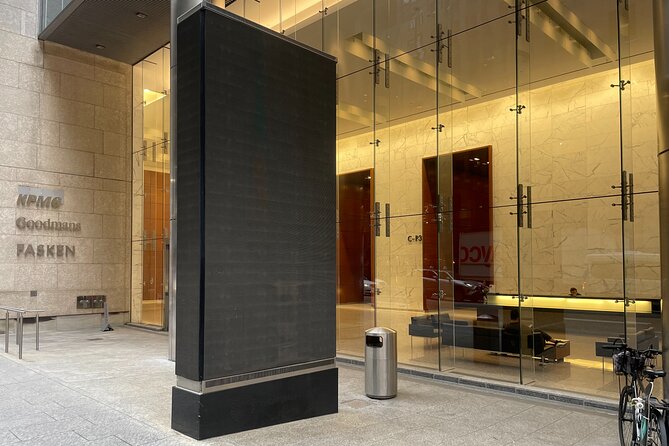
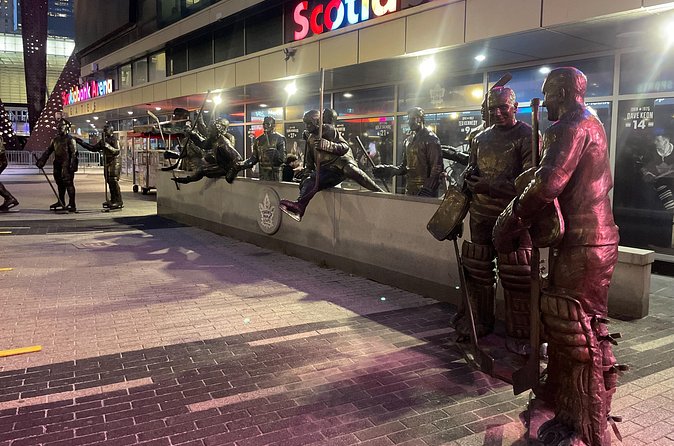
The tour ends with Legends Row, located outside Scotiabank Arena on Raptors Way. Here you’ll learn about the sculpture—called Legends Row—and the artistship behind it, plus what it represents.
The lineup is tied to former Toronto Maple Leafs players, which gives this area a strong “legacy wall” feel. From there, the tour connects to the Raptors and modern basketball momentum.
You’ll hear how the Raptors acquired Kawhi Leonard, how they won the 2019 NBA Finals, and then the street-level branding shift: Bremner Street renamed to Raptors Way. The tour also doesn’t pretend it’s simple. It talks about the challenges the team faces to attract and sign top NBA talent as the only Canadian team in the NBA.
What you’ll likely remember: by the time you reach Scotiabank Arena, the tour has taught you how sports aren’t just games. They’re identity, branding, and recruitment strategy—written onto streets and sculptures.
How this helps after the tour: you’ll likely end with a clearer sense of where the Raptors and Maple Leafs stories live in the city’s geography, not only in headlines.
Duncan’s extra value: the Google Maps food map and end-planning help
One of the standout reasons this tour feels like a good deal is what’s included beyond “walk and talk.” You get a Google Map of Duncan’s Toronto recommendations, including food, drink, and dessert. That isn’t a generic list; it’s personal planning help that many people end up using immediately.
You also get travel advising at the end—help with planning and recommendations. That can be especially valuable if you’re trying to avoid wasting time on tourist traps in a city this size.
And yes, the price is low enough to feel almost unfair for the amount of storytelling you get. At $11.22 per person, you’re paying for a guide’s perspective, the route logic, and the included planning support—not for a pile of paid admissions. In fact, the tour notes that several segments include free admission tickets, so you’re not getting nickel-and-dimed on the ground.
A realistic caution: it’s still a walking tour. The value shows up if you’re willing to walk, listen, and look closely at details.
Who should book this tour?
This is a strong pick if you want a downtown Toronto experience that’s not just “big buildings.” It’s ideal for:
- People who like street culture and want street skateboarding explained in context
- Travelers interested in the city as an economy—how finance, media, and sports shape life
- Anyone who enjoys a guide who pays attention to small visual details and storytelling connections
- First-timers who want orientation without losing depth
It’s less ideal if you:
- Hate walking for 90 minutes
- Only want famous landmarks with no film, sports-business, or street-culture discussion
- Are expecting a hands-on activity (this is sightseeing on foot, not a skate lesson)
Given the high satisfaction rating and the emphasis on the route feeling well-paced and different, I’d book it when you want something thoughtful but still fun.
Should you book this downtown Toronto street-skate, sports, and economics walk?
Yes, if you want a guide-driven route that teaches you how Toronto works—historically, culturally, and economically—while keeping the pace lively. The standout reason to book is the combination of place-based storytelling and the included personal planning support via Duncan’s Google Maps food map.
Book it especially if you’re the type who likes learning why a city looks the way it does from the street up. This tour doesn’t treat downtown as scenery. It treats it as evidence.
If you’re the type who already knows Toronto well and wants fresh angles, you may still be surprised by what you notice when someone frames the same blocks around skateboarding, film production realities, financial district symbolism, and hockey-biz locations.
FAQ
How long is the tour?
It runs for about 1 hour 30 minutes (approx.).
What language is the tour offered in?
The tour is offered in English.
Is there any admission fee for the stops?
The tour description notes free admission tickets for the listed stops.
How much walking should I expect?
It’s a walking tour through downtown Toronto, including a portion through the PATH network.
Does the tour run in any weather?
It requires good weather, so it can be canceled due to poor weather.
Where does the tour start and end?
It starts at 100 Queen St W, Toronto, and ends at the Legends Row area outside Scotiabank Arena on Raptors Way (near the PATH/Maple Leaf Square area).
Is gratuity included in the price?
No. Gratuity or tip is not included.
More Historical Tours of Toronto
More Tour Reviews to line up around Toronto and Niagara


Not sure yet? Here is more to see and do across Toronto, just reviewed











More Historical Tours to size up.
 ★ 4.7Dark History Nighttime Walking TourFrom $20273 reviews
 ★ 4.8Distillery District Historic Walking TourFrom $20267 reviews
 ★ 5.0World Famous Boat Cruise with Historical Walking Tour and moreFrom $99202 reviews
 ★ 5.0Toronto Local Beer Tour: 2 Beers at 2 Unique & Historical PubsFrom $73154 reviews
 ★ 4.5Old Town Toronto History Walking TourFrom $4122 reviews
 ★ 4.9Niagara Falls Boat Cruise with Historical Walking TourFrom $9983 reviews
 ★ 4.8Niagara Falls & NOTL Heritage Town Guided Day TourFrom $7228 reviews
 ★ 5.0Historic Brothels of Old Toronto Walking TourFrom $2123 reviews
This tour also ranks in