
Reviewed · TORONTO CITY TOURS & CN TOWER
Discover Toronto Like a Local
Toronto’s best hits in two hours. That’s what makes this small-group walk a smart way to get oriented fast, covering major landmarks with minimal fuss and plenty of guide talk. You’ll move through classic downtown landmarks, poke into the PATH underground for comfort, and finish in the area where you can easily line up lunch at St. Lawrence Market.
What I like most is the way the tour is built to help you skip logistics. There’s no map juggling or timetable math. You also get a real guide voice; the reviews highlight Leo as a professional, fun presence who remembers people’s questions and keeps the pace easy while still hitting lots of sights.
One consideration: it’s a walking tour with moderate physical fitness needed, and it runs in downtown weather. If skies are rough, you may still get help from the indoor PATH portion, but the experience does note that it requires good weather.
In This Review
- Key things to know before you go
- Why this 2-hour downtown walk fits real trip days
- Starting at the Toronto Sign and Old City Hall square
- The PATH underground stop that keeps you dry and warm
- Hockey Hall of Fame: a quick stop with big Canadian energy
- Brookfield Place and Allan Lambert Galleria
- Financial District skyline and public art moments
- Union Station: Beaux-Arts beauty and Canada’s busiest hub
- Berczy Park and the dog fountain pause
- Gooderham (Flatiron) Building: the original at Front Street
- St. Lawrence Market: the easiest lunch win
- How the guide makes the city make sense (especially with Leo)
- Price and value: why $27.04 feels fair for this route
- Who this tour is best for (and when it’s not)
- Weather, timing, and using the PATH well
- Should you book this Toronto highlights walk?
- FAQ
- How long is the Toronto walking tour?
- How much does the tour cost?
- Is the tour offered in English?
- How big are the groups?
- What main stops are included on the route?
- Are admission tickets included for the stops?
- Do I get a mobile ticket?
- What fitness level do I need?
- What if the weather is bad?
- When will I receive confirmation after booking?
Key things to know before you go
- Small group (max 18): more questions, less crowding.
- No-planning start: the route covers downtown icons so you don’t have to piece together your own day.
- PATH stop included: warmth and shelter are built into the itinerary, not added later.
- Mix of old and modern: Old City Hall, Union Station, and the financial skyline all share the same 2-hour walk.
- St. Lawrence Market is on the route: perfect for an easy lunch plan right after the tour.
- Guide-driven, not scripted: the experience is set up for Q&A and conversation as you walk.
Why this 2-hour downtown walk fits real trip days
This is a tight, efficient way to see a lot of Toronto without turning your vacation into a checklist. At about 2 hours, it’s long enough for meaningful context, but short enough that you can still explore on your own later.
The small-group size (up to 18) matters more than it sounds. You can actually ask questions while you’re moving, and the tour doesn’t feel like a line of people being herded past buildings. Also, it’s offered in English, and you’ll use a mobile ticket, which keeps things simple once you’re downtown.
The tour also gives you time-slot choices, which is useful in a city where weather and energy levels can swing fast. If you’re planning a first day, this kind of “orientation loop” helps you later understand what you’re looking at—especially around Union Station, the financial district, and the market area.
See more of the skyline on our other Toronto city tours and CN Tower trips in Toronto


Starting at the Toronto Sign and Old City Hall square
Your route begins near Toronto’s City Hall area, at the square with the popular Toronto Sign. It’s a good opener because it’s instantly recognizable—even if you’ve only seen photos—so your guide can set the stage right away with what matters downtown and what to pay attention to as you walk.
Next up is Old City Hall, a classic building in the heart of the city. This stop is short, but that’s the point. You get a quick visual and a bit of explanation so the building doesn’t just look pretty from the outside. You’re learning what the structure represents in the city’s story, and why this part of downtown has such strong identity.
The practical upside of these early stops: you’re starting in an area where it’s easy to orient yourself. After that, you’ll have an easier time figuring out which direction leads to Union Station, where the market vibe begins, and how the downtown blocks connect.
The PATH underground stop that keeps you dry and warm
One of the smartest parts of this tour is the inclusion of the PATH. You get a taste of Toronto’s underground city—the same reason locals can move around downtown in winter without freezing (or getting soaked).
This stop is also useful because it changes how you experience downtown. Above ground, you’re reading street life and architecture. Underground, you’re reading how the city protects people from weather while keeping movement efficient. In other words: it’s not just a shortcut; it’s part of how Toronto functions.
The reviews also point out a key practical benefit: even when rain shows up, guides often use the PATH to help you stay comfortable rather than forcing you out in the elements. That flexibility is exactly what you want on a walking tour when the forecast is uncertain.
Hockey Hall of Fame: a quick stop with big Canadian energy
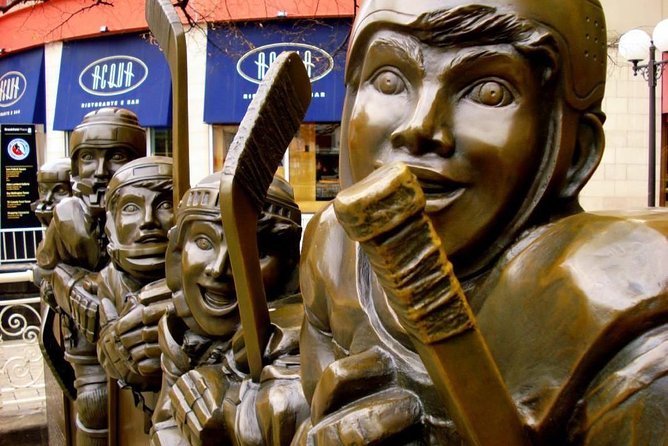
Then you swing into a classic Canadian stop: Hockey Hall of Fame. Even if you’re not a die-hard fan, the building carries cultural weight in Canada. Since this is a short stop, you’re not doing a full museum visit here—you’re getting the context and the “why it matters” framing.
This kind of quick thematic stop is good because it breaks up the architecture parade with something cultural. Plus, it can act like a conversation starter. If you are a hockey fan, you’ll likely get extra value from the guide’s talk about places and traditions tied to the game.
If you do want more, you can always build on it afterward. But for a 2-hour overview tour, the stop is the right length: short enough to keep momentum, useful enough to give your downtown walk meaning.
Brookfield Place and Allan Lambert Galleria
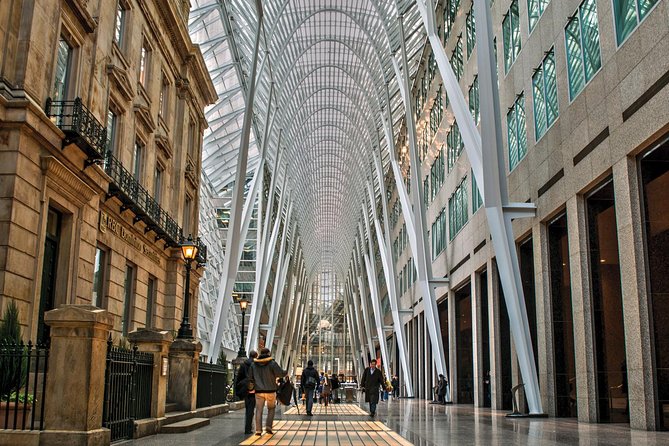
Next is Brookfield Place, with the Allan Lambert Galleria nearby. This is where you start seeing more of Toronto’s modern downtown energy. The contrast helps: you’ve just come from civic classic and hockey culture, and now you’re stepping into a different architectural feel.
The reason this stop works for most people is that it shows Toronto isn’t one mood. Downtown shifts from older landmarks to newer designs in short blocks, and a walking tour is one of the best ways to notice the change.
Your time here is brief, but it’s still valuable. You’ll understand what this area is known for visually and functionally, so later, if you’re walking past it on your own, you won’t feel like you’re looking at random shiny buildings.




Financial District skyline and public art moments
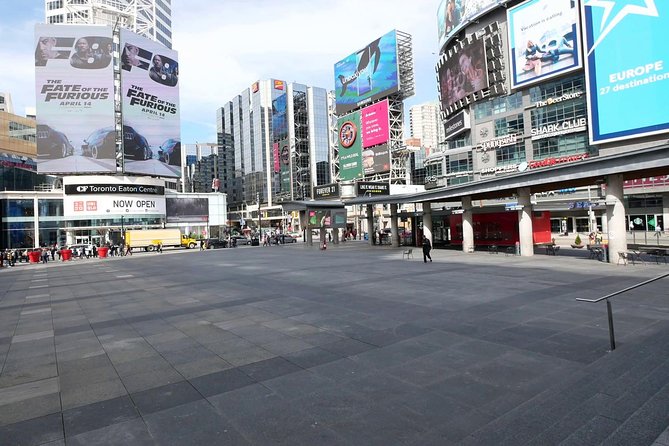
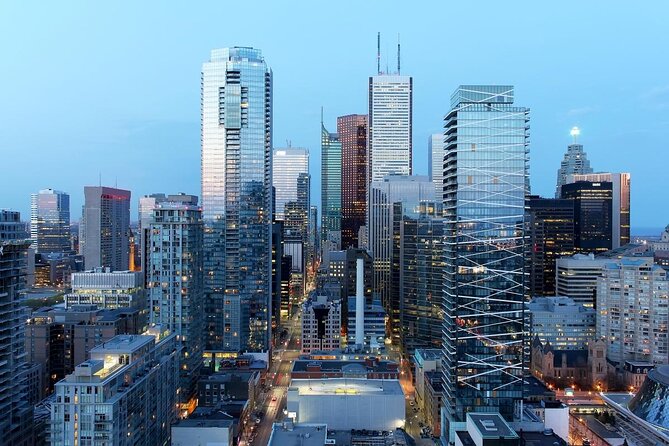
The tour continues into the Financial District, with time for views of Toronto’s skyline. The schedule calls out the biggest building in Canada, plus public art. That combination is practical: you’re not just looking up at tall structures; you’re noticing the human touches placed in public space.
This stop gives you a sense of scale. Toronto can feel smaller than some global cities until you’re in this corridor, seeing how the skyline clusters and how the downtown “center of gravity” works.
Public art is also the kind of detail that’s easy to miss if you’re sightseeing alone. A guide’s call-outs help you clock what’s worth looking at, not just what happens to be visible from street level.
Union Station: Beaux-Arts beauty and Canada’s busiest hub
One of the biggest “wow” moments on the route is Toronto Union Station. It’s a major transportation hub and described as the busiest passenger terminal in Canada, with a Beaux-Arts style.
You’ll get a quick, high-impact look, which is exactly right for a short tour. Union Station is the kind of place where the building itself tells you something about Toronto. It signals status, design ambition, and the idea that travel should feel dramatic and dignified, not utilitarian.
This is also a useful stop for practical reasons. Once you understand the station layout and its role in downtown, it’s easier to plan your own future days—especially if you’re connecting by train, heading to other neighborhoods, or simply using transit without stress.
Berczy Park and the dog fountain pause
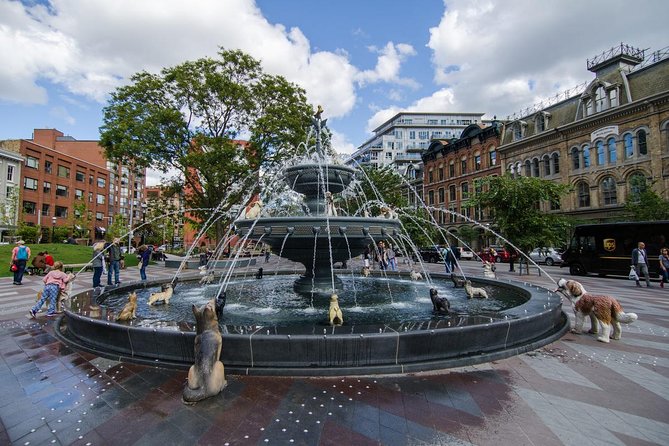
After the transit landmark, you get a breather at Berczy Park. The highlight here is the famous dog fountain, which is one of those details people remember because it’s cheerful and photogenic.
This stop is short, but it works because it resets your eyes. You’ve been surrounded by civic and financial buildings; now you’re in a pocket of green with a distinct local personality. It’s also a good moment to catch your breath before the route turns toward more architecture and food.
If you like street-level Toronto (not just skylines), Berczy Park is the kind of stop that makes the whole tour feel more lived-in.
Gooderham (Flatiron) Building: the original at Front Street
Then comes Gooderham (Flatiron) Building on Front Street. The tour frames it as the original Flatiron Building, and that detail matters because it connects Toronto to a wider architecture conversation.
This stop is especially useful if you enjoy noticing shapes. The “wedge” form is distinctive, and it’s the kind of building you can instantly recognize later in photos. A quick stop plus explanation helps you understand why this corner matters so much visually.
It’s also a good example of how the tour mixes landmark types. You’re not only seeing big institutions (like Union Station). You’re also seeing quirky, recognizable structures that define the look of certain blocks.
St. Lawrence Market: the easiest lunch win
Finally, you end at St. Lawrence Market—Toronto’s oldest food market. This is where you can turn your sightseeing momentum into a simple plan for lunch.
The market section is the most “you can use this right away” part of the tour. The schedule notes plenty of options, and the vibe is perfect for a casual meal after walking around downtown.
One practical tip from the tour experience: ask your guide about what to try. The reviews specifically mention peameal bacon as something to look into, and people also talk about the guide’s food recommendations around the market area. If you’re the type who wants one confident food choice instead of wandering in circles, this stop is your payoff.
How the guide makes the city make sense (especially with Leo)
The experience is guide-led, and the strongest praise centers on the guide’s style. The reviews repeatedly highlight Leo for being professional, entertaining, and quick to answer questions. That’s not a small thing. City tours can feel like memorized facts; this one is set up as a moving conversation.
A good guide also changes how you walk. When the pacing feels right, you can look at details you’d miss on your own—public art in the Financial District, how the downtown blocks line up near Union Station, and what to notice at each architecture stop.
Even weather can shape the value, and the reviews mention that when rain hit hard, the guide still kept the tour fun and used the PATH to help keep everyone dry. That tells you the operator understands the real problem with walking tours: conditions change, and the route should still work.
Also, the group size stays small, so it doesn’t feel like you’re speaking into the void. If you’re asking about neighborhoods, transit, or what’s worth seeing later, you’ll likely get direct, useful answers.
Price and value: why $27.04 feels fair for this route
At $27.04 per person for around 2 hours, this isn’t priced like a full-day tour or a museum package. It’s more like a guided orientation loop through the densest downtown highlights.
Value comes from three things you can actually feel:
- Coverage: you hit major downtown landmarks in one go, without needing to build your own route.
- Comfort planning: the PATH stop helps protect you from weather.
- Included costs: the experience lists all fees and taxes and notes free admission for the stops on the schedule.
Now, here’s the balanced part: this isn’t a deep museum crawl. It’s a walking overview. If you want long indoor time in a single attraction, you’ll need to add that separately after the tour.
But for most visitors, that trade-off makes sense. Getting your bearings and understanding what you’re looking at is often what turns a good trip into a great one.
Who this tour is best for (and when it’s not)
This tour is a strong fit if you’re:
- Visiting Toronto for the first time and want a fast downtown primer
- Short on time but still want the biggest sights within a single morning or afternoon slot
- The kind of traveler who likes learning while walking, not just taking photos
- Someone who appreciates the humor and context of Canadian culture, including the hockey stop
It’s also a good call if you want an easy way to set up the rest of your day. After you know where Union Station sits and where the market ends, it’s simpler to plan your next steps without guessing.
A less ideal fit: if you hate walking, or if moderate walking distance is a problem for you, you may feel rushed. The tour requires moderate physical fitness, so be honest with your own pace needs.
Weather, timing, and using the PATH well
This experience is set up for good weather, and it’s noted that if it gets canceled due to poor weather, you’ll be offered a different date or a full refund. That’s important to know up front so you can plan with flexibility.
The good news is that you’re not helpless if the weather turns. The itinerary includes the PATH, and the reviews mention using it to stay warm or dry. In real terms, that means you’re more likely to keep moving comfortably than if your whole tour were outdoors end-to-end.
If you’re choosing among time slots, I’d pick one that matches your energy level. Since it’s only about two hours, you don’t need an early start to make it work—you just want a slot where you won’t be rushing right before dinner or right after a late flight.
Should you book this Toronto highlights walk?
I’d book it if you want an efficient, downtown-focused introduction that’s easy to plug into a real itinerary. For the money, the value is the combination of major landmarks, a PATH stop for comfort, and a finish at St. Lawrence Market where you can instantly turn sightseeing into food.
Also, the reviews give you a strong signal about what to expect from the guide. If you care about asking questions and getting practical local tips—especially around what to eat—this is the kind of tour that rewards curiosity.
My final advice: wear comfortable walking shoes, bring a layer for temperature swings, and at St. Lawrence Market, ask your guide what to try first. If you do those things, you’ll leave with Toronto feeling mapped in your head, not just photographed on your phone.
FAQ
How long is the Toronto walking tour?
It’s about 2 hours.
How much does the tour cost?
The price is $27.04 per person.
Is the tour offered in English?
Yes, the tour is offered in English.
How big are the groups?
The maximum group size is 18 travelers.
What main stops are included on the route?
You’ll visit the City Hall square with the Toronto Sign, Old City Hall, the PATH, Hockey Hall of Fame, Brookfield Place / Allan Lambert Galleria, the Financial District, Toronto Union, Berczy Park, Gooderham (Flatiron) Building, and St. Lawrence Market.
Are admission tickets included for the stops?
The schedule lists free admission for the stops included in the experience.
Do I get a mobile ticket?
Yes, the tour provides a mobile ticket.
What fitness level do I need?
The tour notes a moderate physical fitness level.
What if the weather is bad?
The experience requires good weather. If it’s canceled due to poor weather, you’ll be offered a different date or a full refund.
When will I receive confirmation after booking?
You’ll receive confirmation at booking time unless you book within 6 hours of travel, in which case confirmation is received as soon as possible, based on availability.
More Toronto City Tours and CN Tower Trips
More Tour Reviews to line up around Toronto and Niagara


Not sure yet? Here is more to see and do across Toronto, just reviewed












More Toronto City Tours & CN Tower to size up.
 ★ 4.3City Sightseeing Hop-On Hop-Off Bus TourFrom $492,544 reviews
 ★ 5.0Niagara Falls Canada Open-Top (Wet) Jet Boat TourFrom $711,000 reviews
 ★ 4.5Toronto Premium Small Group Driving Tour with CN TowerFrom $128833 reviews
 ★ 3.5City Sightseeing Toronto Hop-On Hop-Off Bus TourFrom $49726 reviews
 ★ 5.0Show me the City! A Small Group Walking Tour of TorontoFrom $39621 reviews
 ★ 4.4City Views Harbor CruiseFrom $28557 reviews
 ★ 4.6City Highlights Walking Tour | 3-HourFrom $5306 reviews
 ★ 4.5Old Town Toronto Highlights 3 Hour Walking Tour | Gratuity-BasedFrom $5290 reviews
This tour also ranks in